

-At Jamaica Road
By Melvin Jackson
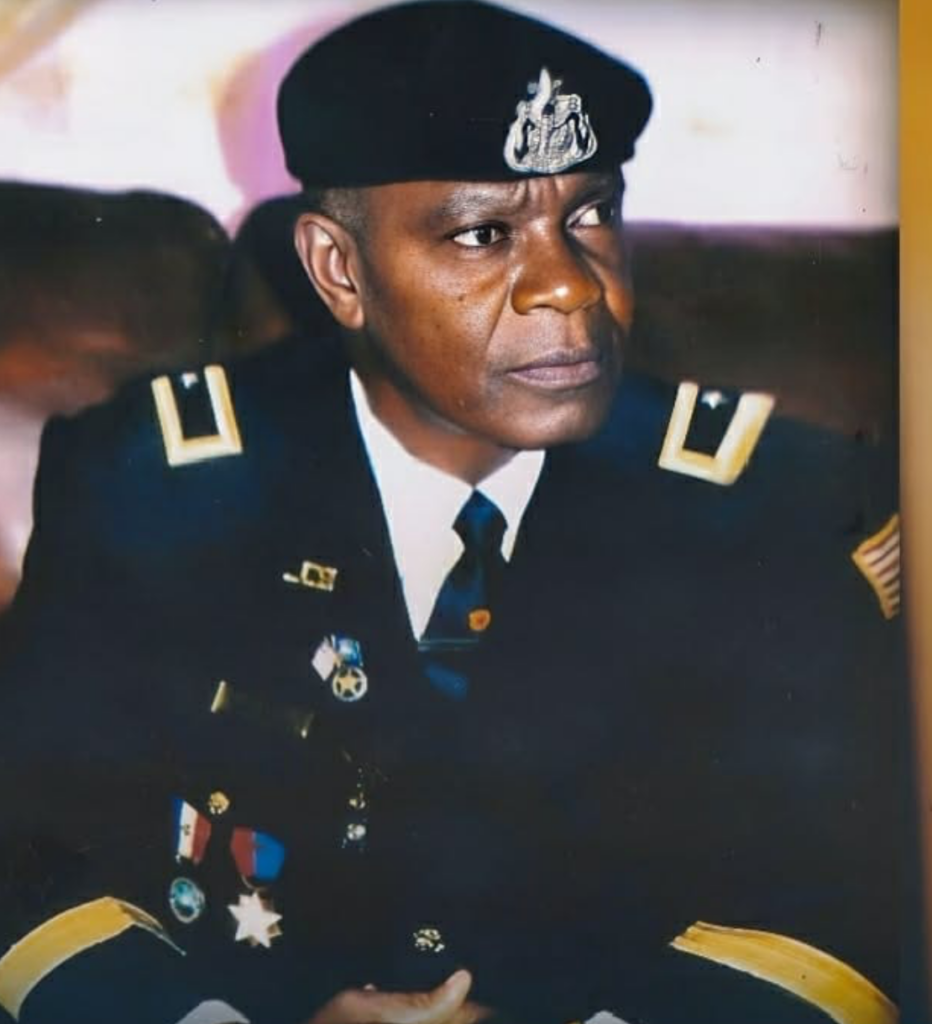
MONROVIA, Liberia – July 28, 2026 — Retired Marshal of the Supreme Court of Liberia, Brigadier General Amos B.K. Dickson, has sharply criticized the Government of Liberia’s handling of a recent court-ordered eviction in the Jamaica Road community, describing the operation as poorly coordinated and dangerous after he sustained serious injuries while driving through the area.
Speaking in an interview with this platform from his residence in Kebbah, the 72-year-old retired judicial officer recounted how he suffered severe head injuries requiring nearly 19 stitches after his vehicle came under attack during violent clashes that erupted as authorities attempted to enforce an eviction order near the Battery Factory on the Japan Freeway.
According to Dickson, he was on his routine morning trip to supervise renovation work at his school when he unknowingly entered the area where the eviction operation was taking place.
“There were no warning signs, no roadblocks, no public announcement that the road was closed because of an eviction. We simply drove into the area, and suddenly stones and bottles started flying everywhere,” he explained.
The retired marshal said his vehicle became trapped in traffic as panic spread, leaving motorists unable to escape the violence.
Dickson revealed that his daughter was traveling with him when the violence erupted. Fearing for her safety, he instructed her to leave the vehicle while he remained behind to protect the car from possible theft or vandalism.
“I told my daughter to leave because I didn’t want to abandon my vehicle. But when she saw blood running from my head, she came back. She was the one who rescued me.”
He expressed disappointment that despite the presence of security officers at the scene, none came to his assistance.
“Police officers were standing around, yet nobody came to help me while I was bleeding. My daughter was the only person who came to my rescue.”
‘I Survived By God’s Grace’
The former Supreme Court Marshal said the injuries could have been fatal.
“If God had not helped me, I probably would not be alive today. I received almost 19 stitches on my head.”
He also sustained injuries to his leg after being struck by rocks and displayed blood-stained clothing and photographs documenting his injuries during the interview.
His vehicle, according to him, suffered extensive damage, including shattered windows caused by rocks thrown during the disturbance.
Questions Government’s Eviction Strategy
While acknowledging that court orders must be respected, Bidexin argued that the Government’s method of executing eviction orders is placing innocent citizens in danger.
“No one is saying government should not carry out eviction orders. The issue is how they are enforced.”
He stressed that authorities should provide advance public notice whenever large-scale enforcement actions are planned.
“If government knows an eviction will be taking place in a certain area, then announce it. Tell people not to use that road. Divert traffic. Don’t allow innocent citizens to drive into danger.”
He argued that simple traffic control measures could have prevented the chaos that left motorists caught between law enforcement officers and angry residents.
According to him the judiciary Interprets the Law—Executive Enforces It Drawing on nearly four decades of judicial service, Dickson emphasized that the judiciary should not bear the blame for violence associated with enforcement actions.
“The Judiciary interprets the law. It does not enforce the law. Enforcement is the responsibility of the Executive.”he said.
He explained that while courts determine legal ownership and issue judgments, the Executive Branch must decide how those judgments are implemented without endangering public safety.
“If enforcing a court order will create conflict, then government must carefully plan how to execute it.” He however Calls for National Land Crisis Committee describes Liberia’s growing land disputes as a national crisis requiring urgent political intervention.
He called on President Joseph Boakai’s administration to establish a National Land Crisis Committee comprising government officials, legal experts and community stakeholders to mediate complex land ownership disputes before they escalate into violent confrontations.
“The land crisis is becoming worse. If we are not careful, it will create bigger problems.”
According to him, many disputes involve absentee property owners who return after decades abroad to reclaim land now occupied by communities that have built permanent homes.
He suggested negotiated settlements instead of mass evictions.
“If someone leaves Liberia for 20 or 30 years and people have developed that land, government should bring everyone together to negotiate compensation or settlement rather than simply removing thousands of people.”