

-To Increase Higher Education For Marginalized Liberian Youth
By Jessica Cox
MONROVIA, Liberia — The FAWE-Mastercard Foundation Phase II Program is targeting 80 percent female participation among 650 beneficiaries to increase access to higher education and technical and vocational training for marginalized young Liberians.
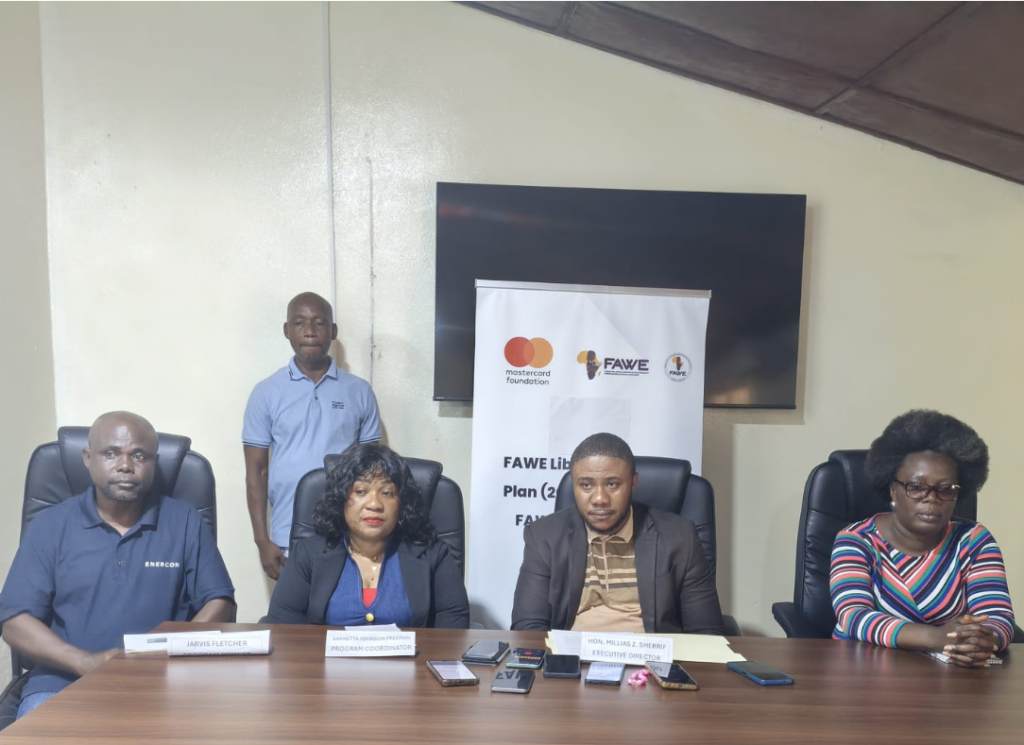
The Forum for African Women Educationalists (FAWE) Liberia Chapter announced the recruitment outcome on Friday, October 9, 2026, during a press conference in Monrovia, disclosing that the program received 1,447 applications for its first cohort.
Under the planned allocation, 400 beneficiaries will pursue Technical and Vocational Education and Training (TVET), while 250 will access university education through the program’s higher education and bridging pathways.
FAWE Liberia Executive Director Hon. Millias Z. Sheriff said the initiative seeks to help marginalized young women and men overcome barriers to education, with particular emphasis on expanding opportunities for women.
The 80 percent female participation target reflects the program’s commitment to promoting gender equity in education. However, the organization did not disclose the final number of women selected in the first cohort during the briefing.
Implemented in partnership with the Mastercard Foundation, the program aims to help young people access tertiary education, develop practical skills, and prepare for employment and entrepreneurship.
According to Sheriff, the recruitment attracted 1,447 applicants, comprising 816 applications for university opportunities and 631 for TVET programs.
Applications were received through online and in-person channels, with forms distributed through participating educational institutions and other platforms to broaden access to the opportunity.
The selection process involved screening and reviews at district, county, and national levels. Officials said home visits were also conducted to verify applicants’ circumstances and assess claims of marginalization.
Sheriff explained that meeting the basic eligibility requirements did not automatically guarantee selection, as the number of applicants exceeded the 650 available places.
Following the initial screening, applications were reviewed and validated by a National Recruitment Selection Committee comprising 22 representatives from government institutions, educational institutions, youth organizations, civil society, disability-focused organizations, refugee-related institutions, and other stakeholders.
Participating institutions included the Ministry of Education, Ministry of Youth and Sports, National Commission on Higher Education, universities and TVET institutions, the Federation of Liberian Youth, the Youth Coalition for Education in Liberia, the National Commission on Disability, and the Liberia Refugee Repatriation and Resettlement Commission.
FAWE Liberia said the multi-level process was intended to promote transparency, accountability, and fairness in determining which applicants qualified for the available opportunities.
The program’s assistance will extend beyond school fees to address other challenges that could prevent beneficiaries from completing their education.
According to officials, the support package may include accommodation, laptops, learning materials, health insurance, and specialized equipment for students with disabilities.
Beneficiaries who require accommodation will be assisted in finding suitable living arrangements, with mentors expected to provide guidance and follow up on their academic progress.
Officials said learning materials and other resources required for specific courses would also be provided, while students with disabilities could receive equipment needed to make their learning accessible.
The initiative is designed to help beneficiaries concentrate on their studies without being unduly burdened by expenses associated with pursuing higher education or vocational training.
The university component includes a bridging pathway intended to help high school graduates who face difficulties entering tertiary institutions, particularly those who have not passed the West African Senior School Certificate Examination (WASSCE).
Officials said applicants were expected to be between 15 and 25 years old and to have completed the prescribed high school curriculum within the program’s eligibility period.
Applicants who had completed high school but had not passed WASSCE could qualify for the bridging pathway, subject to the program’s selection requirements.
Through partnerships with participating institutions, the program will facilitate access to education while preparing eligible participants to sit the next available WASSCE examination.
Officials said participants entering through this pathway would need to satisfy the required academic conditions to progress through their respective educational programs.
The duration of training will depend on the institution and course, with some TVET programs expected to run for approximately nine months to one year. University programs may take two years for associate-level qualifications or four years for full degree programs.
Beyond educational access, FAWE Liberia said the program will prepare participants for employment and self-employment after graduation.
Officials disclosed plans to work with government ministries and private institutions to create internship and industrial engagement opportunities for participants approaching the completion of their studies.
The program will also introduce entrepreneurship training, through which participants will develop business plans.
According to the presentation, participants who meet the relevant requirements could receive grants ranging from 3,000 to 5,000 to establish businesses. The currency and detailed eligibility conditions for the grants were not specified during the briefing.
The entrepreneurship component is intended to provide an alternative pathway for graduates who may not immediately secure formal employment.
Officials said the broader objective is to ensure that beneficiaries acquire practical skills and have opportunities to apply their training toward productive livelihoods.
Sheriff said prioritizing women reflects FAWE Liberia’s commitment to addressing gender-related barriers to education and creating opportunities for young women to develop the skills needed to participate in economic and social development.
Under the announced target, women are expected to constitute 80 percent of the program’s beneficiaries, while marginalized young men will also be supported.
The program also seeks to accommodate young people with disabilities and those affected by displacement, with assistance tailored to their circumstances and learning requirements.
Officials said the selection process considered applicants’ backgrounds and living conditions through application reviews and home visits, rather than relying exclusively on the information provided on application forms.
The emphasis on women is consistent with FAWE’s broader mission of promoting gender equity and improving educational opportunities for girls and women across Africa.
FAWE Liberia said all 1,447 applicants, whether selected or not, would be contacted using the details provided in their applications.
Successful applicants will receive official offer letters outlining the next steps and the conditions attached to the bursary support.
The organization also said unsuccessful applicants would be informed of their results and the reasons for their non-selection.
Sheriff encouraged those who were not selected not to abandon their educational ambitions, explaining that the number of available places was limited.
He said the first cohort represents an initial phase of the program and that FAWE Liberia intends to continue expanding opportunities for young people.
Officials outlined plans to recruit an additional 200 participants in each of 2027, 2028, and 2029, subject to implementation plans and available resources.
FAWE Liberia acknowledged the Mastercard Foundation, FAWE Africa, government institutions, participating educational institutions, civil society organizations, and recruitment committees at the district, county, and national levels for their contributions to the process.
The organization said the next phase would focus on issuing offer letters, enrolling selected participants, and preparing them to begin their respective educational programs.
Sheriff urged successful applicants to take their studies seriously and make effective use of the opportunity, emphasizing that the investment is intended to benefit participants, their families, and society.
He also called on the media to continue providing accurate and timely information to applicants and their families as the enrollment process progresses.
Through the FAWE-Mastercard Foundation Phase II Program, the organization aims to expand access to higher education and technical and vocational training while creating pathways to employment and entrepreneurship for marginalized young Liberians.