By: Sampat JMB Kpakimah
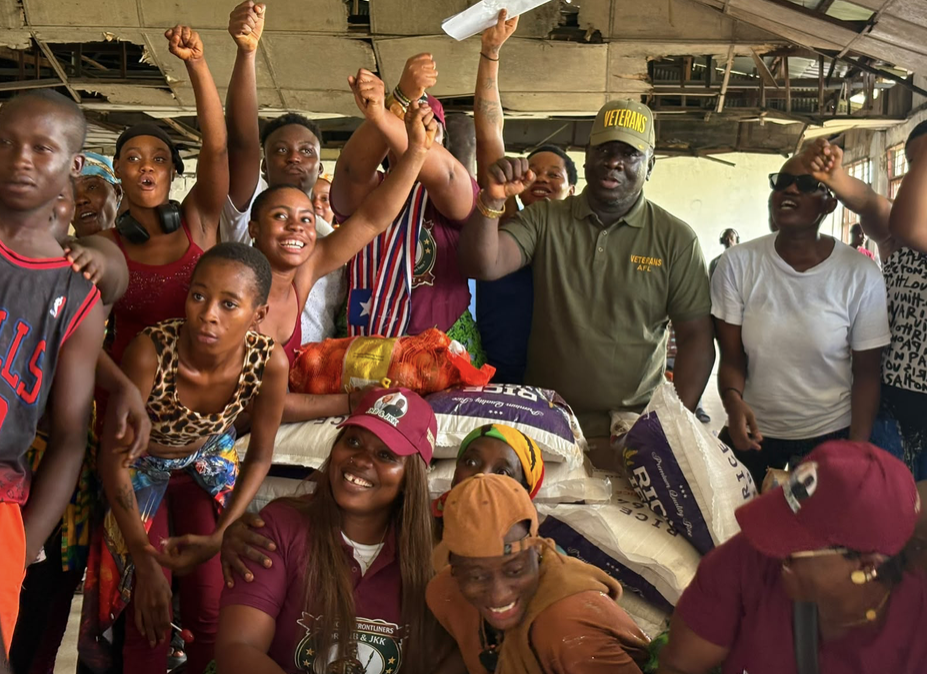
The National Frontliners for the JNB and JKK Movement on Saturday, June 6, 2026, donated assorted items to the National Rehabilitation Center for Drug and War‑Affected Persons Inc. at the Coast Guard Base on Bushrod Island. The event, held under the theme “Say No to Drugs,” reaffirmed support for the government’s efforts to combat substance abuse and rehabilitate affected citizens.
Keynote Address by LDEA Officer‑in‑Charge
Fitzgerald Biago, Officer‑in‑Charge of the Liberia Drug Enforcement Agency (LDEA), warned that drug abuse and illicit trafficking remain serious threats to Liberia’s health, security, and development. He outlined LDEA’s ongoing work through awareness campaigns, school programs, community outreach, and law enforcement.
“Drug prevention is not solely the responsibility of law enforcement,” Biago said. “It requires a collective effort involving parents, schools, religious institutions, community organizations, government agencies, and development partners.” He urged parents and educators to foster drug‑free environments and called on community leaders to create positive opportunities for youth.
Biago stressed that “Say No to Drugs and Yes to Life” must be more than a slogan—it requires courage, support, and hope. He cited peer pressure, curiosity, unemployment, trauma, and weak support systems as factors that lead individuals to substance abuse. “Drugs often enter lives disguised as solutions, but they only deepen the pain they claim to cure,” he warned. He added, “Addiction is not a moral failure; it is a health challenge. Those struggling deserve compassion, treatment, rehabilitation, and a second chance.”
Rehab Center’s Historic First Government Visit
Veteran Lieutenant Augustine Nagbe (known as General Power), head of the rehabilitation center, noted that this marked the first time government officials had visited the facility. He called on the Government of Liberia and stakeholders to support rehabilitation efforts, emphasizing that residents are Liberians who deserve care.
Nagbe revealed that the center—the largest of its kind in Liberia—has served over 600 individuals. Success stories include 32 former residents now living well in the U.S. (one playing basketball), 24 studying at Kigali University, 15 females and one male enrolled at New Era High School, 20 who completed military training and are serving Liberia, and others who secured scholarships. He said all this was achieved with little external support.
He thanked the JNB & JKK Frontliners and LDEA’s Officer‑in‑Charge for their visit and praised international donors who keep admission free of charge. “Friends overseas go into the streets and graveyards to collect addicts,” he noted.
Movement Chairperson’s Remarks
Madam Florence Paye, Chairperson of the National Frontliners for JNB and JKK Movement, encouraged beneficiaries not to let past challenges define their future. She assured them that President Joseph Nyuma Boakai and Vice President Jeremiah Kpan Koung care deeply about their well‑being. “The vision of this administration is to ensure every Liberian is given a fair opportunity to contribute positively,” she said.
Paye announced that the group’s outreach will extend beyond Monrovia to rural communities and rehabilitation centers nationwide. She described the Frontliners as grassroots supporters of President Boakai and Vice President Koung, pledging regular visits to rehab facilities.
Several recovering addicts shared success stories and expressed gratitude for the center’s opportunity. They appealed to the government, humanitarian organizations, and individuals to support General Nagbe, who they said has largely shouldered the burden of care alone.
Items donated included rice, cooking oil, bath and washing soap, onions, toiletries, and other essentials. The event closed with calls for stronger collaboration among government, communities, families, and development partners to prevent drug abuse and sustain rehabilitation and reintegration pathways.