

By Vaye Abel Lepolu
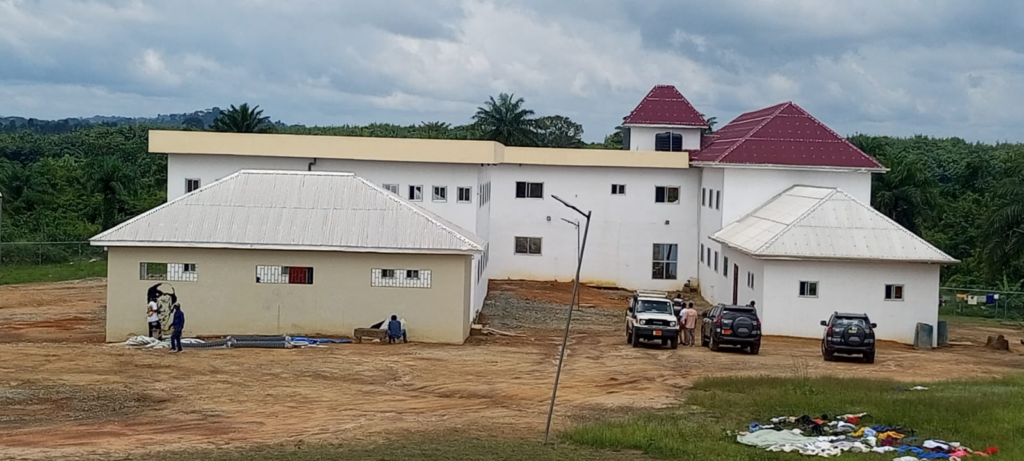
GBARNGA, Bong County, Liberia — The Leymah Gbowee Foundation is expanding opportunities for girls through education, vocational training and recreation, with a residential facility in Gbarnga, Bong County, currently providing accommodation and development opportunities for 40 high school students.
The Facility was Commissioned approximately four years ago. It was established to provide girls with a safe and supportive environment where they can pursue their education, acquire practical skills and prepare for productive futures.
The project is reportedly valued at over US$1 million and includes a 20-bedroom dormitory designed to support girls pursuing secondary education. However, the reported construction cost and current operational capacity have not been independently verified.
The dormitory also honors the lives and legacies of five Catholic nuns who were killed during Liberia’s civil war in 1992.
According to a foundation Chief Executive Office Madam Laymah Gbowee, the facility operates a revolving admission system in which girls who graduate make room for new beneficiaries. Although the building could accommodate additional residents, the foundation intends to maintain its current population of 40 girls to ensure that each student receives adequate care and support.
Beyond providing accommodation, the foundation is investing in educational resources and practical training to help the students become academically prepared and economically independent.
The facility includes a computer laboratory established with support from German Embassy in Liberia, a library and a craft room. Plans are also underway to introduce training in computer literacy, soap-making, sewing and other income-generating activities.
The initiative aims to ensure that the girls graduate with more than academic qualifications, equipping them with practical skills that could improve their employment prospects and ability to support themselves.
Madam Laymah Gbowee, emphasized that the foundation’s investment in girls’ empowerment also highlights the importance of recreation in promoting physical health, emotional well-being, confidence and leadership among young women.
In addition she said that,a dedicated female recreation center can provide girls with opportunities to participate in sports, games, cultural activities and social events while developing teamwork, discipline and communication skills.
For students living away from their families, recreational spaces are particularly important because they provide opportunities to relax, build friendships and manage the pressures associated with academic life.
Safe and inclusive recreational facilities can also help girls discover their talents, develop leadership abilities and strengthen their sense of belonging. When properly managed, such spaces can allow girls to participate in activities in an environment free from harassment, discrimination and exploitation.
Recreation complements formal education by helping students manage stress, maintain motivation and develop healthy habits. Sports and other group activities can also encourage cooperation, self-confidence and positive relationships among students.
For girls from disadvantaged communities, access to organized sports and leisure activities may be limited. Establishing safe recreation centers can therefore help reduce inequalities and ensure that girls have opportunities to develop beyond the classroom.
Education stakeholders emphasize that investments in girls’ schooling should go hand in hand with recreational facilities, libraries, computer laboratories and vocational training centers to support their overall development.
The foundation’s work also extends to surrounding communities through local employment and educational support.
A foundation representative said women from nearby communities had been contracted to maintain the building and its grounds, while other residents had been employed to provide security services.
The arrangement is intended to ensure that the foundation’s presence creates economic opportunities for surrounding communities rather than benefiting only the students residing at the facility.
“We don’t just want to occupy space; we want to invest in the community so that the benefits go around,” Madam Laymah Gbowee, explained.
The foundation also supports other educational institutions, particularly schools serving girls. According to the representative, the organization has invested in schools in the Bromley Mission and Virginia areas, with future funding expected to support the expansion and improvement of existing institutions.
The foundation believes strengthening existing schools can be an effective way to expand educational opportunities without relying exclusively on constructing new facilities.
It also owns property in Marshall, where a separate development is planned under a different operational arrangement.
The foundation’s initiatives underscore the need for sustained investment in girls’ education, vocational development, recreation and community participation.
Government institutions, development partners, private organizations and other stakeholders are being encouraged to support programs that provide girls with safe accommodation, quality education, practical skills and opportunities for personal development.
A foundation representative emphasized that improving lives should not be considered the responsibility of government alone, arguing that individuals and organizations with the resources to assist others should contribute to society.
As Liberia continues to pursue greater educational access and gender equality, initiatives that combine schooling, safe housing, recreational opportunities and vocational training can help prepare girls to become confident, independent and productive citizens.
For the 40 girls benefiting from the Gbarnga facility, the initiative offers an opportunity to pursue education in a supportive environment while preparing for futures in which they can contribute meaningfully to their families, communities and the development of Liberia.