By Jessica Cox
MONROVIA – The Gbowee Peace Foundation Africa has brought together veteran peacebuilders, policymakers, feminist leaders and emerging women leaders from across West Africa, with Nobel Peace Laureate Leymah Gbowee calling for renewed regional action to protect the gains made by women in peacebuilding and secure their greater influence in political and security decision-making.
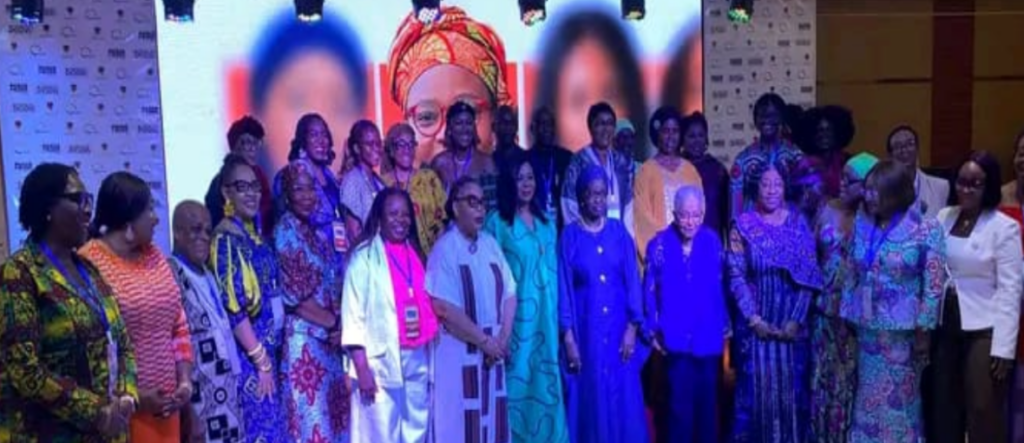
Gbowee made the call Monday, November 16, at the West African Women Peacebuilding Convening 2026, held at the Ministerial Complex in Monrovia under the theme, “Honoring the Past, Strengthening the Present, and Co-Designing the Future of Women’s Leadership for Peace.”
The one-day gathering, hosted by the Gbowee Peace Foundation Africa in collaboration with Luma Women, sought to document more than two decades of women’s contributions to peacebuilding across West Africa while examining emerging security challenges and developing strategies to strengthen women’s leadership in regional peace and security processes.
Addressing participants, Gbowee reflected on the circumstances that shaped her involvement in Liberia’s peace movement, recalling how the country’s civil war challenged traditional assumptions about men’s responsibility to protect women and children.
She described her frustration with the social expectations that restricted women’s participation in public life, particularly when the conflict exposed the vulnerability of women and children and the failure of institutions and individuals expected to protect them.
Gbowee said her experiences as a young woman questioning the status quo helped inspire her commitment to organizing women for peace.
She recalled how engagements in Accra in 2000 further influenced the development of a regional movement, connecting women peacebuilders from Liberia, Nigeria, Sierra Leone, Senegal, The Gambia, Côte d’Ivoire and Ghana.
Describing Monday’s gathering as a reunion of women whose collective sacrifices helped shape peace movements across the region, she emphasized that the achievements being celebrated were not the work of a few prominent personalities.
Rather, she said, the movement was built through the contributions of numerous women, including those whose sacrifices and involvement have received little public recognition.
Gbowee also stressed the importance of deliberately bringing younger women into peacebuilding discussions, explaining that students and emerging feminists were invited to learn directly from the experiences of women who pioneered the movement.
However, she cautioned that the region’s current security challenges require more than celebrating past achievements.
“This is not the time to sit on our laurels,” she stressed, pointing to political instability, upcoming elections, human trafficking and the increasing intersection between conflict and violence against women and girls.
As part of efforts to strengthen regional cooperation, Gbowee announced plans for a West African Women’s Peace Hub, a proposed digital platform intended to connect women peacebuilders, facilitate information sharing and sustain collaboration beyond physical meetings.
The convening also provided an opportunity to advance discussions on a regional position statement and strategic framework for 2026–2030, aimed at strengthening women’s influence in regional and international peacebuilding institutions.
Meanwhile, Thelma Ekiyor-Solanke, co-host of the convening and President and Chief Executive Officer of Luma Women, reflected on nearly three decades of organizing women for peace across West Africa.
She explained that her work in conflict-affected communities, particularly in Nigeria’s Niger Delta, contributed to the establishment of the Women in Peacebuilding Network (WIPNET), which became an important platform for organizing women across national boundaries.
Ekiyor-Solanke recalled recruiting women leaders from different countries to build the network, describing how Liberia’s Leymah Gbowee became a central figure in the movement.
She disclosed that the initiative began with approximately US$50,000, emphasizing the importance of institutions and individuals willing to invest in women-led initiatives before their success was guaranteed.
She particularly acknowledged the African Women’s Development Fund and other supporters whose financial and institutional backing helped the network expand into Francophone West Africa.
According to her, the experiences of the movement demonstrate that building sustainable peace requires trust, long-term investment and opportunities for women to lead initiatives that address challenges within their communities.
Ekiyor-Solanke also emphasized the importance of documenting women’s contributions across the region, noting that Liberia’s peacebuilding experience has received considerable international recognition while several other stories of women’s leadership remain insufficiently documented.
Liberia’s Minister of Foreign Affairs, Sara Beysolow Nyanti, also reaffirmed the importance of women’s participation in peace and security, drawing connections between historical African women’s leadership and contemporary efforts to advance gender equality.
She referenced the historical leadership of Queen Amina of Zazzau in present-day Nigeria and highlighted United Nations Security Council Resolution 1325, adopted in October 2000, which recognizes the importance of women’s participation in conflict prevention, peace negotiations and post-conflict reconstruction.
Nyanti recalled Liberia’s pioneering adoption of a National Action Plan on Women, Peace and Security in 2009, emphasizing the country’s experience in translating women’s mobilization during the civil war into broader policy and institutional commitments.
She urged women to support and promote one another, stressing that women’s collective advancement is essential to strengthening their representation in leadership and public decision-making.
“When women recognize women, when women love women, when women promote women, women go higher,” she emphasized.
For her part, Minister of Gender, Children and Social Protection Gbeme Horace-Kollie challenged younger women to learn from the experiences and sacrifices of veteran peacebuilders.
She stressed that individual efforts are insufficient to address security threats that transcend national boundaries, calling for stronger networks connecting community mediators, youth organizers, advocates and policymakers across West Africa.
Horace-Kollie also welcomed the proposed West African Women’s Peace Hub, describing cross-border information sharing and collaboration as important tools for strengthening early-warning systems and collective responses to emerging conflicts.
She urged participants to move beyond treating women as mere participants in peace processes and ensure they become decision-makers and architects of the region’s peaceful future.
The discussions come against a wider regional challenge: despite the adoption of policies and commitments recognizing women’s contributions to peace and security, their representation in influential decision-making structures remains limited.
An ECOWAS baseline assessment on the implementation of the Women, Peace and Security agenda in West Africa found that 14 of the region’s 15 member states had developed National Action Plans to implement the agenda.
However, the assessment, based on information gathered through 2021, found that women occupied less than 10 percent of decision-making positions in peacebuilding oversight structures across the member states.
It also found that fewer than 10 percent of the National Action Plans had dedicated government budget allocations for implementation, raising concerns about the sustainability of commitments that depend heavily on civil society organizations and development partners.
The findings highlight a major gap between governments’ policy commitments and the resources and institutional opportunities available to women working to advance peace.
The challenges remain relevant to current regional discussions. At a June 2026 meeting of the ECOWAS Women, Peace and Security Regional Steering Group in Dakar, Senegal, the regional bloc emphasized the need for stronger monitoring, reporting, coordination and accountability.
The meeting also identified violent extremism, political instability, humanitarian crises, climate-related insecurity, cybercrime, trafficking and sexual and gender-based violence among the emerging threats requiring coordinated regional responses.
For Liberia, the convening also follows the September 2026 launch of its Third National Action Plan on Women, Peace and Security for 2026–2031, which seeks to strengthen women’s participation, youth engagement, accountability and sustainable financing for peacebuilding initiatives.
Beyond the speeches, the conference programme brought together women with extensive experience in politics, civil society, governance, research and peacebuilding.
Among the featured personalities were Madame Bineta Ndeye Diop, Founder and President of Femmes Africa Solidarité; Madame Salimata Porquet, former parliamentarian and Adiaké’s first female mayor in Côte d’Ivoire; Ms. Cerue Konah Garlo, a Liberian peacebuilding activist and former gender specialist with the Carter Center’s Liberia Rule of Law Program; and Hon. Gladys Gappy Brymah, a Sierra Leonean women’s rights activist and former member of parliament.
The programme included discussions on building women’s leadership, strengthening partnerships between men and women in peacebuilding, and examining peacebuilding within local contexts.
The Gbowee Peace Foundation Africa, established in 2012 by Leymah Gbowee, works to develop the next generation of peacebuilders and democratic leaders through education, leadership development and community empowerment.
The foundation’s regional convening reflects its broader commitment to ensuring that women’s leadership and youth participation remain central to building peaceful and inclusive societies.
As the gathering concluded, its central challenge extended beyond honoring the women who helped shape West Africa’s peace movements.
It raised the question of whether the region’s governments and institutions are prepared to translate that legacy into meaningful representation, sustained financial investment and greater influence for women in the decisions that determine peace and security.
For Gbowee and the women who helped build the movement, preserving the gains of the past will require ensuring that the next generation does not merely inherit the history of women’s contributions to peace, but also the opportunity and authority to shape its future.