

-With Major Inter-Agency Workshop
By Jessica Cox
MONROVIA – The government of Liberia has concluded a three-day national fisheries workshop aimed at strengthening Liberia’s capacity to combat Illegal, Unreported and Unregulated (IUU) fishing, enhance maritime surveillance, and deepen collaboration among key government institutions.
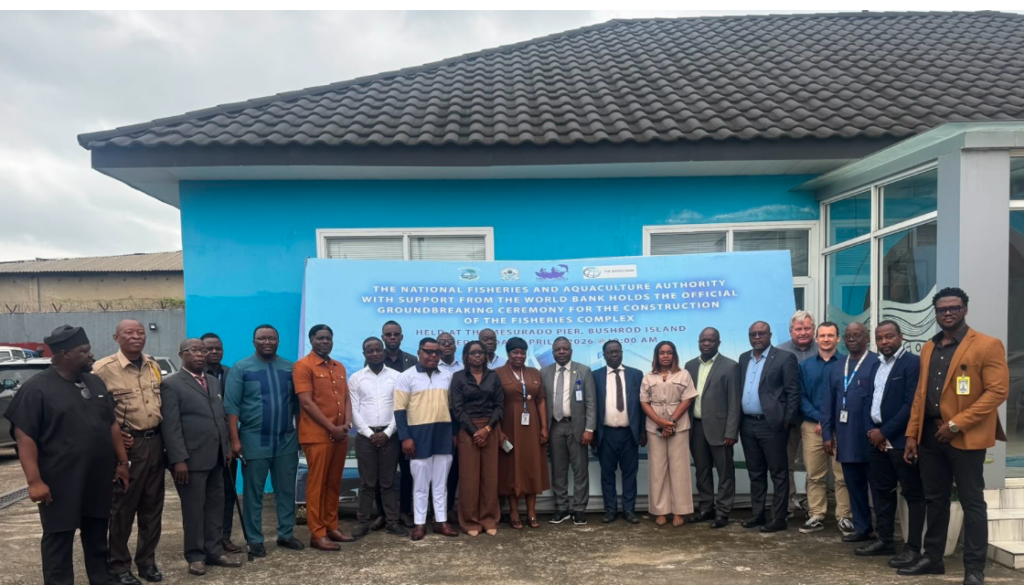
The technical workshop, held July 20–22 at the headquarters of the National Fisheries and Aquaculture Authority (NaFAA) on Bushrod Island, brought together senior representatives from Liberia’s security and maritime agencies alongside regional fisheries experts from the Fisheries Committee for the West Central Gulf of Guinea (FCWC).
Participating institutions included the Ministries of Justice and National Defense, the Liberia Immigration Service, National Port Authority, Liberia Revenue Authority, Liberia Maritime Authority, and members of Liberia’s National Working Group on fisheries monitoring and enforcement.
The workshop focused on strengthening Monitoring, Control and Surveillance (MCS) systems, implementing the Port State Measures Agreement (PSMA), improving information sharing among agencies, and reinforcing regional cooperation to curb illegal fishing—activities that cost West African nations billions of dollars annually in lost marine resources.
Opening the workshop, NaFAA Director General J. Cyrus Saygbe Sr. described the meeting as a strategic milestone in Liberia’s efforts to safeguard its fisheries resources and strengthen accountability in marine governance.
Saygbe said Liberia has demonstrated increasing commitment to transparency by subscribing to several international fisheries governance initiatives, including the Fisheries Transparency Initiative (FiTI), ratifying the Agreement on Biodiversity Beyond National Jurisdiction (BBNJ), and endorsing the Global Charter for Fisheries Transparency.
“We believe these commitments are the right thing to do—not only for our fisheries sector, but for our people and future generations,” Saygbe said.
He revealed that Liberia is also embarking on an ambitious modernization of its Fisheries Monitoring Center through the deployment of Artificial Intelligence (AI) and satellite-based technologies. The upgraded system, he said, will provide authorities with real-time maritime visibility by tracking both vessels equipped with Automatic Identification Systems and those attempting to evade detection.
Saygbe explained that the AI-powered platform will enable authorities to identify suspicious vessel behavior, prioritize enforcement operations through intelligence-based risk analysis, streamline investigations, improve regulatory oversight, protect government revenue, and recover millions of dollars currently lost through illegal fishing activities.
Experts note that AI-assisted maritime surveillance has increasingly become a critical tool globally, enabling governments to monitor vast ocean territories more efficiently while reducing operational costs.
FCWC Secretary-General Dr. Antoine Gaston Djihinto emphasized that no single country can effectively tackle illegal fishing without strong regional collaboration.
He said the workshop reviewed fishing activities across FCWC member states while presenting progress made in developing the Regional Record of Authorized Fishing Vessels (RRAFV)—a shared database designed to improve transparency and facilitate information exchange among fisheries administrations throughout West Africa.
“Our discussions focused on improving inspections both at sea and in port while identifying the information needed to strengthen intelligence sharing and joint enforcement operations,” Djihinto said.
He noted that years of regional cooperation have already resulted in stronger institutional capacity, improved information-sharing systems, enhanced operational coordination, and increased trust among member states.
Djihinto urged participating countries to build upon those gains by creating a more integrated regional fisheries governance framework capable of protecting marine biodiversity while strengthening food security across West Africa.
Key Outcomes Adopted
At the close of the workshop, participants adopted several practical measures aimed at strengthening Liberia’s fisheries enforcement architecture:
· An updated national MCS capacity assessment reflecting Liberia’s current operational and institutional needs
· Increased understanding among participating agencies regarding the role of the FCWC Regional Monitoring, Control and Surveillance Centre (RMCSC)
· Stronger coordination mechanisms between Liberia’s Fisheries Monitoring Center and the regional surveillance center
· Progress in refining Standard Operating Procedures governing inspections under the Port State Measures Agreement
· Development of a shared action plan outlining technical assistance, institutional support, and future implementation priorities
Officials also reviewed ongoing work surrounding Liberia’s inter-agency Memorandum of Understanding intended to improve cooperation among enforcement institutions responsible for fisheries inspections. The workshop further assessed technical procedures governing Advance Requests for Entry into Port and inspection protocols for foreign fishing vessels operating through the Freeport of Monrovia.
The workshop comes as West Africa remains one of the world’s regions hardest hit by illegal fishing. According to international fisheries organizations, IUU fishing contributes significantly to declining fish stocks, loss of government revenue, destruction of marine ecosystems, and growing food insecurity across coastal communities that depend heavily on fishing for their livelihoods.
Liberia, with approximately 580 kilometers of Atlantic coastline, possesses rich marine fisheries that support thousands of artisanal fishermen, fish processors, and coastal households while contributing to national food security and economic development. However, experts warn that illegal industrial fishing—particularly by foreign vessels operating without authorization or violating fishing regulations—continues to undermine sustainable fisheries management across the region.
Since 2015, the regional project “Fisheries Intelligence and MCS Support in West Africa,” funded by the Government of Norway and implemented by TMT in collaboration with Stop Illegal Fishing, has assisted FCWC member states in improving fisheries intelligence and enforcement. Since 2021, additional support has been provided through the programme “Supporting PSMA Implementation in Africa: Intelligence-led Fisheries Port Controls,” implemented by TMT alongside Global Fishing Watch.
The FCWC has also established the Regional Monitoring, Control and Surveillance Centre to facilitate cross-border cooperation, improve communication among member states, coordinate joint enforcement operations, support vessel monitoring, and maintain the Regional Record of Authorized Fishing Vessels.
Officials believe these initiatives will significantly strengthen Liberia’s ability to combat fisheries-related crimes while promoting sustainable management of marine resources for future generations. With stronger institutional coordination, improved surveillance technologies, and expanding regional partnerships, Liberia is positioning itself to play a more active role in protecting the Gulf of Guinea’s valuable fisheries resources from illegal exploitation.