

-Speaker Koon Accepts Deputy Speaker Fallah’s Apology, Calls for Unity and Reconciliation
By Jerromie S. Walters
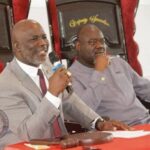
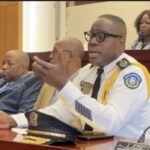
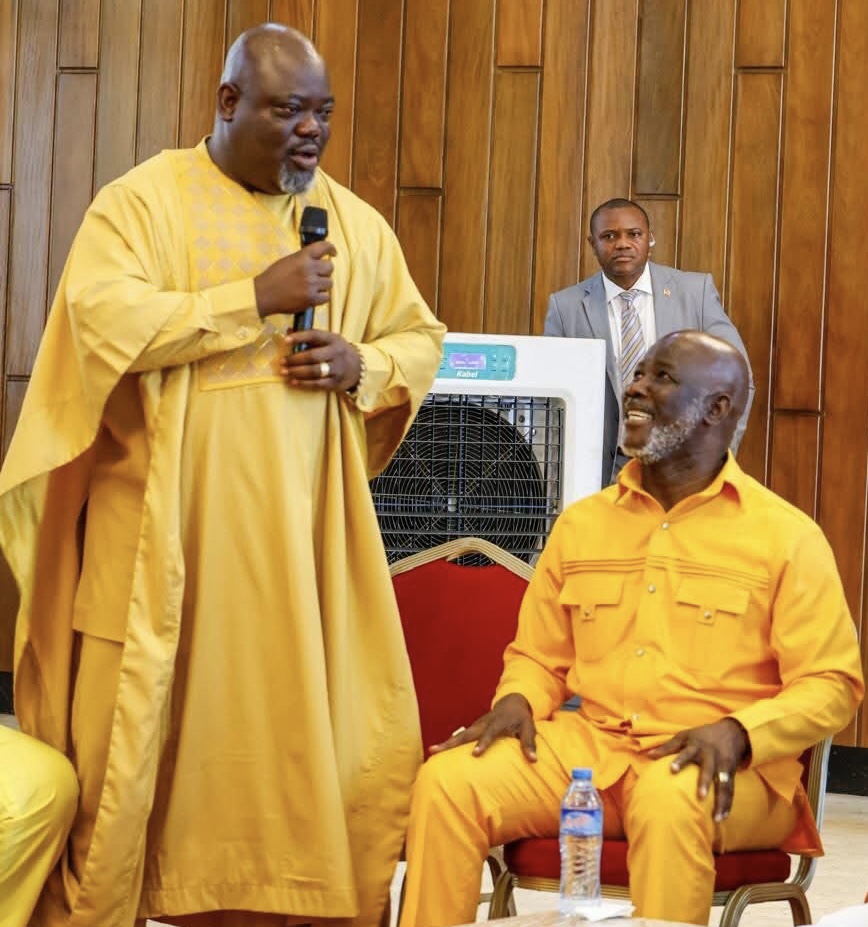
MONROVIA — Speaker Richard Nagbe Koon has formally accepted the public apology extended by Deputy Speaker Thomas P. Fallah, urging fellow lawmakers to set aside differences and focus on the nation’s pressing challenges.
Speaker Koon’s response, delivered via his official Facebook page on Wednesday, comes just one day after Deputy Speaker Fallah retracted controversial comments made during a weekend radio appearance that had threatened to further strain relations within Liberia’s legislative body.
“I accept his apology in good faith,” Speaker Koon declared in his statement, addressing what many had feared could escalate into another institutional crisis. “I acknowledge that in every democratic institution, disagreements and differences of opinion are inevitable. What defines us, however, is not the absence of disagreement but our willingness to demonstrate humility, mutual respect, and commitment to the institution we have sworn to serve.”
The conciliatory response effectively defused tensions that had been building since Deputy Speaker Fallah’s appearance on the Spoon Talk Show on Sunday, June 28, where he discussed Speaker Koon and aspects of his leadership in remarks that Grand Gedeh County Electoral District #3 Representative Jacob Debee argued had “the potential to undermine the image, credibility, and unity of the House of Representatives.”
Less than an hour before plenary was set to deliberate on Representative Debee’s formal communication requesting retraction and investigation, Deputy Speaker Fallah took to social media to issue an unqualified apology.
“I wish to state clearly that my comments on SpoonTalk regarding my friend, Speaker Richard Nagbe Koon, were made in good faith and without any intent to mislead, malign, or undermine,” Fallah stated. “I hereby retract them and offer my sincere apology.”
Fallah emphasized the longstanding personal relationship between the two leaders, noting that “Speaker Koon and I share a longstanding personal relationship that predates our current roles in the Honorable House. I value that relationship deeply and have no intention of doing anything to jeopardize the mutual respect and camaraderie between us.”
Meanwhile, during plenary discussion, Montserrado County District #7 Representative, Emmanuel Dahn, proffered a motion that the House’s leadership take seizure of the matter. The motion was endorsed by several lawmakers and considered the House’s decision. However, some lawmakers protested against the decision and called for an investigation as demonstrated in other cases.
The matter unfolded against a backdrop of heightened sensitivity among lawmakers regarding public comments involving House leadership. This sensitivity traces directly to the controversial April 17, 2026 expulsion of Representative Yekeh Kolubah of Montserrado County District #10, who was removed from the House by an overwhelming 49-to-73 vote following comments regarding the Guinea border crisis.
Many observers had speculated that Deputy Speaker Fallah—whose own legislative journey has been marked by controversy—could face similar consequences. For months, persistent reports have circulated about plans to remove Fallah from his post, though the House of Representatives has repeatedly dismissed these rumors and officially reaffirmed its confidence in his leadership.
Deputy Speaker Fallah, often referred to by legislative colleagues as the “Doyen of the Legislature” and one of Liberia’s longest-serving contemporary lawmakers, carries a complex political legacy that made this latest incident particularly charged.
His legislative path began in 2005 when he was elected to represent Montserrado County District #5, winning re-election in 2011 and 2017 before shifting constituencies in 2023 to successfully secure the Lofa County District #1 seat on the Coalition for Democratic Change (CDC) ticket.
However, Fallah played a highly controversial role in the political crisis that led to the resignation of former House Speaker J. Fonati Koffa in May 2025. Initially caught between party loyalty and legislative rebellion, Fallah’s eventual defection became the tipping point that paralyzed Koffa’s leadership. After initially denying involvement, Fallah officially broke away on October 31, 2024, aligning himself with the Majority Bloc and arguing it was his “constitutional duty to restore legislative functions.”
His actions triggered a severe constitutional crisis, with the Supreme Court ultimately ruling in December 2024 that the Deputy Speaker could not legally preside if the Speaker was present and available. Despite the High Court deeming the parallel sessions unconstitutional, Fallah’s refusal to return effectively denied Koffa a working quorum, eventually forcing the former Speaker’s resignation in May 2025.
Following his exit from the CDC—which he publicly described as a “blessing in disguise”—Fallah clarified that he remains a non-partisan legislator. He founded and serves as the vision bearer for the National Independent Movement for Boakai (NIMBO), a political movement that heavily backs President Joseph Boakai’s “ARREST Agenda.” President Boakai has publicly lauded Fallah as a dependable, action-oriented leader.
Speaker Koon’s statement made clear that he intends to rise above political divisions that have historically plagued the House. “My focus has never been on personalities,” Koon declared. “It has always been on strengthening and restoring public confidence in the House of Representatives, promoting transparency, improving accountability, and ensuring that the people’s business remains our highest priority.”
The Speaker emphasized his commitment to working with all colleagues “regardless of our differences of opinions,” adding that “the Liberian people expect collaboration, not conflict and solutions, not distractions.”
Koon encouraged all members to “remain focused on the enormous responsibilities before us,” noting that “our nation faces significant challenges that demand our collective wisdom, energy, and unity. This is not the time for division; it is the time for service.”
In a final reflection on leadership, the Speaker offered what many observers interpreted as a broader message about institutional maturity: “Matured leadership is not measured only by how we respond when praised, but by how we conduct ourselves when tested. In this regard, I have chosen reconciliation over resentment, institution over individual, and progress over politics.”