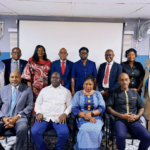
For far too many girls in Liberia, the classroom remains a fragile privilege rather than a guaranteed right. Poverty, early marriage, teenage pregnancy and entrenched gender norms conspire to push girls out of school before they can realize their potential. Against this grim backdrop, the Jewel Starfish Foundation (JSF) offered a welcome reminder last Friday, October 16, 2026, that change is possible when commitment meets action.
Marking the 2026 International Day of the Girl Child at C.H. Dewey High School in Tubmanburg, the foundation did more than pay lip service to the annual observance. Under the local theme “Inspiring Girls, Empowering Dreams,” JSF combined mentorship with tangible support—distributing educational and hygiene items to female students and announcing scholarship slots for deserving pupils. It is the kind of practical intervention that translates lofty rhetoric into real opportunity.
JSF Executive Director Pekay Nyepon deserves credit for acknowledging the foundation’s challenges while vowing to press on. That candor is refreshing in a sector where platitudes often substitute for progress. The school administration rightly described the gesture as timely, noting that such support helps dismantle the barriers that too often force girls out of the classroom.
Equally inspiring were the voices of women who have walked the path they now urge others to follow. Nancy Fayiah, a former sponsored student now studying at the African Methodist Episcopal University, offered herself as living proof that determination can triumph over circumstance. Sarah S. Wennah, who became the first female student council president in her school’s history, challenged girls to break barriers of their own. And Cecelia Freeman, a JSF beneficiary, delivered the day’s most resonant message: “Your background may shape your beginning, but it does not have to determine your future.”
Board Chairman Norwu G. Howard’s keynote, delivered through the Executive Director, framed the girl child not as “a burden to be carried, but a blessing to be nurtured.” His call for parents, teachers, policymakers and development partners to build a Liberia where no girl is left behind is one every leader in this country should heed.
The statistics underscore the urgency. According to UNICEF, roughly 650 million women alive today married before age 18, and more than 12 million girls still marry each year—one every three seconds—with sub-Saharan Africa bearing the highest prevalence at 31 percent. Yet the UN also notes that investments in education, legal reform and social protection have averted an estimated 68 million child marriages over the past 25 years. Progress is not only possible; it is proven.
In Liberia, where child marriage, teenage pregnancy and school dropout remain stubborn challenges, local initiatives like the Jewel Starfish Foundation are not merely charitable gestures—they are essential instruments of national development. When we educate a girl, as Howard observed, we strengthen families, transform communities and build stronger economies. The vision of former vice president Jewel Howard Taylor, whose foundation drives this work, demonstrates what homegrown philanthropy can achieve.
The task ahead is formidable, and one foundation cannot shoulder it alone. But in Tubmanburg last week, a group of girls heard—perhaps for the first time—that their dreams matter. That message, backed by scholarships and school supplies, is how a nation begins to keep its promise to its daughters.
Every girl matters. Every dream counts. Every future deserves a chance. Liberia would do well to remember it—not just on October 11, but every day of the year.