

-EPA Boss Declares at Unification Gathering
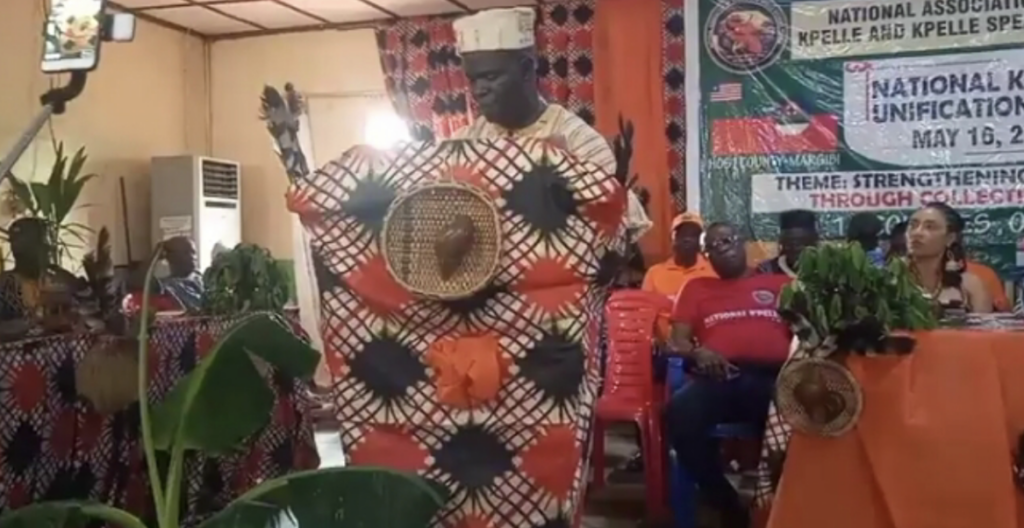
MONROVIA, Liberia — The Executive Director of the Environmental Protection Agency (EPA), Emmanuel Urey Yarkpawolo, has called on the Kpelle people to transform their ethnic unity into a driving force for national peace, development, and responsible leadership. “A united Kpelle people must become a stronger force for a united Liberia,” Yarkpawolo declared during a Kpelle Unification gathering.
He stressed that Kpelle unity should never target any other tribe or group. Instead, he said, it must promote cultural dignity, education, women and youth empowerment, peacebuilding, and national development. “We gather not merely to celebrate a tribe, but to reflect on a people, a culture, a language, a responsibility, and a future,” Yarkpawolo told the audience. “Kpelle unity must never be unity against any group. It must be unity for Liberia.”
He described unification as more than the absence of conflict, calling it “the presence of shared purpose.” Division, he warned, weakens families, communities, institutions, and the nation itself, while unity strengthens Liberia’s collective future. As Liberia’s largest ethnic group, representing more than 20 percent of the population, the Kpelle people carry a special responsibility to provide peaceful and disciplined leadership, Yarkpawolo argued.
“To be the largest is a burden of responsibility,” he stated. “The largest must also be peaceful, organized, generous, disciplined, and committed to the common good.” Yarkpawolo urged Kpelle communities across Bong, Margibi, Bomi, Gbarpolu, Lofa, and neighboring Guinea to rise above county and clan divisions. Although dialects and accents may differ, he stressed that Kpelle people share a common ancestry, memory, and cultural heritage.
“Our unity must rise above county boundaries,” he said. “The town may differ, the accent may vary, and the county may change, but the ancestry, memory, and spirit remain one.” He highlighted historical governance systems within Kpelle communities, noting that long before modern political institutions, chiefs and elders practiced mediation, accountability, diplomacy, and peaceful conflict resolution. Modern Kpelle unity, he said, should root itself in accountable leadership, service, humility, respect for women and elders, and protection of vulnerable communities.
Yarkpawolo also stressed the importance of preserving the Kpelle language, warning that cultural erosion threatens future generations when children can no longer speak the language of their ancestors.
“When a people lose their language, they lose a library of memory,” he said. He urged parents, schools, churches, mosques, and radio stations to promote Kpelle language learning and cultural education.
He praised ongoing efforts toward English-Kpelle machine translation and encouraged young people to embrace technology while preserving their cultural identity. The address placed strong emphasis on agriculture and economic empowerment. While the Kpelle people have historically fed Liberia through farming, Yarkpawolo noted that the future requires expansion into agribusiness, technology, processing, and climate-smart agriculture.
“The Kpelle people have fed Liberia with their hands,” he said. “Now we must help feed Liberia with our minds, institutions, businesses, technology, and leadership.” He also called for greater investment in education and proposed establishing a Kpelle Education and Scholarship Initiative to support rural students, girls’ education, vocational training, agriculture, medicine, environmental science, entrepreneurship, and public administration.
“No unification is complete if children remain uneducated and parents remain economically poor,” he asserted. Addressing women’s leadership, Yarkpawolo praised historical figures such as Chief Suah Koko and Chief Lango Lippaye. He argued that women have always played central roles in governance, farming, trade, family stability, and cultural preservation.
“If we unify the men and leave women behind, we have only organized half of the house,” he said.
The speech also focused heavily on youth development, discipline, and moral responsibility. Yarkpawolo urged young people to avoid drugs, violence, crime, and destructive behavior while embracing education, humility, and hard work.
“Identity without discipline is empty,” he warned. “Pride without education is dangerous.” Drawing from Kpelle oral tradition, Yarkpawolo used proverbs to stress the importance of reconciliation, leadership, and collective responsibility. He reminded the audience that unresolved grievances can quietly weaken communities if not addressed honestly.
On environmental governance, the Bong County native expressed concern over illegal mining, forest destruction, river pollution, and unsustainable land use practices across Liberia. “A people cannot claim love for their ancestors while destroying the land those ancestors protected for them,” he cautioned. He emphasized that development projects, including roads, mining, and agriculture, must protect communities, preserve water sources, follow environmental laws, and benefit local populations.
As part of his recommendations, Yarkpawolo proposed a “Kpelle Unification Compact” built around six commitments: unity beyond political and county divisions, preservation of the Kpelle language, responsible leadership, youth and women empowerment, environmental protection, and dedication to a united Liberia. In closing, Yarkpawolo urged the Kpelle people to ensure that unity extends beyond cultural celebrations and becomes a practical force for national transformation.
“Let this Unification Day continue after the drums stop and speeches end,” he said. “Let it live in how we raise our children, respect elders, treat women, guide youth, protect land, preserve language, build communities, and serve Liberia.” He concluded by calling for unity, peace, development, and national service, expressing hope that Liberia would grow stronger through the collective leadership and responsibility of the Kpelle people.