

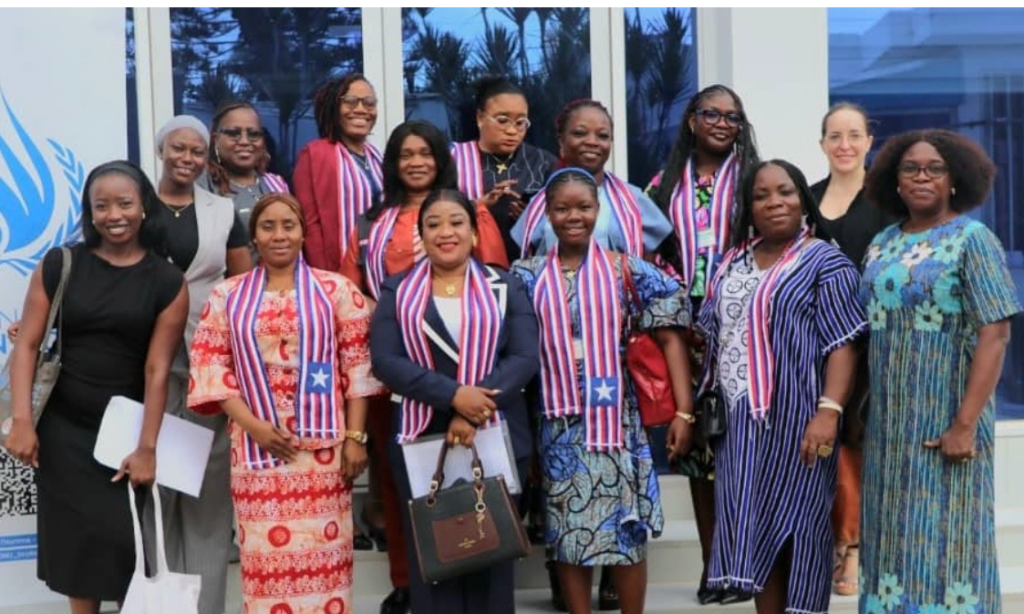
BANJUL, The Gambia — A Liberian delegation of women’s rights advocates, lawyers and government officials is in The Gambia this week to study how that country’s truth commission handled women’s participation — lessons the delegation hopes to apply to Liberia’s own stalled transitional justice process.
The five-day visit, which began September 27, is funded by the UN human rights office under the Strengthen Her Voice Project, backed by the UN Peacebuilding Fund’s Gender Promotion Initiative.
The delegation includes representatives from the Women NGOs Secretariat of Liberia, the Liberia National Bar Association, the Association of Female Lawyers of Liberia, the Ministry of Gender, Children and Social Protection, the Ministry of Justice, the Federation of Liberian Youth, the Female Journalists Association of Liberia and several community organizations.
Strengthening Women’s Role
The study visit seeks to provide Liberian stakeholders with an opportunity to learn from The Gambia’s transitional justice experience, including its approaches to truth-seeking, accountability, reparations, reconciliation, institutional engagement and survivor participation.
A central objective of the visit is to examine how women and women-led organizations can meaningfully participate in transitional justice processes—not simply as beneficiaries or participants, but as leaders, advocates, decision-makers and contributors to national dialogue and reform.
The delegation will engage with Gambian institutions, civil society organizations, women’s rights groups, legal actors and other stakeholders to exchange experiences and explore approaches that may offer relevant lessons for Liberia.
The visit will also provide space to examine the roles played by legal professionals, civil society, women’s organizations and national institutions in advancing transitional justice, documenting violations, supporting survivors, promoting accountability and contributing to reconciliation.
Drawing Lessons for Liberia
Liberia’s own transitional justice journey requires sustained engagement among government institutions, civil society, women’s rights organizations, legal practitioners, survivors and other affected communities.
The study visit therefore provides an important opportunity for the Liberian delegation to reflect on experiences from The Gambia and consider how applicable lessons can contribute to Liberia’s ongoing efforts to advance truth, justice, reparations, accountability, reconciliation and institutional healing.
While recognizing that each country has its own history and context, the delegation will explore practical lessons that can inform Liberia’s efforts to develop and implement transitional justice mechanisms that are inclusive, survivor-centered, gender-responsive and nationally owned.
WONGOSOL Executive Director Esther S. Davis Yango emphasized the importance of women’s leadership in transitional justice:
“Transitional justice cannot be meaningful if women are only present as participants. Women must have a meaningful voice in shaping the decisions, mechanisms and outcomes that determine how a nation confronts its past and builds its future. This study visit provides an important opportunity for Liberia to learn from The Gambia while reflecting on what lessons can be adapted to our own transitional justice journey.”
Building Solidarity
Beyond institutional learning, the study visit is intended to strengthen relationships between Liberian and Gambian women leaders, civil society organizations, legal practitioners and human rights actors.
The exchange provides an opportunity to identify common challenges, share experiences and strengthen networks around women’s leadership, transitional justice, human rights, peacebuilding and accountability.
The delegation recognizes that sustainable peace requires more than addressing the legacy of conflict. It requires creating systems and processes through which victims and survivors can seek truth and justice, women can exercise meaningful leadership, and communities can participate in rebuilding trust and strengthening social cohesion.
The Liberian delegation expresses appreciation to OHCHR and the United Nations Peacebuilding Fund Gender Promotion Initiative (GPI 2.0) for supporting the study visit and to the Gambian institutions, civil society organizations and other stakeholders facilitating the exchange.
The visit, taking place from September 27 to October 1, 2026, represents an important opportunity for Liberia and The Gambia to strengthen solidarity and shared learning around a common commitment to justice, accountability, reconciliation, women’s leadership and sustainable peace.