

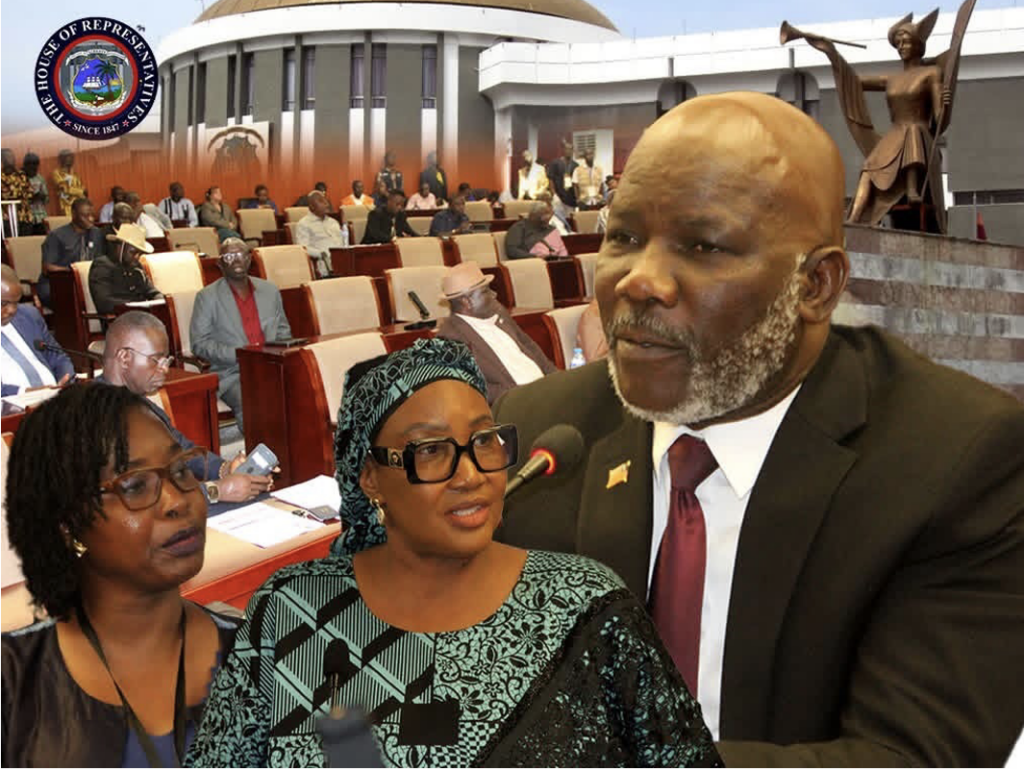
The Plenary of the House of Representatives has constituted a special committee to work with the Ministry of Health and the National Public Health Institute of Liberia (NPHIL) regarding the country’s preparedness for any possible outbreak of Ebola reportedly affecting the Democratic Republic of Congo and neighboring Central African nations.
The committee is chaired by the Chairperson on Health, Hon. Julie F. Wiah, and comprises representatives from the Committees on Ways, Means and Finance, Gender, and other designated resource persons including Hon. Musa Bility, Hon. Bernard Blue Benson, and Hon. Dixon Seboe. The committee has been mandated to report its findings and recommendations to Plenary on Thursday.
Plenary also expressed concern regarding procurement processes associated with Ebola preparedness activities and emphasized that all emergency health-related procurements during this period should be exempted from the Public Procurement and Concessions Commission (PPCC) procedures due to the emergency nature of the situation.
Appearing before Plenary, the Minister of Health, Dr. Louise M. Kpoto, assured lawmakers that Liberia currently has no suspected or confirmed case of Ebola.
Also speaking before Plenary, the Acting Interim Director General of the National Public Health Institute of Liberia (NPHIL), Dr. Sia Wata Camanor, highlighted Liberia’s Integrated Disease Surveillance System, which is jointly managed by NPHIL and the Ministry of Health.
According to Dr. Camanor, the surveillance system includes indicator-based surveillance, event-based surveillance, community-based surveillance, and rumor and media reporting mechanisms. She disclosed that Liberia currently has 989 health facilities nationwide across 98 health districts, each equipped with district surveillance officers.
She further noted that the country maintains a trained workforce of field epidemiologists, community health assistants, and surveillance officers responsible for early detection and reporting of disease outbreaks.
Dr. Camanor explained that Liberia also operates a rapid alert investigation mechanism and a laboratory surveillance system linked to field surveillance while actively monitoring regional epidemiological developments through the World Health Organization (WHO).
She informed lawmakers that Liberia is currently responding to three national outbreaks, including monkeypox, Lassa fever, and measles, while existing surveillance systems remain focused on early detection, notification, investigation, and response to suspected Ebola cases.
On preparedness, Dr. Camanor revealed that Liberia has developed an Ebola preparedness plan and conducted a coordinated national risk assessment using WHO guidelines. The assessment indicates that Liberia is 69 percent prepared across several response areas, though logistics management remains weak at 49 percent.
She added that Liberia is strengthening surveillance measures at airports, seaports, and ground crossings, including 49 official border crossing points, eight of which are designated under the International Health Regulations.
According to her, courthouse personnel and health officers stationed at ports of entry are being sensitized on Ebola case definitions and are conducting daily screenings, traveler risk assessments, and monitoring through health declaration forms.
Dr. Camanor further disclosed that Liberia is currently using a paper-based health declaration system but is in discussions with software developers to introduce a digital health declaration application similar to the COVID-19 digital platform. The digital system, once operational, will allow travelers to submit health information prior to boarding flights to strengthen preparedness and early detection efforts.
As of the previous morning, she said 16 travelers from affected regions were under screening and monitoring, including nine Ugandan nationals and three Liberians