


–EPA Warns of Hotter Dry Season as LEC Power Supply Remains Unstable
By Jerromie S. Walters & Vaye Abel Lepolu
MONROVIA, Liberia — Liberia confronts a dual crisis this dry season as the Environmental Protection Agency warns of unusually harsh heat conditions while the Liberia Electricity Corporation struggles to maintain power supply, leaving citizens sweltering through extended outages across the country.
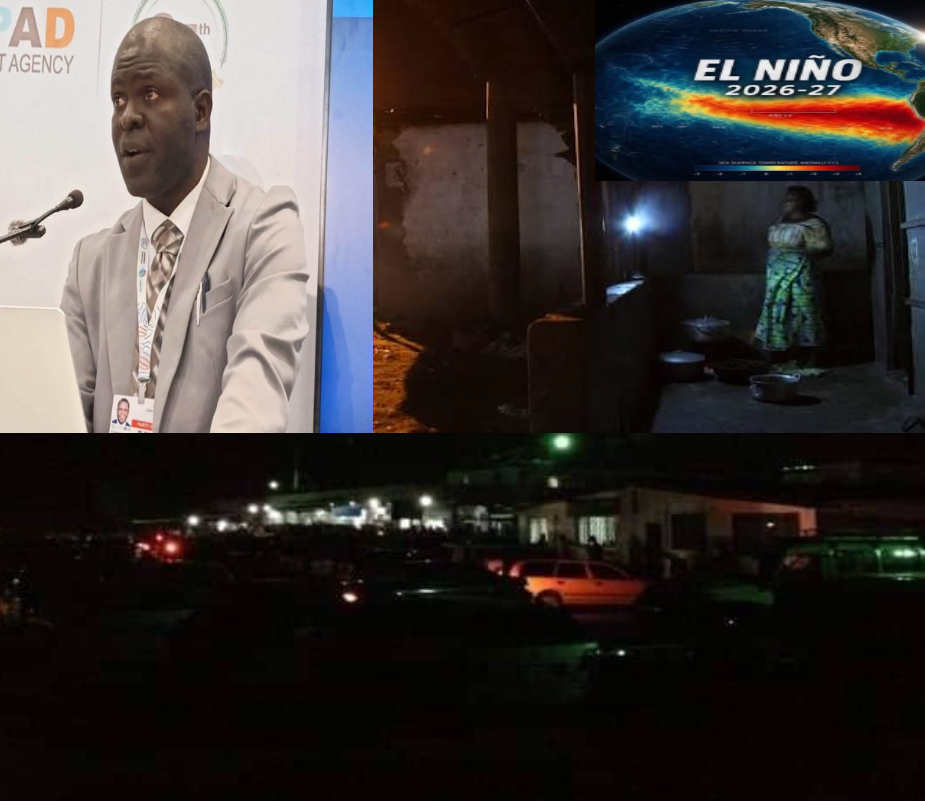
The EPA issued a comprehensive warning Thursday, disclosing that a strengthening El Niño weather phenomenon threatens to intensify temperatures, devastate agricultural production, strain water supplies, and disrupt livelihoods across multiple counties during the coming months.
The agency’s warning comes as Liberians endure prolonged power outages in their homes and business areas, compounding the misery of extreme heat—particularly during nighttime hours when temperatures remain uncomfortably high and ventilation becomes critical for comfort and health. In a press release issued in Monrovia, the EPA revealed that satellite observations have detected alarming signs of water stress affecting croplands in seven counties, with Sinoe County recording the highest level of concern among the affected regions.
According to the agency, approximately 70 percent of cropland in Sinoe County is showing signs of insufficient water, raising serious concerns about potential agricultural losses if dry conditions persist throughout the coming months. The EPA said the warning comes as El Niño conditions, which emerged in June 2026, have continued to strengthen significantly, with climate scientists projecting that the phenomenon could remain strong or very strong between January and March 2027.
The United States Climate Prediction Center, in an assessment released on November 12, 2026, estimated an approximately 80 percent chance that El Niño would remain strong or very strong during the first three months of 2027—a period that directly coincides with Liberia’s dry season. The EPA reported that satellite observations conducted between October 23 and November 1, 2026, detected signs of dryness affecting at least one-quarter of cropland in Sinoe, Grand Kru, Grand Gedeh, Grand Bassa, Rivercess, River Gee, and Grand Cape Mount counties.
The agency said the satellite findings would help agricultural authorities identify vulnerable farming communities for further investigation and possible intervention before conditions deteriorate further. However, the EPA cautioned that field assessments are necessary to determine which specific crops are experiencing stress and whether farmers have already suffered harvest losses that could impact national food security.
An Uncomfortable Way of Life:
Poor electricity supply during the dry season has become a familiar hardship for Liberians, but many citizens believe the current situation is more severe than previous years, with outages lasting longer and occurring more frequently.
On Monday, November 23, 2026, the Management of the Liberia Electricity Corporation informed the general public that CIE had notified the corporation of a major emergency shutdown affecting regional supply, resulting from a significant technical fault on the transmission line supplying regional electricity.
According to CIE, its technical teams are currently working to resolve the fault and restore normal power supply to affected areas as quickly as possible. As a result of the emergency shutdown, communities in Monrovia and its surrounding areas will experience extended power outages during this period, according to LEC officials.
LEC said it remains actively engaged with CIE technical teams to monitor developments and provide timely updates on the restoration process to keep customers informed about progress. In the interim, LEC disclosed that it is utilizing its available domestic generation capacity to minimize the impact of the interruption and maintain electricity supply to customers where possible.
However, the public continues to complain about lower supply than anticipated, with many residents expressing frustration over the inconsistent power that forces them to endure oppressive heat without fans or air conditioning. LEC serves over 306,000 connected customers—providing access to more than one million people—against a national demand of roughly 128 to 140 megawatts, highlighting the significant gap between supply and demand.
The corporation’s power supply relies on a mix of domestic generation and regional imports, making it vulnerable to disruptions in either source. The Mount Coffee Hydropower Plant serves as LEC’s primary generation source, capable of producing up to 88 megawatts when the St. Paul River is full during the rainy season.
Heavy fuel oil and thermal facilities—including units on Bushrod Island—provide backup capacity of around 38 megawatts installed to help stabilize the grid during periods of high demand. To bridge domestic shortfalls, LEC imports electricity from neighboring countries through the West African Power Pool and the CLSG interconnection line, though these imports remain subject to regional availability and transmission reliability.
Because Mount Coffee lacks a large storage reservoir and relies on daily river flow, lower water levels in the dry season frequently lead to power deficits and load shedding across the country. Major initiatives are underway to address supply gaps and grid losses, with the government announcing that President Joseph Nyuma Boakai, Sr., has accepted a US$5.7 billion infrastructure plan from the Interministerial Concession Committee.
The agreement between the Government of Liberia and Bea Mountain Mining Corporation, known as the Master Infrastructure Development Agreement, is designed to accelerate industrialization and unlock large-scale job creation, according to a statement from the Executive Mansion. The plan provides for 270 megawatts of new generating capacity through four new power plants, including a 100-megawatt hydropower plant on the Via River and two hydropower plants on the St. Paul River with a combined capacity of 110 megawatts.
A 60-megawatt biomass plant would further diversify the energy mix, while three planned reservoirs would provide a combined water storage capacity of 10 billion cubic meters to support hydropower generation throughout the year. Hydropower would account for 210 megawatts of the planned capacity, with the Via River plant and the SP3 plant on the St. Paul River each carrying 100 megawatts of installed capacity.
The SP4 plant on the St. Paul River would add 10 megawatts, while the biomass plant near the Via dam would diversify the electricity sources feeding the national grid. The agreement also focuses on delivering electricity to communities through an extensive transmission network that would connect power plants to population centers.
A 150-kilometer main transmission line would connect the power plants to the Mount Coffee substation, while another 150-kilometer line would link the Via plant to Nimba County.
A 5-kilometer line would serve Bong County, with the Nimba and Bong projects each including a substation to ensure reliable power distribution. The agreement allocates US$230 million to reinforce the national grid through upgrades to substations, transformers, and transmission infrastructure across the country. Moreover, the agreement is backed by the 146-kilometer Liberia Development Road, its flagship highway corridor linking the power plants to key facility centers.
A further US$1 billion is earmarked for additional road networks that will crisscross Liberia and connect all regions of the country, supporting economic development and access to energy infrastructure. El Niño is a naturally occurring climate phenomenon caused by the unusual warming of surface waters in the central and eastern Pacific Ocean, which influences rainfall and weather patterns in different parts of the world. El Niño existed long before industrial activities contributed significantly to global warming, but human-induced climate change has increased temperatures in the atmosphere and oceans.
Additional heat released during El Niño events can intensify existing warming conditions and make extremely hot periods more dangerous for vulnerable populations, particularly the elderly, children, and those with pre-existing health conditions. Amid these challenges, the EPA has advised residents to drink safe water regularly to stay hydrated during the hot weather conditions. The agency also encouraged residents to rest in shaded areas during peak heat hours and to carry out demanding outdoor activities during cooler hours of the day.
The EPA further encouraged families and communities to check on elderly people and vulnerable neighbors, particularly those living alone, who may be at greater risk during extreme heat events. The agency’s recommendations come as Liberia prepares for what meteorologists predict could be one of the hottest dry seasons in recent memory, with temperatures potentially exceeding normal ranges.