


BY: SHALLON S. GONLOR
shallonsgonlor@gmail.com
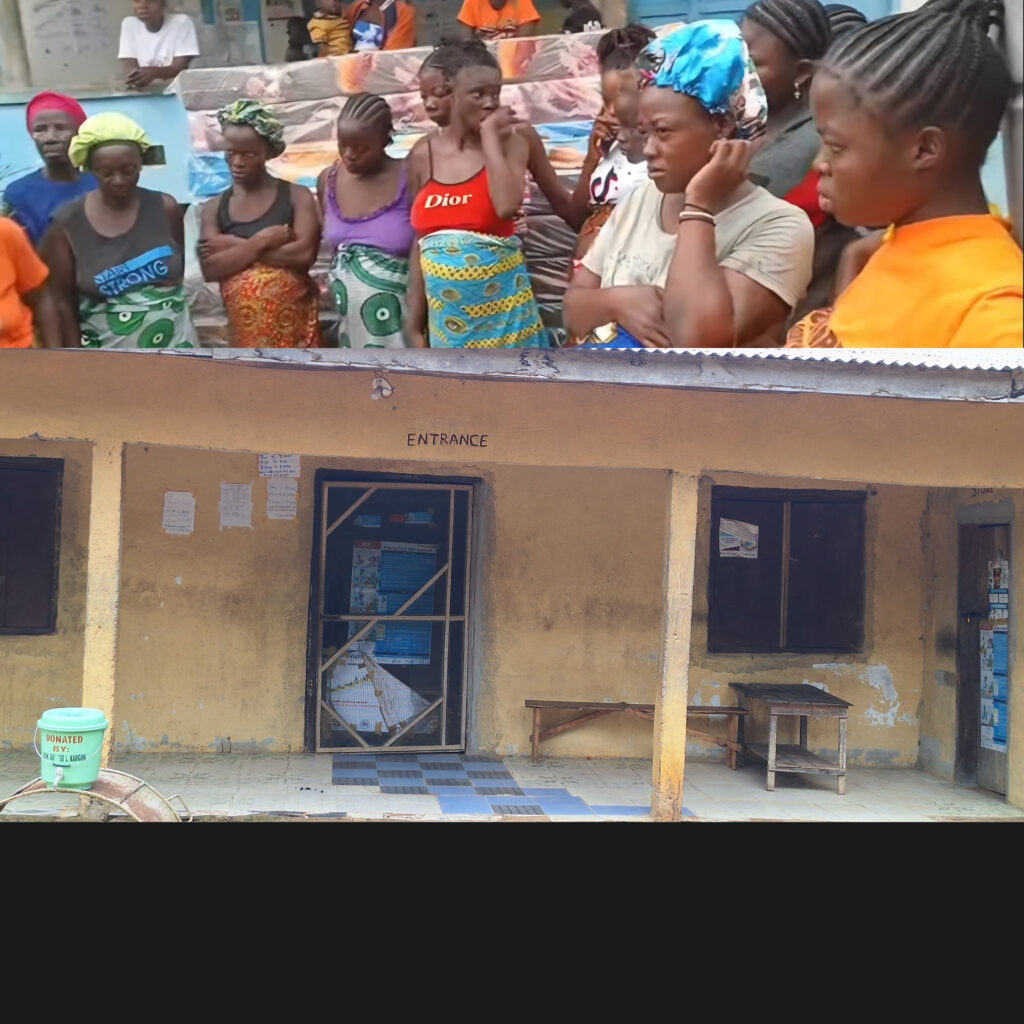
NIMBA COUNTY, Liberia — The shutdown of Weato Memorial Health Center in Bayleglay Town and Paye Dahn Clinic in Gbor Devon Town has left thousands of residents in Nimba County Electoral District #4 with severely limited access to basic healthcare. Pregnant women, children, young people, and the elderly now face arduous journeys of two to three hours to reach the nearest operational facilities, often along poor roads with scarce transportation.
The two privately run clinics, which once provided essential primary care to surrounding rural communities, were closed after health authorities determined they no longer met national standards. Their absence has placed enormous strain on the remaining two government-run health centers, which must now serve a large, geographically dispersed population.
Residents warn that the long travel times pose life-threatening risks, especially for women in labor, young children with acute illnesses, and elderly patients requiring emergency care. In a region where road conditions deteriorate rapidly during rains and vehicles are few, even routine check-ups have become a logistical ordeal.
In an interview with WOMENVOICES NEWS on Saturday in Bayleglay Town, District Health Officer L. Fester Yormie of the Zoe-Geh Health District confirmed the closures. He explained that the facilities were originally established by community members to supplement government services in underserved areas. However, both clinics lacked adequate trained manpower, essential equipment, medicines, and other resources required to comply with national healthcare regulations.
“Closing down a health center erected by the people is a serious problem,” Yormie said, acknowledging the painful trade-off between regulatory compliance and access. He noted that District #4 previously had four functional health centers—two public and two private—under the Zoe-Geh Health District, which oversees eight facilities overall. With the two private clinics shuttered, the burden on government facilities has intensified.
Yormie stressed that while health authorities have a duty to enforce quality standards, the closures expose a deeper policy gap: rural communities cannot be left with no viable alternatives when local clinics are shut down.
Nimba County District #4 Representative Ernest M. Manseah, speaking during his Second Legislative Annual Report on Saturday in Bayleglay Town, acknowledged the crisis and urged citizens and prominent district natives to leverage their networks to engage development partners and donors—both domestic and international—to bolster the district’s health sector.
Manseah reported that approximately 11 health facilities currently operate across the district, though one of three private clinics has been closed by the county health team. He noted that several health-related interventions are ongoing, including the construction of new health centers and the provision of medical equipment and supplies. Additionally, eight community development projects are under implementation, with some nearing completion and others still in progress.
Community leaders and residents are now calling on the government to rehabilitate, upgrade, or reopen the closed clinics in compliance with national standards. They urge the provision of essential medical equipment, trained staff, medicines, and logistical support to restore services safely.
For the people of Bayleglay, Gbor Devon, and nearby villages, the immediate concern is stark: access to basic care should not require a dangerous, hours-long journey. The District #4 crisis underscores systemic challenges plaguing rural Liberia—insufficient infrastructure, transport deficits, and chronic shortages of medical resources.
As Liberia strives to expand healthcare coverage, local authorities and residents insist that greater investment in rural health infrastructure and sustained support for community-based initiatives are non-negotiable. Ensuring that every citizen can reach essential care within a reasonable distance—especially in emergencies—remains a fundamental step toward saving lives and improving health outcomes for the nation’s most vulnerable populations.


