

By Jessica Cox
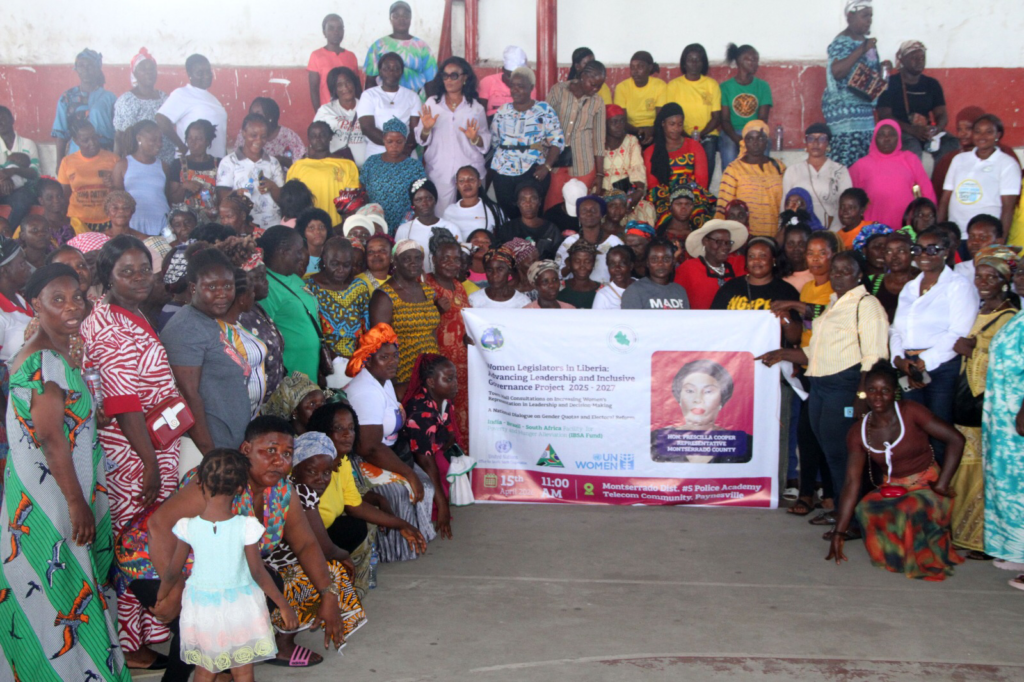
Montserrado County Electoral District #5 Representative, Hon. Priscilla A. Cooper, on Wednesday, April 15, 2026, convened a major community consultation and town hall meeting at the Police Academy in the Telecom Community, bringing together more than 300 women from 18 communities across the district.
The engagement forms part of a nationwide outreach under the Women Legislative Caucus of Liberia project titled “Women Legislators in Liberia Promoting Voice, Leadership, and Gender-Responsive Governance for Sustainable Development” (2025–2027), implemented with support from the IBSA Fund and UN Women.
With a budget of US$1 million over 18 months, the project aims to strengthen WLCL’s institutional capacity, promote gender-responsive lawmaking, and enhance women’s leadership at both national and community levels.
During the interactive session, Rep. Cooper provided a comprehensive overview of the IBSA-supported initiative, outlining its objectives, expected benefits, and opportunities for women’s empowerment. She also educated participants on key electoral reform issues, including temporary special measures such as mandatory gender quotas aimed at increasing women’s representation in leadership.
Liberia, she noted, is at a critical stage in its ongoing electoral legal reform process. Despite years of advocacy—including the 2014 amendment to the Elections Law encouraging political parties to include at least 30 percent women on candidate lists—women’s representation in the Legislature has remained stagnant at around 11 percent due to the absence of enforceable mechanisms.
Although a mandatory gender quota bill was passed by the Legislature in 2022, it did not receive Executive approval.
As part of the broader initiative, WLCL is conducting a series of community consultations and town hall engagements across eight counties and eleven locations nationwide from April 12 to 25, 2026.
These engagements are intended to bridge the gap between national policy discussions and grassroots participation, ensuring that communities are actively involved in shaping reforms.
At the forum, women actively contributed to discussions, highlighting their growing leadership roles within their communities while calling for greater unity, mutual support, and sustained civic education through regular town hall meetings. Participants also raised pressing social and legal concerns, including child support issues and the need for stronger legislation on paternal responsibility.
The women expressed appreciation to Rep. Cooper for the initiative and encouraged her to maintain consistent engagement to further amplify their voices in governance and decision-making processes.
The event brought together local authorities, civil society organizations, and community leaders, all of whom commended the initiative for promoting inclusive dialogue and strengthening grassroots participation in governance.
In her closing remarks, Rep. Cooper reaffirmed her commitment to working closely with her constituents to address their concerns and advance women’s empowerment. She also acknowledged the critical support of international partners, noting that Liberia’s participation in global engagements on women’s empowerment—including discussions at the United Nations—has helped secure funding, training, and development opportunities for women.
“Women are the backbone of our communities and true generational builders,” she said. “We must continue to build trust, promote inclusion, and ensure that every woman has the opportunity to lead and contribute to national development.” The consultations come at a pivotal moment as Liberia intensifies efforts toward electoral reform. WLCL’s ongoing engagements are expected to play a key role in building broad-based public support for gender equality measures and strengthening women’s participation in governance.
The India–Brazil–South Africa Facility for Poverty and Hunger Alleviation (IBSA Fund) is a South-South cooperation mechanism established by India, Brazil, and South Africa to support development projects addressing poverty and hunger in developing countries. The Fund is managed by the United Nations Office for South-South Cooperation, with resources for this project channeled through UN Women.