By Jessica Cox
MONROVIA – Liberia’s efforts to expand rural electricity access and promote cleaner energy alternatives are gaining international attention, as the Rural and Renewable Energy Agency (RREA) pushes for increased climate financing, private-sector investment, and regional partnerships to accelerate the country’s energy transition.
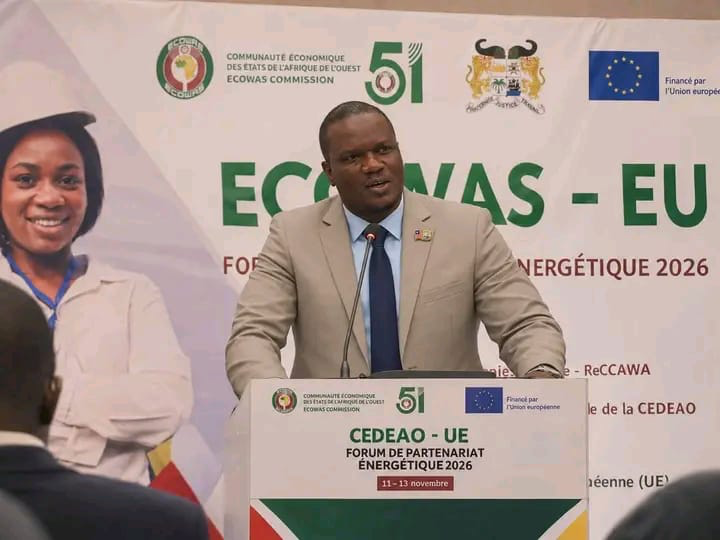
The agency is advancing this agenda on two international fronts, with its representatives highlighting Liberia’s renewable energy progress at the 31st United Nations Climate Change Conference (COP31) in Antalya, Türkiye, while engaging regional energy stakeholders on clean cooking and sustainable energy development at the 2026 ECOWAS–EU Energy Partnership Forum in Cotonou, Benin.
At COP31, where Liberia officially opened its National Pavilion, RREA’s Deputy Executive Director for Programs, Stephen V. Potter, called for stronger international partnerships and increased climate financing to expand access to affordable and reliable electricity, particularly in rural communities.
Potter emphasized that renewable energy investment goes beyond electricity provision, noting its potential to create jobs, improve livelihoods, reduce dependence on fossil fuels, and address the effects of climate change.
He cited the recent dedication of the Liberia Utilities Solar Energy (LUSE) Project’s hybrid power facility in Greenville, Sinoe County, as an example of the country’s progress in renewable energy development.
The facility comprises an 850-kilowatt-peak solar photovoltaic plant, a 1.2-megawatt-hour battery energy storage system, and an 850-kilovolt-ampere backup generator.
Supported by the European Union and the Government of Liberia, the project is expected to improve electricity reliability in Greenville, a southeastern city that has experienced decades of limited electricity access.
However, Potter stressed that expanding such interventions across the country will require greater access to climate financing, stronger international cooperation, and increased private-sector participation.
Meanwhile, in Cotonou, RREA is extending its clean energy advocacy beyond electricity generation, with Social Safeguards Specialist Abraham Bility representing Liberia at the 2026 ECOWAS–EU Energy Partnership Forum.
Bility, who also serves as Liberia’s National Focal Point for Clean Cooking, is joining regional energy experts, policymakers, and development partners to exchange experiences and explore opportunities for cooperation in expanding access to affordable, safe, and sustainable cooking technologies.
His participation places clean cooking alongside renewable electricity as another important component of Liberia’s broader energy transition, particularly in efforts to promote healthier and more sustainable energy practices.
The discussions also provide an opportunity for Liberia to share its experiences, draw lessons from other West African countries, and explore partnerships that could support the expansion of clean cooking solutions.
The two engagements underscore RREA’s broader approach to energy development, combining renewable electricity expansion with cleaner cooking initiatives while seeking the international resources and partnerships needed to scale up both sectors.
For Liberia, the challenge remains translating international commitments and discussions into tangible investments capable of bringing reliable electricity to underserved communities and expanding access to cleaner energy alternatives.