

–After US$63.6M Loss
By Jessica Cox
Monrovia – Liberia’s state-owned enterprises (SOEs) recorded a net fiscal drain of more than US$63.6 million between 2020 and 2024, prompting the newly established State-Owned Enterprises Authority of Liberia (SEAL) to move toward stronger oversight, financial accountability and reforms aimed at reducing the country’s growing dependence on government subsidies to sustain public enterprises.
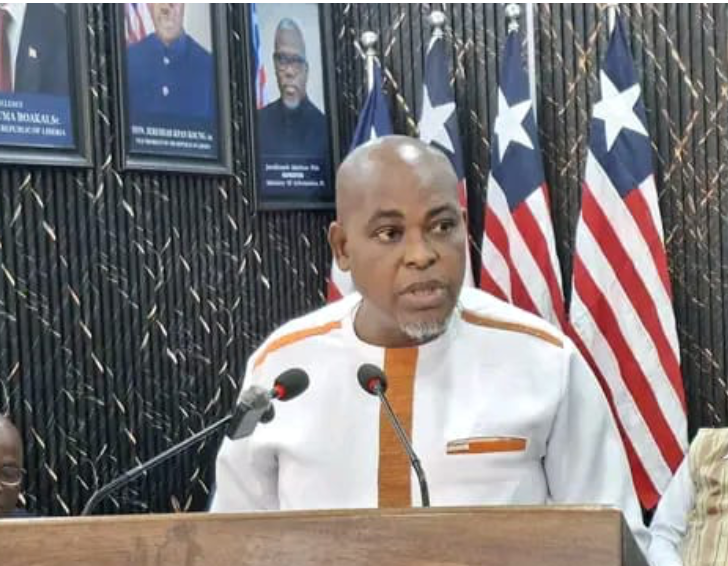
The disclosure was made Thursday, November 19, 2026, by SEAL Director General, Hon. JSB Theodore Momo, Jr., during the Ministry of Information’s regular press briefing in Monrovia, where he outlined the financial challenges confronting Liberia’s state-owned enterprises and the reforms expected to address years of weak institutional supervision.
According to Momo, an analysis of 20 state-owned enterprises over the five-year period showed that the government transferred more than US$90.5 million from the national budget to sustain chronically loss-making enterprises, while the same entities generated only approximately US$26.9 million in cumulative net operating surplus.
He said the resulting fiscal drain exceeded US$63.6 million, excluding an additional US$116.5 million in accumulated net deficits recorded by the enterprises.
Momo further disclosed that only about 35 percent of Liberia’s state-owned enterprises currently operate profitably without government subsidies, underscoring what he described as the urgent need to strengthen accountability and improve the management of public assets.
The SEAL Director General said the financial situation reflects years of institutional weaknesses under the former Bureau of State Enterprises (BSE), which, despite being responsible for overseeing public enterprises, lacked sufficient legal authority, institutional capacity and effective enforcement mechanisms.
He explained that the Bureau, established under Interim National Assembly Decree No. 8 in 1985, operated with an outdated legal framework that allowed it to request information and provide recommendations but offered limited powers to compel compliance from state-owned enterprises.
As a result, the Bureau’s oversight covered only about 20 of Liberia’s 46 state-owned enterprises, leaving 26 entities with minimal central supervision.
Momo also revealed that only approximately 13 percent of the enterprises submitted compliant quarterly financial reports, while reporting systems remained largely manual and paper-based, making it difficult for authorities to monitor their financial performance and identify problems early.
Beyond financial losses, he identified persistent failures by some state-owned enterprises to remit personal income taxes deducted from employees’ salaries to the Liberia Revenue Authority (LRA), as well as social security contributions owed to the National Social Security and Welfare Corporation (NASSCORP).
He warned that such failures expose workers to long-term pension risks, despite the fact that the required deductions have already been made from their salaries.
Against this background, Momo said the transformation of the Bureau into the State-Owned Enterprises Authority of Liberia represents a major shift in the country’s approach to managing public enterprises.
He emphasized that the transition was not merely a change of institutional name but a legal and structural reform intended to give the oversight institution greater independence and authority.
The SEAL was established through an Act of the National Legislature, approved by President Joseph Nyuma Boakai, Sr., on February 6, 2026, and published by the Ministry of Foreign Affairs on February 17, 2026.
The legislation followed consultations involving the Governance Commission, Law Reform Commission, relevant government institutions and other stakeholders, before receiving legislative approval.
Momo said the new legal framework provides a stronger foundation for requiring state-owned enterprises to submit financial reports, comply with governance standards and account for their operations.
He noted that the Authority’s mandate is particularly significant given the size of Liberia’s public enterprise sector, which comprises 46 entities operating across energy, water and sanitation, maritime and ports, telecommunications, agriculture and forestry, insurance and gaming, health and welfare, and education.
Collectively, the enterprises employ more than 10,000 Liberians and contribute over US$30 million annually to national revenue.
However, he acknowledged that the establishment of SEAL alone would not resolve the challenges confronting the sector, stressing that additional legal, administrative and financial reforms are necessary to achieve sustainable improvements.
Under its 2025–2029 Strategic Plan, the Authority intends to introduce a Corporate Governance Code and State Ownership Policy to clarify the responsibilities of government, boards of directors and enterprise management.
It also plans to establish a Performance Management and Compliance System that will introduce performance contracts for state-owned enterprises, with incentives for institutions that meet their targets and escalating consequences for those that fail to comply.
Another major component of the reform agenda is the proposed State Enterprises Information System (SEIS), a web-based platform expected to replace the existing paper-based reporting arrangements with a centralized system for monitoring enterprise finances, payrolls, assets and debts.
The platform is also expected to include a public performance dashboard through which citizens can access information on the performance of state-owned enterprises.
Additionally, SEAL plans to establish an SOE Fiscal Risk Management function and introduce an Annual Fiscal Risk Statement to strengthen the integration of public enterprise liabilities into the national budget process.
The Authority has also set measurable targets for the end of its strategic plan period, including increasing the proportion of enterprises operating profitably without subsidies from 35 percent to 65 percent, raising total SOE contributions to the national budget by 50 percent and reducing government subsidies and bailouts by 20 percent.
It further aims to increase compliant quarterly financial reporting from 13 percent to 100 percent and achieve full tax payment compliance among state-owned enterprises by 2029.
To implement these reforms, Momo disclosed that SEAL’s institutional strengthening plan provides for the recruitment of 159 additional professionals by 2028, alongside a structured capacity-building programme.
He said the Authority’s five-year business case estimates an investment requirement of approximately US$20.35 million, to be financed through government allocations, development partner support and, over time, a proposed 0.25 percent levy on SOE revenues.
Momo argued that the proposed investment would be justified by the potential savings from preventing future financial losses and government bailouts of underperforming enterprises.
He also stressed that SEAL would not operate beyond public scrutiny, pledging that the Authority would sign an annual performance contract with the President, submit an Annual State of the SOE Sector Report to the Legislature and publish its own performance results.
The Director General called on boards and management teams of state-owned enterprises to improve financial reporting, remit statutory deductions and adopt responsible corporate governance practices.
He also urged the Legislature, government institutions, development partners, civil society and the media to support the reform process and hold public enterprises accountable.
For ordinary Liberians, Momo said, the success of the reforms should ultimately be measured by improved public services, including more reliable electricity, safe water, efficient ports and better-performing public institutions.
He maintained that reducing unnecessary subsidies and financial waste would allow government resources to be redirected toward critical national priorities, including health, education, agriculture, roads and sanitation under the ARREST Agenda for Inclusive Development.
While SEAL’s establishment marks a significant institutional change, its broader test will be whether the new Authority can translate its expanded legal mandate into measurable improvements in enterprise performance, protect public resources and reduce the financial burden placed on taxpayers. “The era of weak oversight is behind us. The era of accountability has begun,” Momo declared.