

By: Sampat JMB Kpakimah
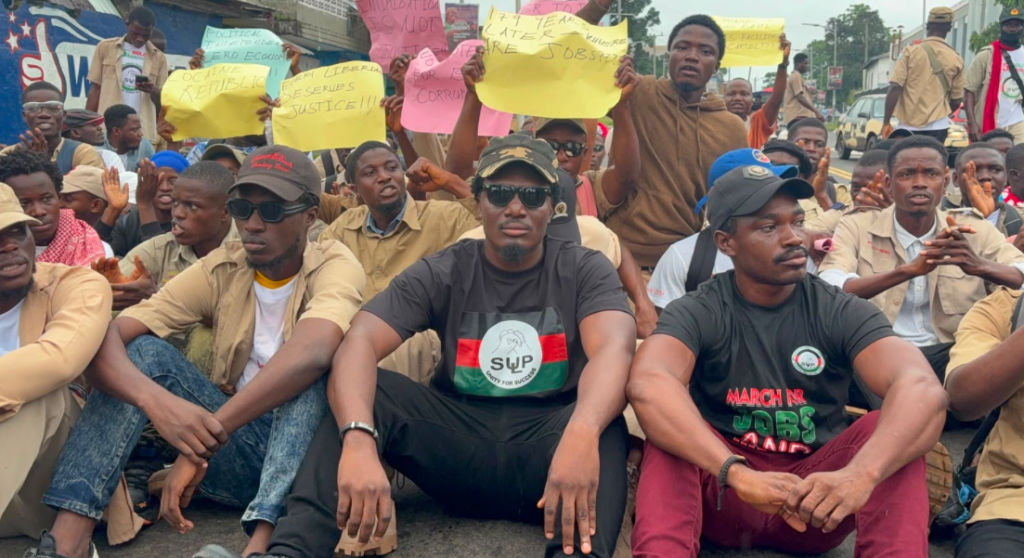
While Liberia marked its 179th Independence Day with official ceremonies on Monday, a student movement took to the streets of Monrovia to reject the celebrations—condemning what they called “selective justice” and demanding the immediate release of 12 recently convicted jurors.
The protest, organized by the Student Unification Party (SUP), unfolded as the nation observed its independence anniversary. Carrying placards and chanting anti-government slogans, demonstrators argued that there is little reason to celebrate while thousands of young Liberians remain unemployed, illicit drugs devastate communities, and justice is applied unevenly.
“Independence has yet to deliver meaningful change for ordinary Liberians,” SUP Chairman Odecious Mulbah told reporters. He urged the government to prioritize job creation, strengthen the education system, expand economic opportunities, and intensify the fight against drugs—instead of focusing on ceremonial events.
At the heart of the protest was the SUP’s demand for the release of 12 jurors recently convicted in connection with the Samuel Tweh case. The student group accused state authorities of practicing “selective justice” and expressed serious concerns about the fairness of the legal process.
“The rule of law must apply equally to all Liberians—regardless of political affiliation, social status, or position,” Mulbah emphasized. He warned that public confidence in the justice system would continue to erode if citizens perceive that justice is applied selectively.
The demonstration, held under the theme “No job, no justice,” was the latest in a series of protests organized by SUP. The group claims that their earlier “March for Jobs and Justice” on April 14, 2026—which drew hundreds of students and youth demanding employment and economic reforms—ended in clashes with police, who used tear gas and arrested several participants. According to SUP, that protest yielded no tangible results due to the threat of police intervention.
While the Independence Day protest unfolded, many Liberians elsewhere were in a jubilant mood. At Ashmun Street, Monrovia’s bustling commercial hub, some residents openly praised SUP for its boldness. Several expressed deep frustration with the government’s handling of the drug epidemic, with one woman warning that if authorities fail to act, “everyone will be involved in drug trafficking.”
Others voiced broader disillusionment, arguing that the current administration has failed to serve the interests of the Liberian people—and some even claimed it is worse than its predecessor.