

–As OWECC-L Boycotts Legislature Hearing
By Jerromie S. Walters & Jessica Cox
MONROVIA, Liberia – The establishment of Liberia’s War and Economic Crimes Court faces a fresh setback after the Office for the Establishment of War and Economic Crimes Court in Liberia (OWECC-L) boycotted a Senate public hearing scheduled for November 25, 2026. The decision has casted doubt over the timeline and legitimacy of efforts to create the War and Economic Crimes Court (WECC) and the National Anti-Corruption Court (NACC).
OWECC-L Executive Director Dr. Cllr. Jallah Barbu announced the decision, citing concerns that the hearing’s format and scope would limit participation by a wider cross-section of Liberians in a process with far-reaching national implications. In a statement issued on November 23, the Office argued that establishing the two courts requires an inclusive, transparent and broadly consultative process that allows citizens and relevant stakeholders to contribute meaningfully.
Barbu said discussions on the proposed courts must accommodate the perspectives of victims and survivors of Liberia’s civil conflicts, civil society organizations, religious institutions, traditional leaders, women’s and youth groups, professional associations, members of the Liberian diaspora and ordinary citizens. According to OWECC-L, the courts are not an undertaking intended to serve the interests of any particular institution or group.
Rather, the Office described them as a national effort to address longstanding concerns about impunity, strengthen accountability, combat corruption, uphold the rule of law and contribute to sustainable peace and national reconciliation. The Office argued that a process of such national significance must provide sufficient opportunities for interested individuals and institutions to express their views, concerns and recommendations before decisions are made.
OWECC-L stressed that its decision not to attend the November 25 hearing should not be interpreted as a rejection of legislative engagement or an attempt to undermine the constitutional mandate of the Liberian Senate.
The Office reaffirmed its respect for the Senate’s legislative authority and responsibility to consider the proposed legislation, while expressing its continued willingness to engage constructively with the Legislature and other relevant stakeholders.
OWECC-L encouraged the Senate to consider a more expansive public consultation process that would ensure meaningful participation from communities and stakeholders across the country. The Office further stressed that the success and legitimacy of the proposed courts would depend not only on their eventual passage into law but also on the inclusiveness, transparency and credibility of the process leading to their establishment.
OWECC-L reiterated its commitment to the creation of both the War and Economic Crimes Court and the National Anti-Corruption Court, describing them as essential national institutions for advancing justice, accountability and Liberia’s future.
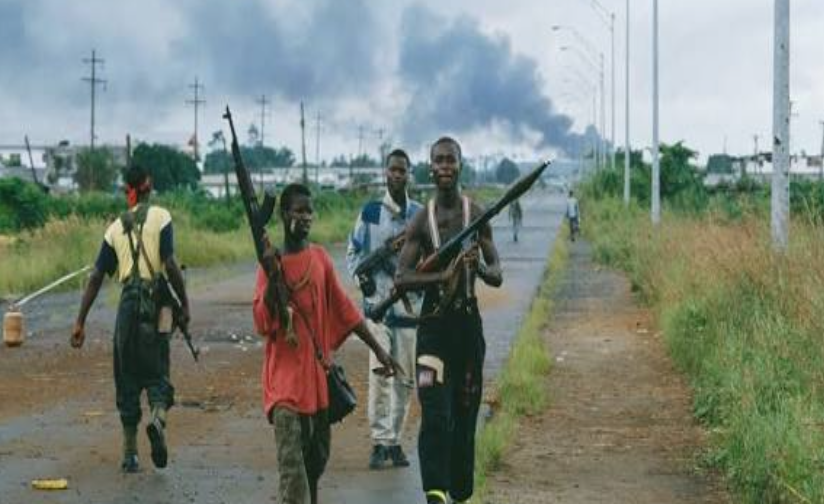
The proposed courts emerge from Liberia’s devastating civil wars, which spanned 1989 to 2003 and claimed more than 250,000 lives while displacing over one million people.
The conflicts were driven by deep-seated ethnic rivalries, political exclusion and competition over natural resources, shattering Liberia’s infrastructure and destabilizing the surrounding region.
Liberia was governed for over a century by a small Americo-Liberian elite through the True Whig Party, which marginalized the indigenous majority. Master Sergeant Samuel K. Doe, an ethnic Krahn, overthrew the government in a violent military coup in 1980, becoming Liberia’s first indigenous head of state. Doe’s regime soon became marked by corruption, economic mismanagement, political repression and ethnic favoritism toward the Krahn at the expense of groups like the Gio and Mano.
In December 1989, Charles Taylor led the National Patriotic Front of Liberia (NPFL) into Nimba County from Côte d’Ivoire to topple Doe. In September 1990, a breakaway faction led by Prince Johnson captured and executed President Doe, triggering a chaotic multi-sided war among rival ethnic militias. The Economic Community of West African States deployed a peacekeeping force known as ECOMOG to stabilize Monrovia, though fighting persisted across the countryside amid failed peace accords.
Following the Abuja Accords, disarmament took place and Charles Taylor won the 1997 presidential election. Many citizens voted for Taylor out of fear that his defeat would trigger a return to war. Taylor’s authoritarian governance, human rights abuses and support for rebels in neighboring Sierra Leone sparked fresh armed resistance. Liberians United for Reconciliation and Democracy attacked from Guinea in 1999, followed by the Movement for Democracy in Liberia invading from Côte d’Ivoire in 2003.
Rebel forces besieged the capital in mid-2003, prompting intense international pressure. In August 2003, Taylor resigned and went into exile in Nigeria, and warring factions signed the Accra Comprehensive Peace Agreement on August 18, 2003, establishing a transitional government backed by a large United Nations peacekeeping mission.
All major factions relied heavily on child soldiers, forced displacement and sexual violence while looting iron, timber and diamond resources. In 2012, the Special Court for Sierra Leone convicted Charles Taylor of aiding and abetting war crimes in Sierra Leone, sentencing him to 50 years in prison. Liberia’s Truth and Reconciliation Commission recommended a domestic war crimes court in 2009, and the establishment of the court remains an active political focus.
Since the war ended, Liberia has achieved successive peaceful transfers of power through the elections of Ellen Johnson Sirleaf in 2005, George Weah in 2017 and Joseph Boakai in 2023. The boycott also comes as Liberia advances a separate but related reconciliation initiative. The Liberia Peace, Reconciliation and Memorialization Museum project is officially underway after its First Steering Committee Meeting concluded November 18, 2026, in Monrovia, adopting seven key decisions during three days of deliberations.
President Joseph Nyuma Boakai chaired the inaugural steering committee meeting, which drew 150 participants, including the 35-member Steering Committee, five Technical Working Groups and delegations from Rwanda and South Africa. The Committee adopted the Project Charter, the Performance Measurement Baseline Plan covering November 16, 2026, to December 31, 2027, a budget of US$420,000 to be released upon approval, the constitution of the five Technical Working Groups, the financing strategy, the 90-day plan and the partnerships framework.
Hon. Hadja Mamaka Bility, Minister of State without Portfolio and Chairperson of the Steering Committee, led the Committee through the Charter, the plan, the budget and reports from the five Working Groups. “We did not come here only to remember. We came here to decide, and we have decided,” Bility said. “This Museum will be a place where every Liberian can find the truth of our history, honor those we lost, and teach our children that peace is something we build together.”
The Museum is a national presidential priority under the National Historical Recovery Initiative, launched by President Boakai in Buchanan in July 2026, and it answers the Truth and Reconciliation Commission’s call for a National History Project. “A nation that remembers honestly is a nation that can reconcile truly,” President Boakai said. “This Museum will keep our history where it belongs, in the open, in the hands of our people, and in the service of peace.”
The President said victims, survivors and their families must help shape the museum from its conception through its operation, warning that overlooking their experiences would undermine the institution’s purpose. “This Museum belongs first to the victims and survivors of our conflict, and to their families. Nothing about them must be done without them,” he said.
President Boakai charged the Committee with finalizing an implementation plan and budget, settling priorities for the five technical working groups and identifying financing for the first 90 days. “The Liberian people are watching, and they are waiting, not for speeches, but for action,” he reminded them. He also announced that the Government will name a Presidential Committee in the coming days to advise on national history and heritage priorities.