

Monrovia: A key witness testimony in the ongoing economic sabotage trial involving former Finance Minister Samuel Tweah and co-defendants has introduced new uncertainty into the prosecution’s allegation that a disputed multimillion-dollar transaction was unlawful.
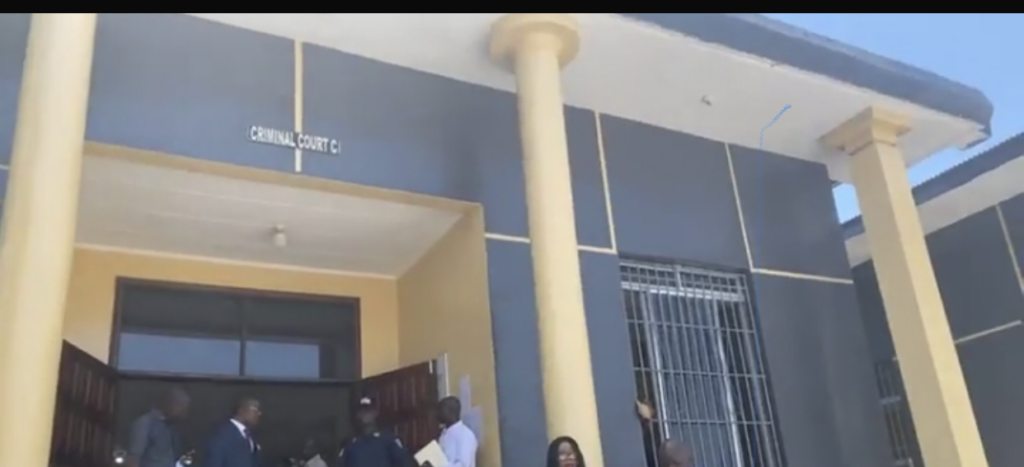
Deputy Finance Minister for Budget and Development Planning, Tanneh Brunson, appeared before Criminal Court “C” on Tuesday as a prosecution subpoenaed witness. Her testimony, however, appeared to weaken part of the state’s argument that the transaction violated financial regulations.
Brunson told the court that she was not aware of the transaction at the time because it did not pass through the standard budget allotment procedure at the Ministry of Finance and Development Planning. She explained that such direct payment requests are typically processed through the Office of the Comptroller and Accountant General in coordination with the Central Bank of Liberia.
While acknowledging that the transaction did not follow normal procedures, Brunson stated that similar payments can be “technically possible” under emergency conditions, citing the COVID-19 pandemic as an example where government spending may be expedited due to urgent fiscal needs. She further clarified that the national budget serves as a financial projection and that liquidity constraints can sometimes require extraordinary measures.
Importantly, Brunson did not describe the transaction as illegal, a position that appears to contrast with the interpretation presented by lead investigator Baba Boika. Boika had previously relied on her earlier statement to the Liberia Anti-Corruption Commission to argue that the funds transfer—estimated at L$1.05 billion and US$500,000—was unlawful because it bypassed established budgetary controls.
During cross-examination, defense counsel challenged Boika to identify where Brunson explicitly labeled the transaction as illegal. Prosecutors objected to the line of questioning, which was upheld by the court.
The prosecution also presented testimony from Central Bank of Liberia official Theophilus Lamin, who denied receiving or handling funds on behalf of national security operations. However, his testimony reportedly contained inconsistencies regarding procedures and access to bank facilities, which the defense highlighted during questioning.
As the prosecution nears the end of its witness list, the case appears to be shifting focus from allegations of outright illegality to a broader dispute over the interpretation of financial procedures during emergency governance.
Legal analysts note that while procedural deviations may be established, the prosecution still carries the burden of proving criminal intent and a clear violation of law beyond administrative irregularities.
With Brunson’s testimony now on record, the defense is expected to argue that the transaction, while unconventional, does not necessarily amount to a criminal offense, setting the stage for a closely contested next phase of the trial.