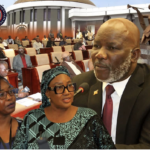



Monrovia, Liberia – A proposed amendment to strengthen Liberia’s protections against torture and other cruel, inhumane, or degrading treatment was formally forwarded to the House Committees on Human Rights and Judiciary on Tuesday, following a passionate plea from Margibi County District 2 Representative Ivar K. Jones.
The communication, which seeks to amend the Act establishing the Independent National Commission of Human Rights (INCHR) and create a preventive mechanism against torture, was received by Speaker Richard N. Koon on May 25, 2026. By the following day, lawmakers had referred the draft bill to the twin committees with a firm directive: report back to plenary in two weeks.
In his letter to Speaker Koon, Rep. Jones drew a direct line between Liberia’s international obligations and recent domestic horrors, including a viral case in which marketers at Redlight Market were seen carrying out an inhumane act against a young woman.
“While condemnation is necessary, preventive mechanism is the best option or remedy,” Jones wrote, urging lawmakers to move beyond reactive outrage.
The proposed legislation aligns Liberia with the Optional Protocol to the Convention Against Torture (OPCAT), adopted by the UN General Assembly in 2002 and signed by Liberia on September 22, 2004. Jones also cited Article 21(e) of Liberia’s 1986 Constitution, which explicitly prohibits torture and orders the Legislature to criminalize violations by public officials.
If enacted, the bill would empower INCHR to serve as a national preventive mechanism, conducting regular visits to detention centers, prisons, and other facilities where persons may be deprived of their liberty.
Speaker Koon has not yet issued a public statement on the referral, but the two-week reporting deadline signals an accelerated legislative timeline. Observers note that the House’s swift action—referral and deadline in a single day—suggests rare bipartisan urgency on a human rights issue.
The joint committees must now review the draft and return to plenary by June 9, 2026, where the bill could be scheduled for debate, amendment, or a vote.