MONROVIA — In a cramped community hall in Montserrado, a survivor finally spoke the name of the brother she lost — a name she had not uttered aloud in twenty years. Across from her, a young man born after the guns fell silent listened, his hands trembling, as the weight of a history he never lived settled on his shoulders.
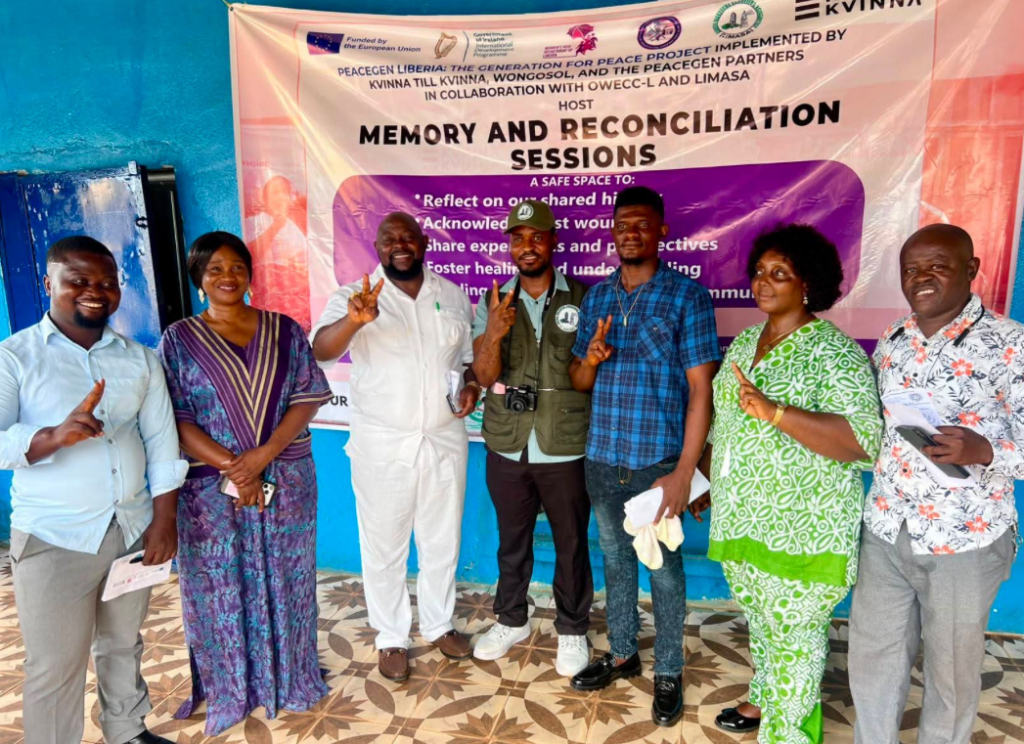
This is the difficult, necessary work unfolding across Montserrado and Bomi Counties, where WONGOSOL, Kvinna till Kvinna, and partners are convening Memory and Reconciliation Sessions under the PeaceGen Liberia “Generation for Peace” Project. The dialogues bring together survivors, women, youth, and key stakeholders in safe, inclusive spaces to confront Liberia’s violent past, share experiences, promote healing, and chart pathways toward lasting peace.
At the Montserrado session, WONGOSOL Executive Director Esther S. Davis Yango Eyeah David Yango underscored the urgency of creating environments where communities feel empowered to contribute meaningfully to the reconciliation process.
“If we do not make space for these conversations, we leave healing to chance — and chance has never favored the wounded,” Yango said. “Liberians must own this process. No one else can do it for us.”
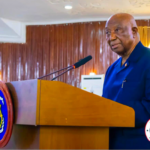
Cllr. Jallah A. Barbu, Executive Director of the Office for the Establishment of War and Economic Crimes Court for Liberia (OWECC-L), delivered a pointed message to participants: accountability is not separate from peace — it is foundational to it.
“Justice is not an enemy of reconciliation,” Barbu said. “It is the ground upon which genuine reconciliation can finally stand. Impunity erodes the rule of law, and without the rule of law, our peace remains a house built on sand.”
Sheikh S. S. Kamara, Executive Director of the Liberia Peacebuilding Office, offered a framework that cut through the emotional complexity of the room: “Memory without reconciliation becomes bitterness, while reconciliation without memory risks becoming denial.”
His words framed the delicate balance at the heart of Liberia’s ongoing struggle — how to remember without being consumed by resentment, and how to move forward without erasing the truth.
The dialogues have drawn emotional responses from participants, many of whom described the sessions as the first time they felt heard in formal peacebuilding settings. Women and youth — often sidelined in traditional reconciliation efforts — have emerged as particularly active voices, sharing experiences of loss, survival, and hope.
“We are tired of carrying this alone,” said one female participant from Bomi County. “These sessions remind us that our pain is shared — and so is our strength.”
The third session is scheduled for Bong County on August 25, extending the conversation deeper into communities still grappling with the scars of civil war.
WONGOSOL recognized the European Union in Liberia, the Embassy of Ireland in Liberia, Kvinna till Kvinna, and all partners supporting PeaceGen Liberia for investing in spaces where Liberians can confront the past, listen to one another, and collectively shape a more peaceful and reconciled future. The next Memory and Reconciliation Session takes place in Bong County on August 25.