

By Jessica Cox
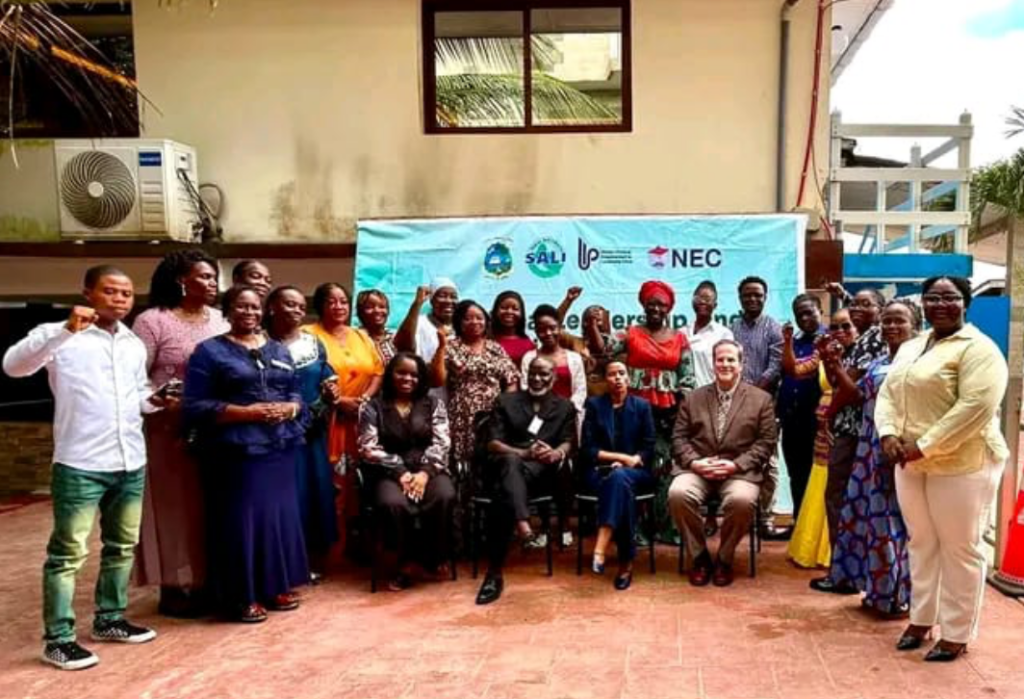
MONROVIA, Liberia — Twenty-six women aspiring to political office in Montserrado County have completed a three-day leadership and electoral preparedness training aimed at strengthening their capacity to compete in Liberia’s 2029 general elections, as concerns over women’s limited representation in national decision-making continue to shape calls for electoral reform.
The training, held from October 28 to 30, 2026, at the A’La Lagune Hotel in Congo Town, brought together women aspirants for practical sessions on political leadership, electoral processes, campaign strategy, fundraising, constituency engagement and the prevention of violence against women in elections and politics.
The exercise represents the second batch of the Political Leadership and Aspirant Readiness Training organized by Sister Aid Liberia under the Liberia Electoral Support Project (LESP), with UN Women as an implementing partner.
The broader project is managed by the United Nations Development Programme (UNDP) in partnership with UN Women and the Netherlands Institute for Multiparty Democracy (NIMD), with support from the European Union, the Governments of Ireland and Sweden, and cooperation with Liberia’s National Elections Commission (NEC).
Unlike conventional political gatherings that often concentrate on election-season mobilization, the programme seeks to prepare prospective female candidates years before the next elections, giving them time to understand the political environment, develop constituencies, build networks and establish realistic campaign strategies.
The initiative comes against the background of women’s persistent underrepresentation in Liberia’s Legislature, despite their significant participation in the country’s electoral processes.
According to statistics, women currently occupy only 11 of the 103 seats in Liberia’s National Legislature, representing approximately 10.7 percent of lawmakers. Eight women occupy seats in the House of Representatives, while three serve in the Senate.
A separate UNDP-supported study on violence against women in elections and politics also found that women constituted more than half of registered voters during the 2023 elections but accounted for only 15.5 percent of candidates.
The figures expose a major gap between women’s participation as voters and their access to elected political leadships
Throughout the three-day programme, facilitators emphasized that entering politics requires more than personal ambition. Prospective candidates must understand the electoral system, the laws governing elections, their constituencies, political party structures and the practical demands of running a competitive campaign.
During a session on Issue-Based Politics and Women’s Leadership in Liberia, Cllr. Darren Domah of NIMD examined the social, cultural and economic barriers that continue to affect women’s participation in politics.
The discussion challenged the dominance of personality-driven politics and encouraged women aspirants to build their political identities around issues affecting their communities.
The emphasis on issue-based politics is particularly significant in a political environment where candidates are expected to demonstrate how their leadership would address public concerns rather than rely solely on popularity, political connections or party affiliation.
Participants also received an overview of Liberia’s electoral and political processes from Samuel B. Cole, Deputy Executive Director for External Relations at the National Elections Commission.
Cole explained the distinction between political and electoral processes, emphasizing that democracy derives its authority from the people, who exercise their power through voting and representation.
He described elections as a continuous cycle rather than an isolated event, identifying post-election, pre-election and election periods as interconnected stages of democratic governance.
The post-election period, he explained, provides opportunities for reviewing election outcomes, assessing lessons learned, examining observer recommendations, reviewing electoral laws and developing strategies for future elections.
The pre-election period involves preparations such as voter registration, institutional capacity-building and training, while the election period covers candidate nomination, campaigning, voting, counting and other related activities.
The discussion underscored why early preparation is essential for women aspirants who must understand electoral procedures and legal requirements before entering the competitive campaign environment.
Legal barriers and the need for gender-responsive electoral reforms also featured prominently during the training.
Cllr. Gerald Yeakula, who facilitated a session on the constitutionality of temporary special measures, including gender quotas, examined how existing laws and political arrangements can either promote or restrict women’s access to public office.
Drawing on reviews of Liberian laws and international commitments, the presentation highlighted the importance of aligning national legislation with instruments such as the Convention on the Elimination of All Forms of Discrimination Against Women (CEDAW) and the Maputo Protocol.
The session also examined different routes for legal and institutional reform, including constitutional amendments, legislative changes and engagement with the National Elections Commission on matters within its regulatory authority.
Participants were encouraged to identify specific legal or institutional changes that could improve women’s chances of participating in elections on more equitable terms.
The discussion has wider national significance because Liberia has previously struggled to translate its commitments to gender equality into enforceable measures that guarantee women’s representation in elected institutions.
A proposed 30 percent gender representation requirement in the New Elections Law was vetoed in 2023, leaving advocates to continue pressing for stronger affirmative measures and political party commitments.
The question of gender quotas therefore remains central to discussions about whether women can compete under existing political arrangements or require additional legal safeguards to address longstanding inequalities.
Another major component of the training focused on the practical challenges women face within political parties and during election campaigns.
Facilitator Bernice Woart, who led sessions on transformative leadership, the decision to run and running as a woman, challenged participants to recognize their numerical strength and convert it into political influence.
She encouraged women to demand more balanced representation within political party executive structures, arguing that women’s participation should extend beyond mobilization and campaign activities to actual decision-making positions.
The discussions also addressed concerns about how political parties distribute nominations and support among candidates.
Participants examined the possibility that women may be placed in constituencies where their parties have weaker electoral prospects, while more politically competitive constituencies are reserved for male candidates.
The session emphasized that meaningful party support should go beyond endorsing female aspirants. It should include access to campaign resources, transportation, security, political networks and other forms of practical assistance.
Fundraising was also a major issue, particularly because limited access to financial resources remains one of the most significant obstacles confronting women seeking elective office.
The final day of the programme expanded on this concern through discussions on money and fundraising, voter and constituent engagement, and the development of individual campaign plans.
Participants were encouraged to identify potential sources of financial and human resources and develop practical strategies for mobilizing support ahead of the 2029 elections.
Beyond party structures and campaign financing, the training placed considerable emphasis on personal leadership and the ability of women aspirants to communicate their reasons for seeking public office.
During sessions facilitated by Mahamed B. Boakai, participants worked on developing their personal political stories, examining why they wanted to contest, what distinguished them from other candidates and how their ambitions connected to the needs of their constituencies.
The sessions also examined constituency analysis, the responsibilities attached to different elective offices and the importance of understanding the laws governing those positions.
Participants were introduced to political message development, with an emphasis on communicating a clear vision that voters can understand and relate to.
These exercises were intended to help aspirants move beyond general promises and identify specific community concerns they could address through public leadership.
Transformative leadership discussions further examined gender roles, personal empowerment, decision-making, self-confidence and the ability to solve everyday problems.
The programme’s final sessions addressed voter engagement, fundraising, overcoming political obstacles and preparing personal follow-up action plans.
A particularly important component was the discussion of Violence Against Women in Elections and Politics (VAWEP), including strategies for preventing and responding to intimidation, harassment and other forms of political violence.
The issue remains a serious concern in Liberia. A UNDP-supported validation study found that violence against women in elections and politics is systemic and deeply entrenched, limiting women’s ability to participate fully and equally in democratic processes.
For women preparing to contest in 2029, understanding how to identify threats, seek support and respond to political intimidation is therefore as important as learning how to communicate with voters or mobilize campaign resources.
The significance of the initiative extends beyond the aspirations of the 26 participants.
Women’s participation in political leadership is closely connected to the quality of representation, public accountability and the responsiveness of democratic institutions.
When women remain significantly underrepresented in legislative and political decision-making, their perspectives and experiences risk receiving insufficient attention in the formulation of policies and laws affecting the wider population.
This does not mean women automatically represent identical interests or political positions. Rather, a more representative Legislature creates greater opportunities for different experiences, priorities and perspectives to influence national decisions.
For Liberia, the issue is particularly important as the country approaches another electoral cycle in 2029.
The 2023 elections demonstrated that women’s participation as voters has not translated into comparable representation among elected officials. Closing that gap will require more than encouraging women to contest. It will require sustained preparation, fairer political party practices, improved access to campaign financing, stronger legal protections and a safer environment for political participation.
The Liberia Electoral Support Project is designed to address some of these challenges through broader electoral support and efforts to promote an inclusive, participatory and accountable democracy.
The wider programme is expected to reach approximately 240 women aspirants across all 15 counties through six training rounds.
The October exercise specifically focused on women aspirants from Montserrado County, following the earlier training round conducted under the same initiative.
While the completion of the three-day training marks an important step, its lasting value will depend on what participants do with the knowledge and tools acquired.
The development of personal campaign plans, fundraising strategies, constituency profiles and political messages provides a starting point. However, converting those plans into electoral success will require sustained mentorship, practical support, political party cooperation and continued engagement with communities.
It will also require women aspirants to build alliances, maintain visibility, engage voters consistently and demonstrate that their political ambitions are rooted in identifiable public needs.
The organizers’ wider ambition to prepare approximately 240 women across Liberia reflects an understanding that women’s political participation cannot be strengthened through isolated activities or last-minute interventions before elections.
For Montserrado’s 26 aspirants, the immediate challenge is to move from training-room discussions to sustained political engagement within their respective communities and parties.
Ultimately, the measure of success will not simply be how many women attend the training, but how many are able to secure fair opportunities to contest, compete effectively and win elective positions in 2029.
As Liberia prepares for its next general elections, the initiative places an important question before political parties, electoral institutions and the wider public: will the country’s commitment to women’s political participation translate into a Legislature and political system that more accurately reflect the people it serves?