

By Jessica Cox
PAYNESVILLE, Liberia — A total of 257 women and girls with disabilities have completed vocational and entrepreneurship training under Liberia’s Empower Her Project, as organizers move to support business development through start-up materials and a L$1.6 million micro-grant arrangement targeting 37 beneficiaries.
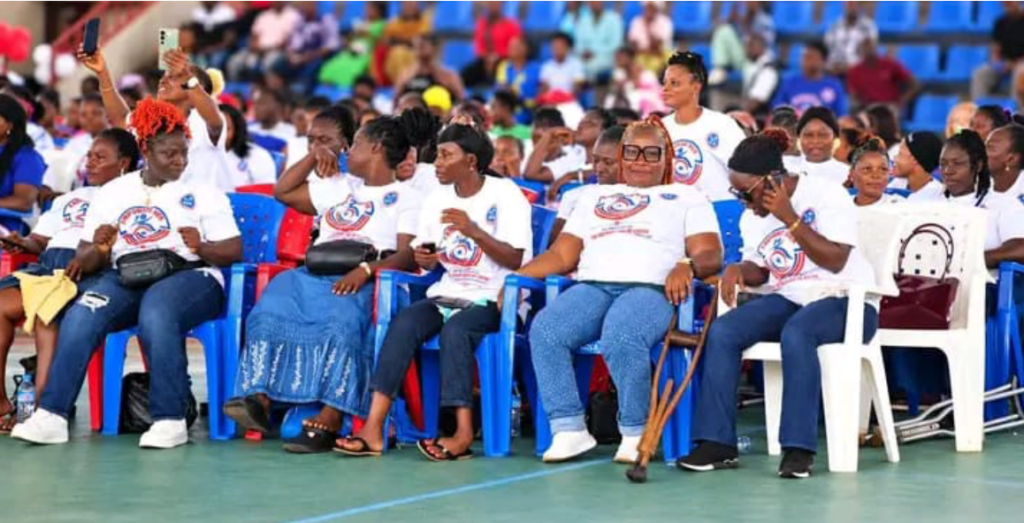
The graduation ceremony, held Friday at the Samuel Kanyon Doe Sports Complex in Paynesville, marked a new phase in the initiative’s effort to help women with disabilities turn vocational skills into income-generating activities and achieve greater economic independence.
Speaking as Guest Speaker, Minister of Gender, Children and Social Protection Gbeme Horace-Kollie called for stronger efforts to remove the social and economic barriers confronting women with disabilities, saying their limited participation in national development reflects gaps in society rather than a lack of ability.
She identified discrimination, inaccessible facilities, limited access to professional training, inadequate financial resources and restricted economic opportunities as some of the challenges that continue to affect persons with disabilities.
“These barriers do not reflect an absence of ability. They reflect a gap in our society, our ability to go forward, and our commitment to inclusion,” Horace-Kollie said.
The Minister emphasized that women with disabilities possess the same aspirations, creativity, intelligence, entrepreneurial potential and leadership capacity as other members of society.
She congratulated the 257 graduates, describing their participation in the project as an important step toward economic independence, personal development, self-sufficiency and greater control over their financial futures.
Horace-Kollie also commended Second Lady Synleseh Stephanie Dahn-Koung for her leadership and commitment to advancing the welfare and economic empowerment of women and girls with disabilities.
She said the project demonstrated how discussions about the challenges facing marginalized groups could be translated into practical interventions capable of improving lives.
A major highlight of the ceremony was the presentation of a L$1.6 million cheque for the project’s micro-grant component. Organizers clarified that the funding was intended for 37 beneficiaries participating in the micro-grant arrangement, rather than being awarded to one individual or shared among all 257 graduates.
The financial assistance is expected to help participating women strengthen existing business activities and improve their ability to generate income.
The Empower Her Project grew out of the first National Conference on the Status of Women with Disabilities in Liberia, convened in March 2025 under the leadership of Second Lady Dahn-Koung.
The conference brought together more than 800 women and girls with disabilities to discuss challenges affecting their participation in society, particularly in healthcare, education, economic empowerment and social inclusion.
According to Raymond K. Zarbay, Senior Administrator of the Group of 77, the gathering provided an opportunity for women with disabilities to communicate their concerns and identify areas requiring urgent intervention.
The discussions produced recommendations that informed the development of the empowerment initiative.
In a special message read at the graduation ceremony by Zarbay, the Second Lady expressed appreciation to the graduates, trainers, partners, government institutions, families and caregivers for their contributions to the program.
She encouraged the graduates to apply their newly acquired skills and view the graduation as the beginning of greater opportunities rather than the conclusion of their journey.
The initiative was launched in October 2025, with implementation beginning in December of that year. It selected 257 beneficiaries from more than 500 prospective applicants.
Training covered several income-generating disciplines, including tailoring, soap production, catering and pastry, event decoration and tie-dye. Participants also received entrepreneurship and financial literacy instruction to prepare them to manage and grow small businesses.
The training was conducted through institutions and centers in Montserrado County, including the Edward Kesselly Training Center, Monrovia Vocational Training Center and Jesus Services headquarters in Virginia.
The program also incorporated disability-inclusive support arrangements, including sign-language interpretation, to improve access for participants.
Speaking during an engagement with journalists, Joy Kenkpen, a member of the project team, explained that the program was deliberately structured to ensure beneficiaries leave with more than certificates.
She said practical start-up packages had been prepared for graduates in different vocational categories, including tailoring, catering and other areas of training.
Kenkpen explained that business management sessions were also introduced to help beneficiaries distinguish between personal and business finances, understand how to manage their enterprises and make decisions that support long-term growth.
She said the micro-grant component was designed for beneficiaries with existing business interests who needed additional financial assistance to improve their operations.
According to her, the project has established a tracking mechanism to assess beneficiaries’ progress beyond graduation.
She explained that the team intends to continue mentoring participants, assisting them with business plans and monitoring improvements in their economic circumstances.
“Our focus has not completely been on implementation; it has been on impact,” Kenkpen said, emphasizing the importance of measuring beneficiaries’ progress from their initial conditions.
She said the project was not intended as a one-time intervention and called on development partners, government institutions and private organizations to support its continuation and expansion.
Kenkpen also acknowledged the need to extend similar opportunities beyond Montserrado County so women and girls with disabilities in rural communities can benefit.
Meanwhile, Minister of Youth and Sports Atty. Cornelia Wonkerleh Kruah praised the initiative and expressed interest in establishing collaboration between her ministry and the Second Lady’s office.
Kruah said the impact of such programs could extend beyond individual beneficiaries to their children, households and communities.
She disclosed that her ministry had adopted a policy requiring at least 10 percent of beneficiaries in its projects to be young persons with disabilities.
The policy, she explained, is intended to ensure that young people with disabilities are not excluded from government-supported opportunities for vocational development and economic empowerment.
Kruah expressed the ministry’s readiness to work with the Second Lady’s office to expand opportunities for persons with disabilities.
Her remarks highlighted the importance of collaboration among government institutions in addressing the economic and social barriers confronting vulnerable populations.
The graduation has renewed attention to the broader question of how persons with disabilities can participate equally in Liberia’s economic and social development.
For many women with disabilities, the obstacles extend beyond the absence of vocational skills. Limited access to financing, discrimination in employment, inaccessible public facilities and inadequate support systems can make it difficult to establish and sustain businesses.
Consequently, the provision of training materials, equipment, financial assistance and continued mentorship will be important in translating the project into lasting economic benefits.
The initiative also aligns with Liberia’s obligations under the United Nations Convention on the Rights of Persons with Disabilities, which recognizes the rights of persons with disabilities to work, earn a living and participate in economic and public life without discrimination. Liberia ratified the convention in 2012.
For the 257 women and girls who completed the program, the certificates represent an achievement, but the next stage will require them to apply their skills and build sustainable livelihoods.
The project’s long-term success will ultimately depend on how many graduates can establish viable businesses, generate consistent income and participate more independently in Liberia’s economy.