–As It Launches Gender-Responsive Foreign Policy
By Vaye A. Lepolu
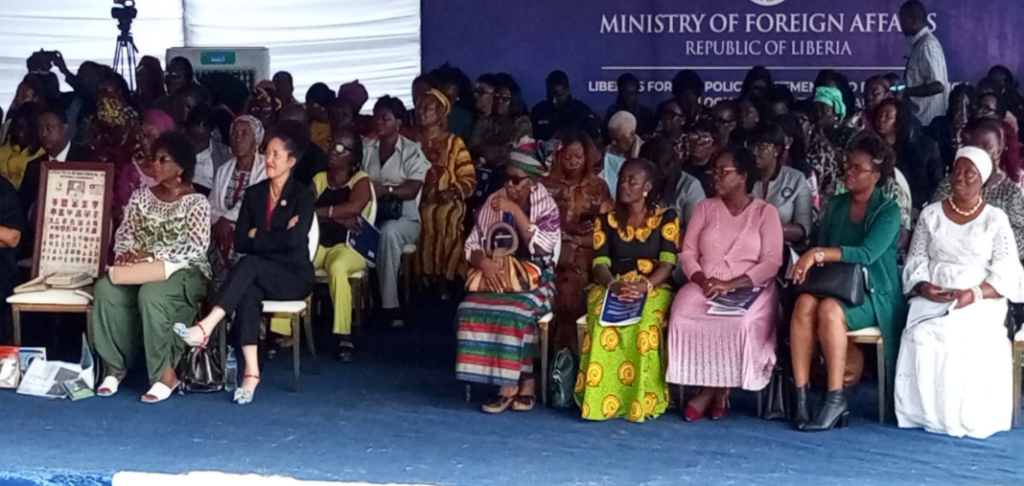
MONROVIA, Liberia — The Government of Liberiahas launched a revised Gender-Responsive Foreign Policy aimed at placing women’s rights, gender equality, and inclusive participation at the center of the country’s diplomatic engagements, both regionally and internationally.
The policy, presented by the Ministry of Foreign Affairs, seeks to ensure that Liberia’s international relations, economic partnerships, peace initiatives, trade negotiations, and development cooperation reflect the interests of all citizens, particularly women and girls.
However, the launch comes against the backdrop of troubling gender inequality indicators, with Liberia ranking 161st out of 191 countries on the United Nations Development Programme’s Gender Inequality Index.
Presenting an analysis of the policy, Dr. Tanya A. Garnett disclosed that women account for only 11 percent of the country’s national legislature, while maternal mortality stands at 742 deaths per 100,000 live births.
She further revealed that Liberia allocated just 0.36 percent of its national budget to gender equality in 2024, raising concerns about the gap between the country’s international commitments and actual investment in women’s empowerment.
Dr. Garnett described the statistics as more than figures, stressing that they demonstrate the urgent need for concrete measures to address gender inequality.
She explained that the new policy is intended to bridge the gap by making gender equality a fundamental principle guiding Liberia’s engagement with the international community.
According to her, Liberia joined the Feminist Foreign Policy Plus Group in September 2023, while the Ministry of Foreign Affairs conducted a gender equality assessment in 2025 to determine the extent to which gender considerations had been integrated into its institutional operations and foreign policy framework.
The Gender-Responsive Foreign Policy Roadmap was subsequently validated in October 2025, paving the way for the development of the comprehensive policy.
Dr. Garnett said the policy is anchored on five gender pillars: women’s rights; women’s economic empowerment and inclusive trade; women, peace and security; climate justice and natural resource governance; and women’s political representation and leadership.
She explained that the pillars are designed to address gender equality both domestically and internationally, while ensuring that women benefit from opportunities created through Liberia’s diplomatic engagements.
She also disclosed that the Ministry plans to reform its recruitment processes, career advancement opportunities, work-life balance policies, and institutional culture.
The Ministry’s Gender Unit is expected to be formalized as a Gender and Social Inclusion Unit in December 2026 to coordinate implementation alongside senior management and other relevant institutions.
Dr. Garnett emphasized that Liberia cannot credibly advocate for gender equality internationally without addressing inequalities within its own institutions.
Meanwhile, presenting the revised foreign policy framework on behalf of the Foreign Policy Development Team, B. Elias Shoniyin described the document as an outward-looking, people-centered, and gender-responsive framework intended to connect Liberia’s national interests with its domestic values, regional obligations, and development aspirations.
He stressed that Liberia’s diplomatic engagements must deliver practical benefits to ordinary citizens, including farmers seeking international markets, young graduates searching for opportunities, and entrepreneurs looking for reliable business partnerships.
Shoniyin said the framework is built around five broader foreign policy pillars: peace, security and international cooperation; economic diplomacy, trade and investment; sustainable development, climate resilience and environmental stewardship; cultural diplomacy and national identity; and institutional strengthening, digital diplomacy and professional service delivery.
He noted that the framework comes at a time when countries are confronting geopolitical competition, economic uncertainty, climate change, digital transformation, irregular migration, and transnational crimes.
According to him, Liberia must respond to these challenges through clear priorities, professional judgment, effective negotiations, and productive international partnerships.
He further emphasized that women and girls must have meaningful opportunities to participate in diplomatic negotiations, economic activities, peace and security decisions, and international representation.
Despite the ambitious objectives outlined in the policy, Shoniyin acknowledged that implementation would determine its actual impact on the lives of Liberians.
He called for stronger coordination across government institutions, constructive engagement with the Legislature and Judiciary, and partnerships with the private sector, civil society organizations, academia, the Liberian diaspora, and international development partners.
He also stressed the need for adequate resources, clearly defined responsibilities, and accountability mechanisms to ensure that the policy produces measurable results.
Dr. Garnett added that the policy aligns with Liberia’s National Gender Policy 2026–2036 and the introduction of a national gender marker designed to track government budget allocations and financing for gender-related commitments.
The revised foreign policy is expected to strengthen Liberia’s international standing while ensuring that diplomatic decisions translate into meaningful opportunities and improved living conditions for citizens.
However, with women still underrepresented in national decision-making and gender equality receiving a relatively small share of public resources, the government’s ability to translate the new commitments into concrete action will be the ultimate measure of the policy’s success.