–Warn Against Mismanagement
By: Shallon S. Gonlor
shallonsgonlor@gmail.com
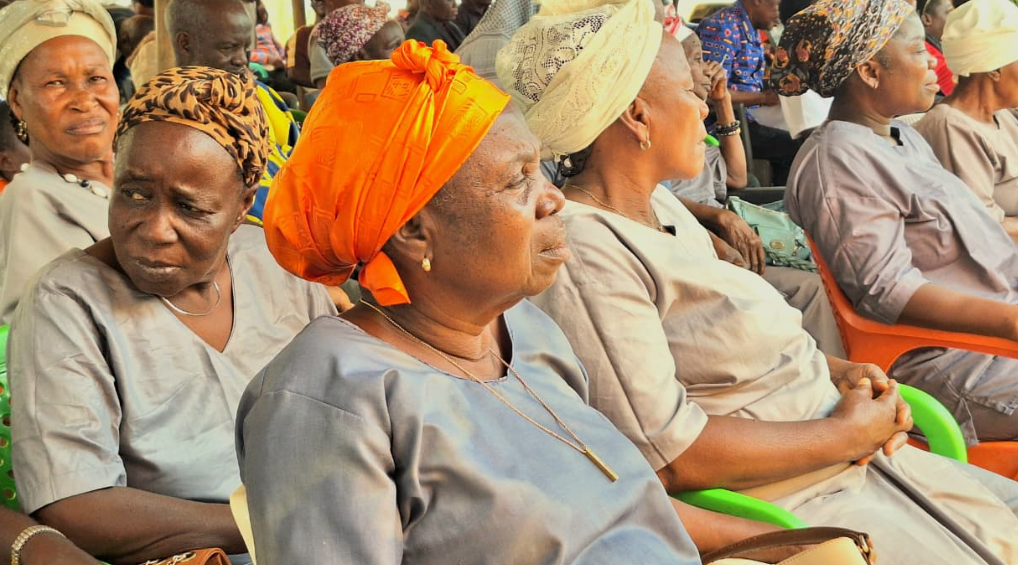
NIMBA COUNTY, Liberia — Dozens of rural midwives and pregnant women across Nimba County have praised President Joseph Nyuma Boakai Sr. and Vice President Jeremiah Kpan Koung for providing 30 heavy-duty road construction machines to the county, describing the initiative as a major opportunity to improve rural road connectivity and save the lives of pregnant women, children, and other vulnerable residents.
However, while welcoming the deployment, the women have cautioned county authorities, lawmakers, and the committee responsible to manage the equipment against mismanagement, political interference, fuel theft, and poor maintenance, warning that the machines could suffer the same fate as a previous fleet of 22-yellow machines purchased through the county’s development funding.
For rural midwives and childbearing mothers, the nationwide Yellow Machines Initiative represents more than an infrastructure development program. They see it as a potentially life-saving intervention that could address longstanding transportation challenges preventing residents of remote communities from accessing essential healthcare services.
According to the women, the rehabilitation and construction of deplorable roads connecting villages, towns, and cities would significantly reduce transportation difficulties faced by pregnant women seeking prenatal consultations, emergency obstetric care, and other essential medical services.
Their concerns come as President Boakai’s administration on Monday, November 17, 2026, simultaneously commissioned 285 heavy-duty road construction machines deployed across Liberia’s 15 counties under its nationwide road infrastructure development initiative.
Nimba County received its allocation of 30 heavy-duty yellow machines on October 31, 2026, as part of the government’s rollout of 285 Chinese-procured earth-moving equipment.
The initiative is being coordinated through the Special Presidential Project Coordinating Committee (SPPCC) and the Yellow Machines Board of Authority (YMBOA), chaired by former Defense Minister Brownie J. Samukai.
The convoy of machines was received in Baila-Sokopa and subsequently moved through Ganta, Sanniquellie, Saclepea, and Bahn by Nimba County Superintendent Kou Meapeh Gono and other local leaders.
Speaking on the sidelines of the national dedication ceremony, Evelyn Yuo, a mother of six living children, welcomed the government’s intervention but urged county authorities to establish strong accountability measures to ensure the machines are properly managed and maintained.
Yuo referenced the county’s previous experience with approximately 22 heavy-duty yellow machines acquired through the County Social Development Fund, warning that Nimba must not repeat the mistakes that contributed to the eventual deterioration of the earlier fleet.
She stressed that the new equipment represents a significant public investment that should benefit ordinary citizens rather than become another abandoned development initiative.
Midwife Kou Nyalama cautioned Nimba’s legislative caucus and county authorities against allowing poor management practices to undermine the objectives of the presidential initiative.
Nyalama warned that the machines could fail to achieve their intended purpose if fuel theft, the diversion of spare parts, inadequate maintenance, and partisan considerations become dominant factors in their deployment and operation.
She emphasized that the equipment must be managed transparently, with clear operational guidelines and accountability mechanisms to protect the government’s investment.
For Midwife Susan Tokpah, the priority should be directing the machines toward hard-to-reach communities where poor road conditions continue to obstruct access to healthcare, education, and agricultural markets.
She called on the county leadership to prioritize roads connecting villages to towns, farms to markets, and rural communities to schools and health facilities.
“These machines should be used to fix our farm-to-market, school and hospital roads because for too long, we midwives as well as our pregnant women have suffered bad road conditions to access health facilities,” Tokpah said.
She noted that midwives working in rural communities frequently encounter transportation challenges when referring pregnant women experiencing complications to facilities equipped to provide advanced medical attention.
Another midwife, Yaah Suah, said the proper utilization of the machines could help reduce the difficulties rural healthcare workers face when transporting pregnant women to designated health facilities.
According to Suah, deplorable roads have continued to expose pregnant women and their unborn babies to unnecessary risks, particularly during emergencies when delays in reaching healthcare facilities can have serious consequences.
“If these machines are properly used for their intended purpose of constructing roads in vulnerable communities, midwives will not suffer to get their patients to designated clinics. Women will no longer have to give birth on highways, roadsides, and in bushes because of the bad road challenges they face,” Suah said.
She urged the government and county authorities to consider rural road construction an essential component of maternal and child healthcare delivery rather than merely an infrastructure development activity.
The midwives further believe that improved road networks would enable pregnant women to attend regular antenatal appointments, facilitate emergency referrals, and help healthcare workers reach communities that are currently difficult to access.
Nimba’s Previous Yellow Machines Experience
Nimba County’s concerns about the management of its latest allocation are rooted in the experience of its previous fleet of approximately 22 heavy-duty yellow machines, acquired largely through ArcelorMittal Liberia’s Social Development Fund.
Under the former Project Management Committee (PMC), substantial financial allocations were made to support rural road rehabilitation and community development initiatives across the county.
Historical budget allocations included approximately US$800,000 in 2013, which reportedly increased to about US$2.2 million between 2015 and 2017.
The funding supported rural road rehabilitation, the opening of farm-to-market roads, community infrastructure development, and the construction of concrete bridges in several parts of Nimba County.
However, despite the initial progress made through the deployment of the equipment, maintenance and operational sustainability eventually became major challenges.
A dedicated maintenance allocation of approximately US$250,000 was reportedly instituted to support the upkeep of the machines, while an additional US$245,000 repair allocation was reportedly left on the books by outgoing PMC officials around 2019.
Despite these financial provisions, the previous fleet gradually deteriorated amid reported weaknesses in technical oversight, inadequate availability of spare parts, political interference in equipment deployment, and ineffective management.
The experience raised serious questions about accountability and the sustainability of county-funded development projects, particularly those requiring continuous maintenance and substantial operational resources.
For many residents, the condition of the previous equipment remains a reminder that acquiring heavy-duty machinery alone does not guarantee sustainable development without effective management, transparent financial practices, and long-term maintenance planning.
Call for Accountability and Equitable Deployment
Against this background, the rural women are calling on Superintendent Kou Meapeh Gono, members of the Nimba County Legislative Caucus, traditional leaders, and relevant county development authorities to ensure that the 30 machines are managed in the collective interest of the people.
They want the county to establish a transparent deployment framework that identifies priority roads based on community needs, particularly in remote settlements where residents face significant difficulties accessing healthcare facilities.