

By Vaye Abel Lepolu
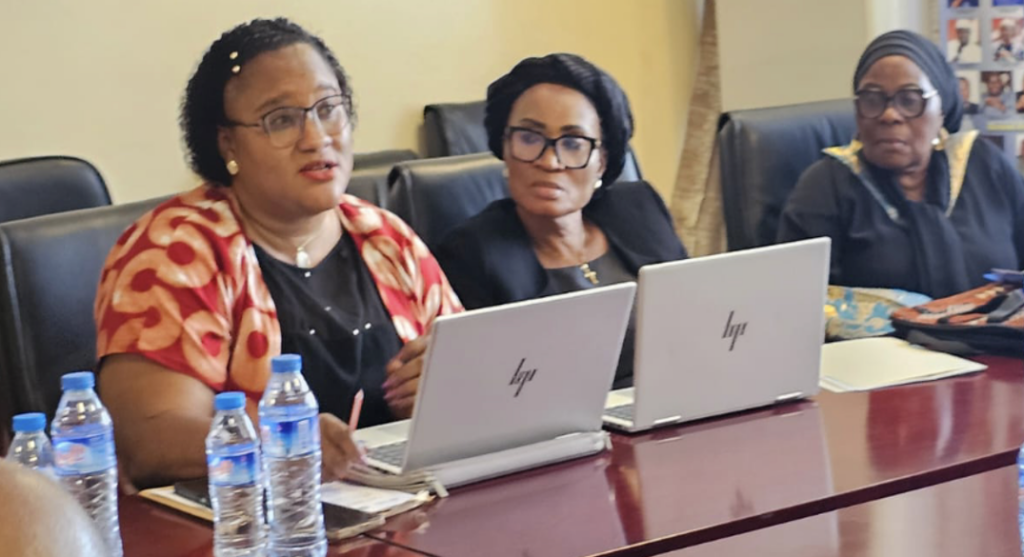
Monrovia – The Association of Female Lawyers of Liberia (AFELL) in collaboration Spotlight unitive 2.0 funding , UN women and Europe Union, AFELL President Cllr. Philomena Ena T. Williams and the Vice president Cllr. Bowoulo Taylor Kelley , has called on the National Legislature to urgently pass the proposed Women and Girls Protection Act of 2025, describing it as a landmark legal reform aimed at ending Female Genital Mutilation (FGM) and other harmful traditional practices affecting women and girls across Liberia.
Presenting the proposed legislation, Cllr. Williams said the bill seeks to strengthen the country’s legal framework by protecting the dignity, health, and constitutional rights of women and girls while improving access to justice for survivors of gender-based violence.
She explained that Female Genital Mutilation, also known as female circumcision, remains one of the most harmful traditional practices in Liberia. According to her, the practice involves the cutting or alteration of female genitalia for non-medical reasons and has no health benefits. Instead, it exposes victims to severe pain, infections, infertility, childbirth complications, psychological trauma, and, in some cases, death.
Williams emphasized that Liberia’s Constitution guarantees every citizen the rights to life, liberty, security, dignity, and bodily integrity, arguing that no cultural or religious practice should override these constitutional protections.
She further noted that Liberia is a party to several international human rights treaties, including the Convention on the Elimination of All Forms of Discrimination against Women (CEDAW), the Convention on the Rights of the Child (CRC), the Convention Against Torture (CAT), and the African Union’s Maputo Protocol. These instruments, she said, require the government to eliminate harmful practices against women and girls.
According to AFELL, the proposed legislation aims to protect the rights and bodily integrity of women and girls, safeguard public health, and promote education and national development.
The bill would criminalize Female Genital Mutilation as a felony, including cases involving coercion, abduction, or cross-border trafficking for the purpose of carrying out the practice. It also provides that consent from a victim or guardian cannot be used as a legal defense.
In addition to FGM, the proposed law seeks to address other harmful traditional practices, including forced marriage, child marriage, widowhood rites, and discrimination based on a woman’s circumcision status. The legislation would also require mandatory reporting by designated professionals, with penalties for those who fail to report suspected cases.
The proposed Act contains a supremacy clause declaring that any customary or religious practice inconsistent with its provisions would be null and void.
Cllr. Williams stressed that prohibiting FGM would align Liberia with several African countries that have enacted similar laws while strengthening the country’s compliance with its international treaty obligations.
She also cited the public health and socio-economic impacts of the practice, noting that FGM contributes to infections, maternal mortality, school dropouts, and early marriage, ultimately limiting the educational and economic opportunities of girls and women.
Describing the issue as both a legal and moral imperative, Williams declared that “Female Genital Mutilation is not culture—it is violence.”
She urged lawmakers to demonstrate leadership by passing the Women and Girls Protection Act of 2025, saying the legislation would protect future generations of Liberian women and girls while reinforcing the country’s commitment to human rights, gender equality, and national development.
In addition, The Association of Female Lawyers of Liberia (AFELL) has reaffirmed its commitment to advancing the proposed Women and Girls Protection Bill, describing it as a comprehensive legal framework aimed at protecting the dignity, safety, health, and fundamental rights of women and girls across Liberia.
Speaking during a legislative engagement, AFELL Vice President Cllr. Bowoulo Taylor Kelley stressed that while the organization remains committed to the bill, it also supports broad public consultations to ensure the legislation reflects the views and concerns of Liberians.
“We see this Act as a significant step toward safeguarding the dignity, safety, and rights of women and girls in our society,” Cllr. Kelley said. “As discussions continue, we believe our messaging must be guided, respectful, and sensitive while allowing room for inclusive consultations that reflect the voices of our people.”
She emphasized that AFELL is not seeking to divide communities but rather to encourage constructive dialogue that will lead to a widely accepted law.
“We do not believe the bill should be rejected. Instead, we should continue engaging citizens, listening to different perspectives, and finding a common way forward,” she added.
Legal Framework and Need for the Bill
Presenting the substance of the draft legislation, AFELL explained that the proposed Act is intended to address harmful traditional practices that threaten the health, safety, and human rights of women and girls.
According to the organization, the bill is built on four major pillars: serious health risks, human rights protection, constitutional obligations, and Liberia’s international treaty commitments.
AFELL noted that harmful practices such as female circumcision can result in severe pain, infections, infertility, childbirth complications, psychological trauma, and even death.
The organization further argued that such practices violate constitutional guarantees protecting the rights to life, liberty, dignity, bodily integrity, and equal protection under the law, regardless of age, sex, religion, or social status.
AFELL also reminded lawmakers that Liberia is a signatory to several international and regional human rights instruments, including the Convention on the Elimination of All Forms of Discrimination Against Women (CEDAW) and the Maputo Protocol, which obligate member states to eliminate harmful practices against women and girls.
The proposed legislation seeks to prohibit all medical and non-medical procedures involving the alteration of female genitalia for non-therapeutic purposes.
It also covers harmful practices occurring in traditional schools, communities, private homes, health facilities, and across Liberia’s borders.
In addition, the bill addresses forced marriage, child marriage, harmful widowhood practices, witchcraft accusations against women, and age-based discrimination affecting elderly women.
AFELL explained that the legislation recognizes that abuse extends beyond female circumcision and therefore seeks to provide broader legal protection for vulnerable women and girls.
Under the draft bill, performing female circumcision would become a criminal offense.
If the procedure results in death, offenders would face a first-degree felony carrying life imprisonment. Where death does not occur, the offense would attract a second-degree felony with a proposed five-year prison sentence.
The bill would also criminalize abducting, coercing, transporting, facilitating, or inducing women and girls to undergo female circumcision, including taking victims across Liberia’s borders.
Anyone who facilitates transportation for the practice could face five years imprisonment, while those who threaten or pressure victims could face misdemeanor charges.
The legislation also proposes penalties for forced marriage, child marriage, harmful widowhood practices, and accusations of witchcraft against women.
AFELL is proposing mandatory reporting requirements under which designated individuals who fail to report known cases of female circumcision could face criminal liability.
The draft legislation also seeks to prohibit government agencies, non-governmental organizations, medical institutions, or traditional authorities from licensing or certifying the practice.
The bill further protects survivors from discrimination, ensuring they can access healthcare and public services without stigma while preserving their right to seek civil damages in addition to criminal prosecution.
Importantly, the legislation would not allow parental consent, victim consent, cultural traditions, religious beliefs, or ignorance of the law to be used as legal defenses for committing prohibited acts.
Government Responsibilities
AFELL said the proposed Act places clear responsibilities on the Government of Liberia to provide medical care, legal assistance, psychosocial counseling, and economic support for survivors.
The bill also calls for nationwide public awareness campaigns involving religious leaders, traditional authorities, civil society organizations, and government ministries.
Additionally, it recommends creating alternative livelihood programs for traditional practitioners who depend on harmful practices for income, alongside dedicated government funding to implement the law effectively.
AFELL proposed that enforcement be carried out jointly by the Ministry of Justice, Ministry of Gender, Children and Social Protection, Ministry of Health, and local government authorities.
Oversight would include the Independent National Commission on Human Rights and civil society organizations to monitor implementation, collect data, and ensure accountability.
Whistleblowers and witnesses would receive legal protection under Liberia’s Whistleblower Act of 2021 and Witness Protection Act of 2021.
Concluding the presentation, Cllr. Kelley urged lawmakers to view the legislation as a necessary measure to protect future generations.
“Think about your daughters, your mothers, your grandmothers, your sisters, and your nieces,” she said. “Think about the young girl crying and bleeding because of these harmful practices. This law is about protecting them and ensuring they can live in dignity and safety.”
Meanwhile, The Chairperson of the House of Representatives’ Committee on Gender, Health and Child Protection, Representative Moima Briggs-Mensah, has reaffirmed the committee’s commitment to advancing the proposed Women and Girls Protection Act of 2025,while emphasizing the need for nationwide consultations before the bill is finalized.
Speaking during a legislative engagement with the Association of Female Lawyers of Liberia (AFELL) and stakeholders, Rep. Briggs-Mensah said the committee remains committed to the work it has undertaken and hopes to secure the necessary funding to conduct public consultations across the country.
“We still stand by what we have done and reported. We hope and pray that we will have the funding to carry out consultations and return with a stronger bill,” she said.
The lawmaker described the protection of women and girls as a personal priority, noting that members of the committee are equally passionate about addressing harmful practices that continue to affect vulnerable groups.
She pointed to concerns over harmful traditional practices, including allegations of abuse involving children, forced widow inheritance, and property grabbing from widows after the death of their husbands.
According to Rep. Briggs-Mensah, these issues underscore the urgency of enacting stronger legal protections for women and girls. She encouraged lawmakers and stakeholders to provide additional recommendations that could strengthen the committee’s work before the legislation is finalized.
Opening the floor for discussion, she thanked participants for attending and urged colleagues to contribute ideas that would improve the proposed legislation.
Meanwhile, Nimba County District #2 Representative Nyan Flomo described the proposed Women and Girls Protection Act as an important step toward safeguarding the dignity, safety, and rights of women and girls in Liberia.
He said the legislation has the potential to provide a comprehensive legal framework for protecting vulnerable citizens but stressed that its success will depend on broad public engagement.
Rep. Flomo urged lawmakers and advocates, including AFELL, to be deliberate in their messaging and sensitive in their approach as discussions continue.
“I think we need to be guided in our messaging and be sensitive in our approach. There must be full and inclusive consultation so that the voices of our people are reflected in the final law,” he said.
The Nimba County lawmaker cautioned against creating unnecessary divisions between harmful cultural practices and positive cultural traditions, emphasizing that communities should be allowed to participate meaningfully in shaping the legislation.
He also suggested that government institutions develop clear standards that distinguish acceptable cultural practices from those that violate the rights of women and girls.
The proposed Women and Girls Protection Act of 2025, championed by AFELL, seeks to criminalize Female Genital Mutilation (FGM) and other harmful traditional practices while strengthening legal protections for women and girls in Liberia. Lawmakers say additional consultations with citizens and stakeholders will help ensure the legislation reflects national concerns and enjoys broad public support before it is submitted for passage.