

-The Complaints, The Hearing, and The Final Decision
By Jerromie S. Walters
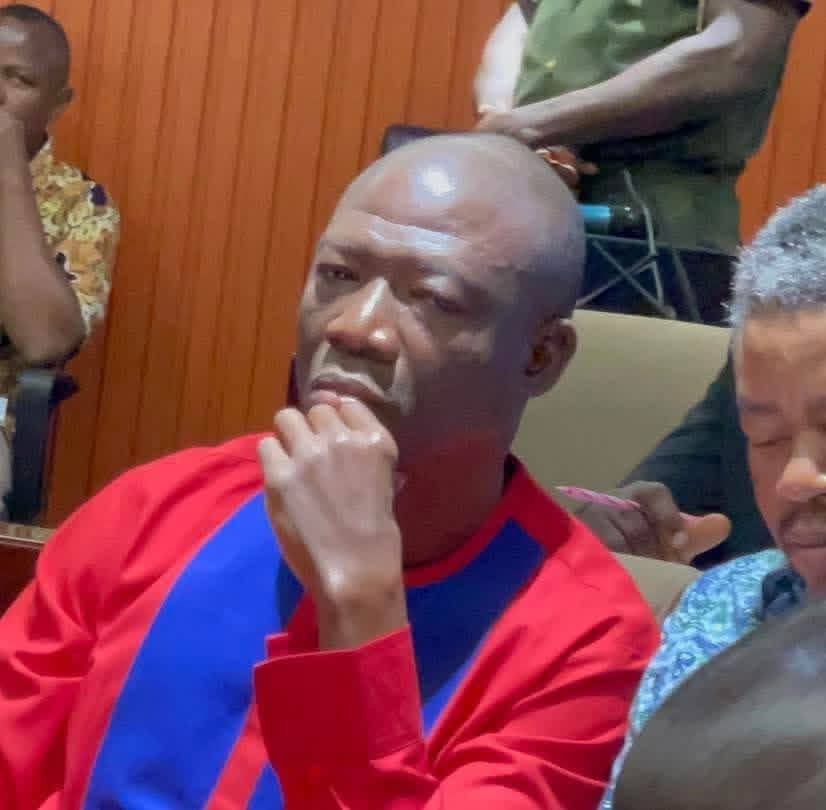
MONROVIA – The House of Representatives has expelled Montserrado County District Number 10 lawmaker Yekeh Y. Kolubah following a vote on Friday, April 17, 2026, after forty-nine members signed a resolution backing the action. The decision came after the House Committee on Rules, Order, and Administration submitted an investigative report that detailed allegations of gross misconduct and violations of the lawmaker’s oath of office.
Nimba County District Number 2 Representative Nyahn Garsaye Flomo moved the motion that the Committee report be considered, including the recommendation for Representative Kolubah’s expulsion. The motion specifically excluded recommendation number six from the Committee report, which had suggested that the lawmaker be turned over to the Ministry of Justice for prosecution based on statements he made against the Republic regarding the border dispute between Guinea and Liberia.
Representative Kolubah was not present in the chamber when the final vote was taken, as he had exited the premises prior to the decision being announced. Following his expulsion, the embattled lawmaker sharply criticized the action taken against him, during an engagement with the media on the grounds of the Capitol building. He alleged that he had recently been confronted by individuals who demanded that he apologize to the President, whom he has consistently criticized in public statements.
According to Kolubah, those who confronted him suggested that an apology was necessary if he truly wished to maintain his position in the legislature.
The expelled lawmaker vowed to take legal action against the House of Representatives and declared that he would not leave the country despite recommendations from multiple people that he should do so. Representative Yekeh Y. Kolubah was re-elected to his seat in the 2023 general elections, after serving his first six-year term as the district’s lawmaker.
During the tenure of the former ruling Coalition for Democratic Change (CDC) administration, Kolubah was a major critic of the government and its policies.
The current administration, which was then in opposition, had previously hailed Kolubah for his vocal criticism of the former ruling party. Kolubah has consistently maintained throughout his political career that his allegiance is to the people of Liberia and not to any single political party.
This assertion was proven when he departed the Alternative National Congress (ANC), with which he had been a member. Despite having campaigned strongly for the current administration during the 2023 general elections, the lawmaker later became critical of the government’s performance and decisions.
The Report:
The investigative report from the Committee on Rules, Order, and Administration was triggered by complaints filed against Kolubah by Montserrado County District Number 3 Representative Sumo K. Mulbah and others.
Representative Mulbah’s complaint specifically sought the expulsion of Kolubah on allegations of misconduct in office, violation of his oath of office, violation of the House’s Rules and Procedures, and consistently bringing the House in particular and the Legislature in general into public disrepute.
The Inspector General of the Liberia National Police, Gregory O. W. Coleman, also raised concerns about national security, public safety, and national stability in connection with Kolubah’s statements. The matter was formally referred to the Committee on Rules, Order, and Administration on April 9, 2026, during the First Extraordinary Session of the House of Representatives.
The Committee was given a mandate to review, analyze, deliberate, and provide recommendations for appropriate legislative actions within a period of ten days.
On April 9, 2026, the Committee officially mandated the Acting Chief Clerk of the House to communicate with all parties involved, including the complainants and the respondent. Invitations were issued for the parties to appear before the Committee on April 13, 2026, in the First-floor Conference Room of the House of Representatives at ten in the morning. A communication was served on Representative Kolubah on April 9, 2026, which he duly received, requiring him to appear before the Committee to face his accusers.
When the Committee met on April 13, 2026, Representative Kolubah submitted a written communication requesting a five-day excuse to enable him to adequately inform and consult with his legal counsel in preparation for the proceedings.
The Committee acknowledged the importance of due process, fairness, and the constitutional rights of the respondent to adequate and fair representation.
After consideration, the Committee granted Kolubah two additional business days to prepare for the hearing.
During the course of the hearing on April 15, 2026, Kolubah appeared along with his legal team and participated in the proceedings. The legal team requested the Committee to allow them to speak on their client’s behalf and made a submission requesting an additional five business days to prepare their defense. Specifically, the legal team sought the provision of statements attributed to their client in audio, video, or written form, the official position of the Government of Liberia as referenced in the citation, documentation regarding the celebration and dissemination of the statement by Guinean authorities, and the House Rules governing the proceedings.
The Committee rejected these requests and informed Kolubah that it is the procedure of the House for members to speak for themselves while being guided by their lawyers to ensure that their fundamental rights are protected. The Committee noted that the hearing was quasi-judicial in nature and intended to satisfy constitutional guarantees of due process, meaning the strict application of rules of evidence as observed in judicial forums ought not to be imposed. Kolubah’s counsel insisted that their requests be honored, and this argument led the Committee Chair to call for a thirty-minute recess.
After the recess, the Committee unanimously voted to object to the requests and proceed with the hearing.
At that point, the complainant was accorded the stage to present his case, and during this presentation, Kolubah’s legal counsel voluntarily walked out of the hearing. Shortly after their departure, Representative Kolubah also exited the hearing room. The complainant proceeded to present his case along with pieces of evidence, which were testified to, identified, marked, and admitted into the records of the hearing.
Following the presentation of the complainant and the admission of evidence, the witness was cross-examined by Committee members and other members of the House of Representatives. During the hearing, the complainant further convinced Committee members of the various counts of House Rules and Procedures that had been violated by the accused.
The Committee’s report cited Article 38 of the 1986 Constitution of Liberia, which states that each House shall adopt its own rules of procedure, enforce order, and with the concurrence of two-thirds of the entire membership, may expel a member for cause.
The report also referenced a historical precedent from October 23, 1998, when the Liberian Senate passed a resolution to expel Senator Sampson Bedell Fahn II from the Senate during the leadership of the late Senate Pro Tempore Charles W. Brumskine.
The Senate had accused Senator Bedell Fahn of engaging in gross misconduct considered by the Senate as desecrating the sanctity of the Liberian Senate and refusing to appear before a Senate Committee after being cited.
The Committee concluded that if the Senate could expel a member for refusing to attend a committee investigative hearing, then stronger action was warranted against Kolubah for walking out of the Committee and continuing to make denigrating statements against the House and other public officials. The Committee found that Kolubah’s consistent inimical posturing against the House and other public officials required decisive action because he continues to recklessly desecrate the sanctity, prestige, dignity, and authority of the House of Representatives.
The report cited specific violations of House Rules, including Rule 11, which requires each member to take an oath to uphold and defend the Constitution and Laws of the Republic of Liberia, and Rule 42.1, which mandates that every member shall at any place keep the prestige and dignity of the House and refrain from undesirable acts.
The Signatories:
The forty-nine representatives who signed the resolution to expel Kolubah came from counties across Liberia, including Bomi, Bong, Gbarpolu, Grand Bassa, Grand Cape Mount, Grand Gedeh, Grand Kru, Lofa, Margibi, Maryland, Montserrado, Nimba, River Gee, and Rivercess. From Bomi County, the signatories included District One Representative Jahkpakpa Obediah Varney, District Two Representative Manah Bishop Johnson, and District Three Representative Sam P. Jallah.
Bong County provided multiple signatures, including District One Representative Prince K. Koinah, District Two Representative James M. Kolleh, District Four Representative Robert Womba, District Six Representative Moima Briggs Mensah, and District Seven Representative Foday E. Fahnbulleh.
Gbarpolu County was represented by District Three Representative Mustapha Waritay.
Grand Bassa County contributed District One Representative Isaac G. Bannie, District Two Representative J. Clarence T. Banks, and District Four Representative Alfred H. Flomo.
Grand Cape Mount County saw District Three Representative Gbessie Sonni Feika sign the resolution.
Grand Gedeh County representatives included District One Representative Jeremiah Garwo Sokan Senior, District Two Representative Marie G. Johnson, and District Three Representative Jacob C. Debee II.
Grand Kru County was represented by District One Representative Nathaniel N. Bahway Senior.
Lofa County produced the largest number of signatories, including District One Representative Thomas P. Fallah, District Two Representative Julie Fatorma Wiah, District Three Representative Momo Siafa Kpoto, District Four Representative Gizzie K. Kollince, and District Five Representative Augustine B. Chiewolo.
Margibi County provided District Three Representative Ellen A. Attoh-Wreh, and District Four Representative Emmanuel Yarh. Maryland County signatories included District One Representative P. Mike Jurry, District Two Representative Anthony F. Williams, and District Three Representative Austin Blidi Taylor.
Montserrado County, the same county represented by Kolubah, had numerous signatories, including District One Representative Rugie Yatu Barry, District Two Representative Sekou S. Kanneh, District Three Representative Sumo Kollie Mulbah, District Four Representative Michael M. Thomas, District Five Representative Prescilla A. Cooper, District Seven Representative Emmanuel Dahn, District Eight Representative Prince A. Toles, and District Eleven Representative Richard Nagbe Koon.
Nimba County representatives signing the resolution included District One Representative Samuel N. Brown Senior, District Two Representative Nyahn Garsaye Flomo, District Three Representative Nehker E. Gaye, District Four Representative Ernest M. Manseah Senior, District Five Representative Kortor Kwagrue, District Six Representative Dorwohn Twain Gleekia, District Eight Representative Saye S. Mianah, and District Nine Representative Taa Wongbe.
River Gee County contributed District Two Representative Alexander Poure Isaac B. Choloplay Wuo and District Three Representative Johnson S. N. Williams Senior. Rivercess County was represented by District One Representative Alex J. Grant and District Two Representative Steve Tequah. However, some lawmakers, including Representative Benson and Wongbe whose names were placed among those who signed the resolution, later claimed that they did not sign it.
On Thursday, April 16, 2026, reports emerged that the Supreme Court had intervened in the disciplinary case against Kolubah, ordering a stay of all actions by the House of Representatives. Associate Justice Yussif D. Kaba, presiding in Chambers, reportedly cited the House leadership to a conference on Monday, April 20, 2026, at two-thirty in the afternoon. The Court’s directive, issued April 16, ordered a halt to all further proceedings or actions in the matter pending the outcome of that conference. However, the House of Representatives noted on Friday that it has not received any communication of such nature from the Supreme Court.
Many Liberians, including the Political Leader of the Alternative National Congress (ANC), Alexander B. Cummings, Gbarpolu County Senator, Amara Konneh, and prominent legal scholar and human rights lawyer Cllr. Tiawan Saye Gongloe has frowned on the decision. For Gongoe, he believes that the decision represents a serious constitutional violation. Embattled Representative Yekeh Y. Kolubah is the first sitting lawmaker who has been expelled in post-war Liberia. Last year, the same House of Representatives through the “Majority Bloc” removed ex-Speaker Cllr. J. Fonati Koffa who had spent less than two years in the post, following a political battle that began in 2024. This battle led to the suspension of several lawmakers by the “Majority Bloc”.