

-Senator Amara Konneh Condemns Kolubah’s Expulsion, Calls for Immediate Reinstatement
By Jerromie S. Walters
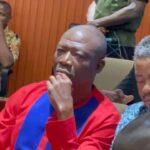
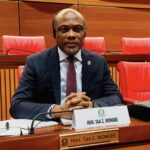
Monrovia – Gbarpolu County Senator Amara Konneh has strongly condemned the House of Representatives’ decision to expel Montserrado County District Number 10 lawmaker Yekeh Y. Kolubah, describing the action as a dangerous departure from due process and a threat to Liberia’s democracy.
The Senator made his remarks via his official Facebook page on Friday, April 17, 2026, just hours after the House voted to remove Kolubah following an investigative report from the Committee on Rules, Order, and Administration. Senator Konneh questioned whether Liberia’s democracy is truly about voice and due process or merely political theater designed to manage dissent while leaving true power structures untouched.
He reflected on his two decades of experience in Liberia’s political landscape, noting that decisions in the country are not always driven by reason but are often influenced by emotions, particularly fear, and the persuasive tactics of those who understand how to sway a traumatized population. The Senator recounted a conversation with an elderly woman in Duala during the 2023 runoff elections, who told him that she votes because it is the only time anyone pretends to listen to her.
He said that sentence has stayed with him because it captures something profound about Liberia’s democracy, where voting sometimes feels like action and control but for many Liberians also serves as a release valve to channel frustration into something predictable and controlled. Senator Konneh argued that in a nation still healing from war, the rituals of democracy sometimes serve less as tools of empowerment and more as mechanisms of pacification, not to silence dissent outright but to manage it.
He emphasized that due process under Liberian law is not optional but inherent, and he cited Article 38 of the 1986 Constitution of the Republic of Liberia, which governs the expulsion of a lawmaker and demands strict adherence to notice, investigation, the right to defense, and transparent proceedings. The Senator expressed concern that in the case of Representative Kolubah, the country is witnessing a troubling departure from these constitutional requirements.
He noted that Kolubah’s lawyers have reportedly been denied the opportunity to defend him and that legal analysts continue to raise serious concerns that the House Committee ignored fundamental principles of due process. Senator Konneh also addressed what he described as even more alarming talk of treason being directed at Kolubah, and he cautioned that treason is not a political slogan but one of the most serious offenses under Liberian law.
He explained that treason is narrowly defined and tied to acts against the state during war or in collaboration with an enemy, and he posed two direct questions to his fellow lawmakers and the public. The Senator asked whether Liberia is at war and whether the Republic of Guinea is Liberia’s enemy in that war, and he further questioned whether the Legislature is clothed with the authority to investigate or prosecute treason.
He provided a straightforward answer, stating that the power to investigate and prosecute treason lies within the Executive branch through law enforcement and prosecutorial institutions, not the Legislature.
Senator Konneh reminded his colleagues that the Legislature is not a criminal court and not a prosecutorial body, and its role is lawmaking and oversight, not criminal adjudication.
He warned that what the country is witnessing is a dangerous blurring of constitutional boundaries.
The Senator drew a parallel to the controversial impeachment of Associate Justice Kabineh Ja’neh in 2019 under the administration of former President George Manneh Weah, which he said was widely criticized as a misuse of legislative power at the time.
He noted that even the ECOWAS Court’s ruling in Ja’neh’s favor was ignored, and he expressed concern that the same patterns appear to be reemerging with different actors following the same script.
Senator Konneh made clear that while he believes Representative Kolubah’s comments on the border issue between Liberia and Guinea were reckless and uninformed, criticism is not a crime and dissent is not treason.
He argued that silencing a critic, even a loud and controversial one like Kolubah, does not strengthen democracy but rather weakens it and strips the people of District Number Ten of the voice they chose in the 2023 elections. The Senator shared a conversation he had with a young woman from Old Road at the Capitol building on Friday afternoon, who told him that she was down because her vote was gone after the expulsion of Kolubah.
When the Senator asked whether the young woman agreed with Kolubah’s utterances, she responded that she does not always agree with him but at least he says what ordinary Liberians are afraid to say.
Senator Konneh said that sentiment reflects a deeper democratic truth that democracy is not only about the voices citizens like but also about protecting the voices they do not like.
He pointed out that critical national issues continue to demand attention, including rising prices of rice, fuel, and basic goods driven in part by global instability, which are suffocating ordinary Liberians. The Senator lamented that instead of addressing these realities, the country is consumed by political theatrics. He noted that President Joseph Nyuma Boakai is calling for legislative approval to print new banknotes and pass a forty-five million dollar supplemental budget, matters that require transparency, deliberation, and public trust.
Senator Konneh warned that procedural shortcuts raise suspicion of ulterior motives and that Liberia has endured too much to accept governance by convenience. He posed a series of fundamental questions to his fellow citizens, asking whether due process can be ignored, whether dissent can be criminalized, and whether constitutional roles can be blurred for political ends. The Senator asked whether Liberia is truly a democracy or simply a well-managed performance that increasingly silences the people for and by whom the government still pretends to exist.
He further questioned what ensures that the same pattern does not repeat itself with different victims when power changes hands. Senator Konneh described the expulsion of Kolubah as yet more theatrics in the chambers of the House of Representatives that risk grinding the whole system of government to a halt.
He warned that if this rift keeps elected politicians focused on each other rather than on the core issues of governance that improve the conditions of those who elected them, the question becomes who benefits and who suffers from what goes unnoticed.
The Senator reminded his audience of the significance of Kolubah’s voice during the Weah administration, when Kolubah stood up against alleged corruption, bad governance, and human rights abuses on behalf of the opposition.
He noted that the now-ruling party led the opposition at that time and had no problems hailing Kolubah as a dissenting voice, and he asked why that same party now has a problem with receiving the same criticism.
Senator Konneh concluded his statement by declaring that what happened in the House of Representatives is not politics but madness, and he called for the immediate reinstatement of Honorable Yekeh Kolubah.