


Liberia’s drug epidemic has become the defining test for the Boakai administration—and it is a test the government doesn’t seem to be winning.
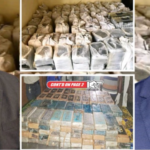
The staggering seizure of 4.2 metric tonnes of cocaine near Monrovia is not merely a law enforcement victory—it is an indictment of systemic failures that have allowed Liberia to become a transit hub for international narcotics syndicates.
Yet as the smoke clears from the incineration of this US$317 million haul, Liberians are left with a troubling question: has the Boakai administration done enough?
To its credit, the government has taken steps that its predecessor did not. President Boakai has dismissed senior LDEA officials and airport authorities implicated in the trafficking network.
He has declared the drug crisis a national emergency and launched the National Anti-Drug Action Plan (2025–2030). Confiscations between 2024 and 2025 reached nearly 10,000 kilograms of illegal substances . These are tangible achievements.
But are they enough?
Consider what we still do not know. Former Vice President Jewel Howard-Taylor has rightly demanded transparency, noting that the destruction of evidence occurred “under a cloud of darkness” . Where are the court documents?
The investigative reports? The names of the “former and current government officials” that Police Inspector General Gregory Coleman has acknowledged are being investigated as cartel enablers ?
The public has been told that an “organized, sophisticated, complex” network may have operated since 2021 . Yet after three years of investigation, the only concrete outcome appears to be the destruction of evidence—not the prosecution of kingpins.
The March 2026 investigation at Roberts International Airport was compromised after principal figures fled the country . This pattern suggests a lack of follow-through that undermines public confidence.
The administration’s budget allocation tells a troubling story.
The National Anti-Drug Action Plan was initially funded at just US$200,000—a fraction of what is needed to combat an epidemic affecting an estimated 20 percent of young Liberians. This is not the resource commitment of a government treating this as the “national security emergency” it claims it is.
Meanwhile, the domestic “kush” epidemic continues unabated. Thousands of young Liberians remain homeless and addicted . The government has yet to demonstrate a comprehensive public health response that matches the scale of the crisis. Interdiction alone will not save a generation.
Former President George Weah’s recent comments are politically convenient—his own record on this issue was far from sterling. But his observation that his government “solve” the problem is a challenge the Boakai administration cannot ignore. The Unity Party weaponized the drug crisis against Weah in 2023.
Now, Weah is poised to use the same issue against Boakai in 2029. The administration’s defenders will argue that dismantling entrenched networks takes time. They will point to firings and seizures as evidence of commitment. But Liberians have heard promises before.
They have watched suspects acquitted and investigations fade. They have seen political rhetoric outpace meaningful action. Has the Boakai administration done enough? The evidence suggests otherwise. While firings and seizures demonstrate political will, they do not amount to a strategy.
The absence of transparent prosecutions, the modest budget allocation, the continued destruction of evidence without full accounting, and the persistent domestic addiction crisis all point to a government that has yet to match its words with deeds. The Boakai administration inherited a disaster. That is undeniable. But it is now two years into its term.
The time for blaming predecessors has passed. The time for decisive, transparent, and adequately resourced action is now. If the government continues to treat this crisis as a political football rather than the existential threat it is, it will have no one to blame but itself when Liberians—and history—render their final judgment.