


By SHALLON S. GONLOR |
shallonsgonlor@gmail.com
NIMBA COUNTY, Liberia — Liberia’s Chief Justice, His Honor Yamie Quiqui Gbeisay, has urged workers, employers, and residents of Nimba County to utilize the newly established Labor Court as a legitimate avenue for resolving workplace disputes.
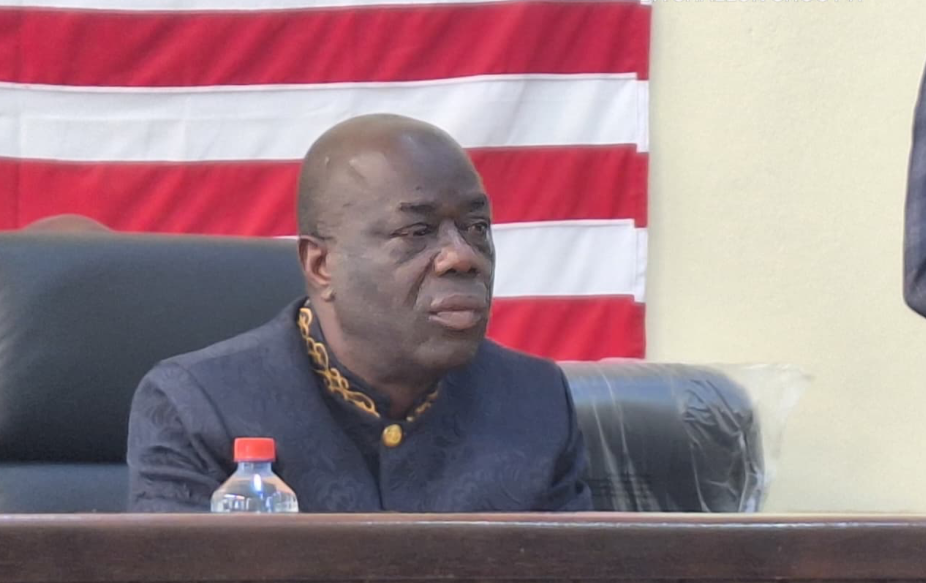
Chief Justice Gbeisay made the call Monday during ceremonies marking the opening of the August Term of Nimba County’s 8th Judicial Circuit Court and the formal seating of Cllr. Tarlo N. Wehyee as Resident Judge of the Nimba County Labor Court.
The Chief Justice described the establishment of the specialized Labor Court as a significant step toward expanding access to justice for thousands of workers and employers across Nimba, particularly amid the county’s growing mining, agricultural, construction, commercial, and private-sector activities.
He urged workers who believe their labor rights have been violated by companies or employers to seek legal redress through the court rather than resorting to confrontation or other unlawful means.
“To the workers of Nimba County, I ask you to use this court, know your rights, and also know your responsibilities to your employers. To the employers, I ask you to respect the law. Don’t disregard the rights of your employees. Your right is the human right,” Chief Justice Gbeisay said.
Chief Justice Gbeisay said the Labor Court is intended to provide a specialized judicial forum where employment-related grievances can be heard and resolved in a timely, fair, and dignified manner.
He noted that Nimba’s expanding economic activities and the increasing number of workers employed by major companies make the establishment of a dedicated labor court particularly important.
Among the major companies and institutions operating in Nimba are ArcelorMittal Liberia, Cocoa Rubber Plantation, AFCONS Infrastructure Limited, SEGAL, and other private businesses and commercial enterprises.
According to the Chief Justice, the growth of these companies has created employment opportunities for residents but has also heightened the need for an effective judicial mechanism capable of addressing disputes between employers and employees.
He said workers—including miners, plantation workers, teachers, professionals, laborers, and other employees—deserve a credible institution where complaints concerning wages, employment contracts, dismissals, working conditions, benefits, and other labor-related matters can be addressed under the law.
“For many, there is law for crime, law for justice, but for many others, there is no justice at all,” Chief Justice Gbeisay said, emphasizing the importance of ensuring that every citizen has access to a forum where legitimate grievances can be fairly adjudicated.
He said the establishment of the Nimba Labor Court was made possible through cooperation among the three branches of government—the Executive, Legislature, and Judiciary.
“With the support of the Executive, the Legislature, and the Judiciary, we have succeeded in establishing the Nimba County Labor Court,” he said.
The Chief Justice explained that the decision to establish the specialized court forms part of broader efforts to strengthen Liberia’s judiciary and expand access to justice beyond Monrovia.
He said the court is expected to serve workers and employers not only in Sanniquellie City but also in other growing communities across Nimba, including Ganta, Saclepea, Bahn, Karnplay, and surrounding areas.
Chief Justice Gbeisay stressed that access to labor justice should not be viewed as a privilege granted to workers or employers but as a right protected under the law.
“This court is not a gift; it is a right,” he declared. “The right of every Nimbaian worker to a dignified working environment. The right of every employer to a standard of credible, legal revenue.”
He encouraged workers and employers to familiarize themselves with Liberia’s labor laws and understand their respective rights and responsibilities.
The Chief Justice warned employers against violating workers’ rights, emphasizing that compliance with labor laws is essential to maintaining peaceful, productive, and respectful workplaces.
At the same time, he reminded employees that they also have responsibilities to their employers and must comply with legitimate workplace rules and contractual obligations.
Formally seating Judge Wehyee, Chief Justice Gbeisay challenged the new Labor Court Judge to administer justice with fairness, compassion, efficiency, and independence.
He urged Judge Wehyee to balance the application of the law with compassion while ensuring that due process is respected in every case brought before the court.
“I challenge you to be compassionate and knowledgeable of the labor laws of our country and to be swift. But perhaps most importantly, I charge you to be a judge of integrity and a judge without fear of anyone—without fear of anyone besides God,” Chief Justice Gbeisay told Judge Wehyee.
He further urged the judge to ensure that the Labor Court becomes known for fairness, truth, accountability, and timely justice rather than unnecessary technicalities and delays.
“Let this court be known not for illegal technicalities, but for the truth; not for delay, but for dignity,” he said.
Judge Wehyee Pledges Impartial Labor Justice
For his part, newly seated Labor Court Judge Tarlo N. Wehyee reaffirmed his commitment to dispensing justice impartially and fairly, guided by the Constitution of Liberia, the rule of law, and the country’s Decent Work Act.
Judge Wehyee said the Labor Court under his leadership will remain committed to ensuring that workers and employers who appear before it receive equal treatment and that labor-related disputes are resolved through due process and strict adherence to applicable laws.
He emphasized that the court will not serve as an instrument for either workers or employers, but as an independent judicial forum where legitimate grievances can be presented, heard, and determined based on evidence and the law.
Judge Wehyee pledged to approach each case with impartiality, professionalism, integrity, and respect for the rights of all parties, stressing that justice must not be influenced by social status, political affiliation, financial capacity, corporate power, or personal relationships.
He said the establishment of the court comes at an important time for Nimba County, where expanding mining, agricultural, construction, commercial, and private-sector activities continue to create employment opportunities for thousands of residents.
With major companies and institutions operating across the county, Judge Wehyee noted that disputes involving employment contracts, wages and benefits, termination, workplace conditions, and workers’ rights require a specialized judicial institution capable of providing timely and credible remedies.
He urged both employers and employees to familiarize themselves with Liberia’s labor laws and recognize that the protection of workers’ rights must go hand in hand with the fulfillment of workers’ responsibilities.
Judge Wehyee said employers have a responsibility to provide lawful, safe, and dignified working environments, while employees must honor their contractual obligations and comply with legitimate workplace regulations.
He stressed that the Decent Work Act provides an important legal framework for promoting fairness and dignity in employment relationships and assured residents of Nimba that the Labor Court will operate within its legal mandate.
Commitment to Fair and Timely Justice
Judge Wehyee also called on lawyers, labor representatives, employers, workers, and other stakeholders to support the court by pursuing lawful mechanisms for resolving disputes rather than resorting to confrontation, intimidation, or other forms of self-help.
He pledged to build public confidence in the new court by ensuring that cases are handled efficiently and that litigants are treated with dignity and respect.
The judge said his administration of justice will prioritize fairness, transparency, accountability, due process, integrity, and the timely resolution of cases.
He further expressed appreciation for the confidence placed in him by the Executive, Legislature, and Judiciary and pledged to use the opportunity to contribute to strengthening Liberia’s justice system.
Judge Wehyee said the court must become a place where workers who believe their rights have been violated can seek redress and where employers can also receive fair consideration when faced with legitimate labor disputes.
The establishment of the Nimba County Labor Court marks a significant development in the county’s judicial landscape, particularly as Nimba continues to experience increased economic activity, infrastructure development, mining operations, agricultural production, and private-sector investment.
The specialized court is expected to provide workers and employers with a structured and lawful mechanism for resolving employment disputes while promoting compliance with Liberia’s labor laws and strengthening public confidence in the justice system.
Chief Justice Gbeisay called on all stakeholders—including workers, employers, lawyers, judges, labor representatives, and government institutions—to support the new court and ensure that it fulfills its mandate.
He said the ultimate objective is to build a labor justice system in Nimba that protects workers’ rights, respects employers’ legitimate interests, promotes industrial harmony, and reinforces the rule of law.