


Children, Safe Water Remains a Dream
By: Varnetta Johnson Freeman
Published: June 16, 2026
As Africa commemorates the Day of the African Child 2026 under a theme that highlights children’s rights to safe water, sanitation, hygiene, and a healthy environment, Liberia must confront a painful truth: for thousands of Liberian children, access to safe and reliable drinking water remains more of a dream than a reality.
While government officials, development partners, and institutions gather today, June 16, 2026, to celebrate children through speeches, cultural performances, and formal ceremonies under the general theme, “Ensuring Universal Access to Water, Sanitation and Hygiene for Every Child in Africa”, many Liberian children will begin their day the same way they did yesterday by searching for water, the very challenge the theme seeks to address.
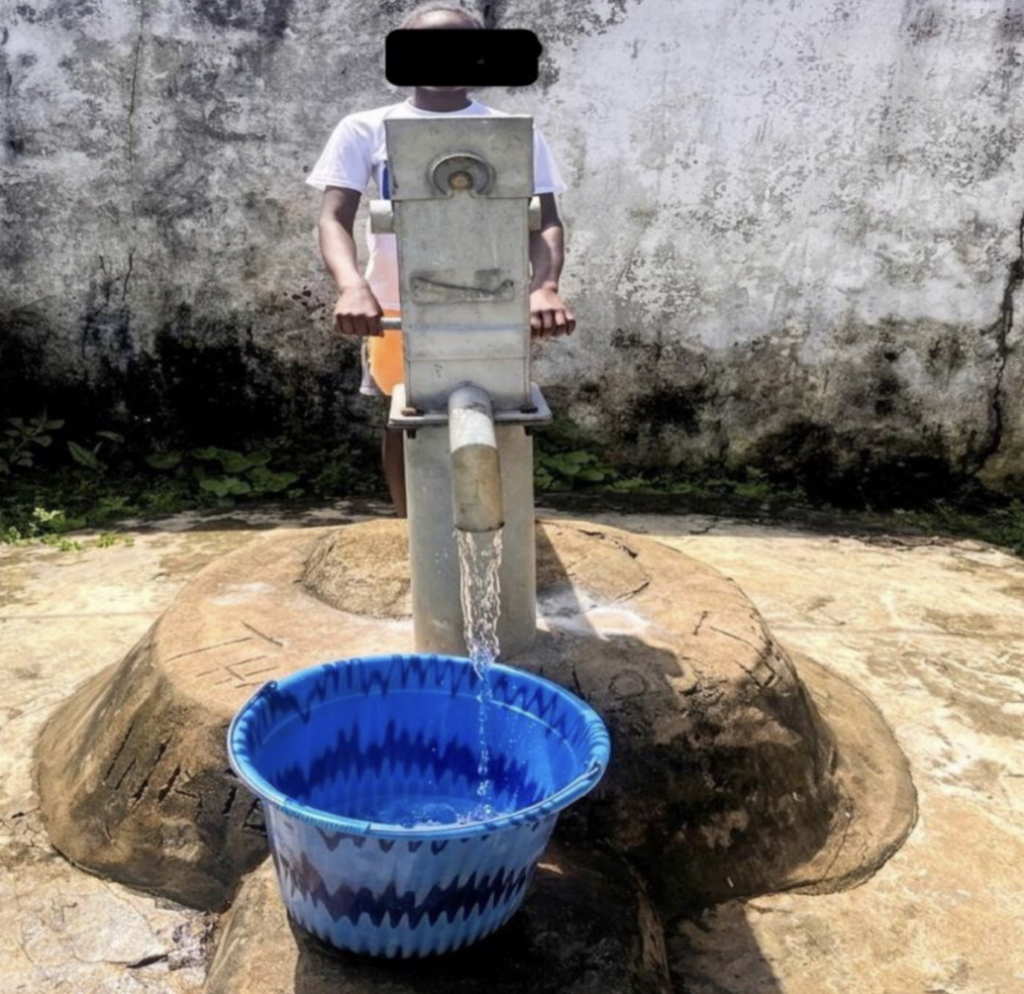
Across Liberia, particularly in poor urban communities and rural areas, fetching water remains solely the responsibility of women and children. Before school, after school, and often several times throughout the day, children carry buckets and gallons over long distances in search of water for drinking, cooking, bathing, washing clothes, and other household needs.
The risks they face are enormous.
In rural communities, children travel to rivers, creeks, streams, and hand pumps, often walking through bushes and narrow roads where they are exposed to rape, drowning, snake bites, and waterborne diseases. During the rainy season, these dangers increase significantly as rivers and creeks get full (swell), and paths become slippery and dangerous.
In Monrovia and other urban cities, the dangers shift differently, but are equally alarming. Children usually cross busy roads and avenues carrying heavy buckets and gallons of water while competing with speeding vehicles and motorbikes. Every day, their lives are put at risk to find a resource that should be readily available in their homes and communities.
A few weeks ago, while driving along the A.B. Tolbert Road, I witnessed a scene that has remained with me ever since. Four children, whom I estimated to be between the ages of five and thirteen, were attempting to cross the busy roadway after fetching water from the Methodist Church compound to take back to their home on the opposite side of the road.
Traffic continued to flow. Motorbikes maneuvered aggressively between vehicles. The children stood waiting for an opportunity to cross safely, holding their buckets of water. Many drivers and riders passed without regard for the danger confronting these young pedestrians. As a mother, I immediately recognized the risk. I stopped my vehicle and allowed the children to cross safely. But as I watched them disappear down the road, one question haunted me: What if nobody had stopped?
How many Liberian children face similar dangers every single day? The truth is that this reality is not limited to the four children I encountered on the A.B. Tolbert Road. It affects children across Liberia, including my own. My children do not have to cross a busy street to fetch water, but they still have to leave the safety of our home and go to the next yard whenever there is no water available. Some may say that the distance is short, but for a parent, especially a mother, distance is not always measured in meters. It is measured in worry.
Every time my children leave to fetch water, my heart skips a beat until they return safely. That concern is particularly heightened for my teenage daughter. Like many Liberian girls, she carries responsibilities that
children in other parts of the world should not have to shoulder. What should be a simple task of turning on a faucet and filling a cup with water becomes a journey outside the home to fill barrels.
As parents, we worry about accidents, harassment, exploitation, and other dangers that children, especially girls, can face even during routine daily activities. No parent should have to live with that anxiety simply because access to water is unreliable.
This reality is made even more troubling by the persistent and prolonged water shortages experienced in many communities, including areas connected to the Liberia Water and Sewer Corporation (LWSC) network.
For many households, having a water pipe connected to their homes does not guarantee access to water.
Too often, children return home from school tired, hungry, and thirsty after spending hours in classrooms. They walk to the faucet expecting a drink of water, expecting to bathe, or expecting to wash their school uniforms in preparation for the next day.
Instead, they are greeted by a familiar disappointment.
“No water.”
“The water is gone.”
For a child, that moment represents more than inconvenience. It represents frustration, exhaustion, and uncertainty. After an entire day at school, many children are forced to pick up buckets and gallons and begin yet another journey in search of water. Some walk long distances to community pumps. Others gather around deep wells. Still others cross dangerous roads and highways. What should have been a moment of rest becomes another burden.
This is not simply a service delivery problem. It is a child rights issue.
Every dry faucet means a child may go thirsty. Every water shortage means a child may miss study time, rest time, or play time. Every journey to fetch water exposes children to unnecessary risks that no child should have to endure in the twenty-first century.
Public institutions responsible for water delivery carry an enormous responsibility because the consequences of failure are borne not only by adults but by children.
Citizens, therefore, have every right to ask questions about the availability and reliability of water services. Public officials entrusted with managing such essential services must recognize that access to water is a fundamental right and respond to public concerns with transparency, accountability, and respect.
The Day of the African Child must therefore be more than another annual gathering where children are assembled for speeches, refreshments, and photographs.
The true purpose of this day should be to examine the real conditions under which African children live and to commit ourselves to addressing the challenges that affect their daily lives. For Liberia, this means moving beyond symbolic celebrations and taking concrete action. The Government of Liberia must significantly increase investments in water infrastructure and distribution systems. The Liberia Water and Sewer Corporation must be empowered, monitored, and held accountable for
improving reliability and expanding access, particularly in underserved communities. Schools should have reliable access to safe water so that children are not forced to leave campuses or arrive late because they spent the morning searching for water.
Road safety measures must also be integrated into child protection policies. Areas where children frequently cross roads to fetch water should be identified and provided with pedestrian crossings, speed-control measures, and stronger enforcement of traffic laws.
County authorities, community leaders, development partners, and civil society organizations must work together to ensure that every child can access safe water within a reasonable distance from home.
Most importantly, policymakers must listen to the voices of children themselves. Their experiences should inform national planning, budgeting, and development priorities.
As Africa reflects on the future of its children, Liberia must remember a simple but powerful truth: no child should have to risk being struck by a vehicle, fall into a well, drink unsafe water, or walk miles carrying heavy buckets simply to satisfy a basic human need.
The success of the 2026 Day of the African Child theme will not be measured by the number of events organized, speeches delivered, or photographs taken. It will be measured by whether African governments, including Liberia’s, can ensure that every child has
access to clean, safe, and reliable water.
As Liberia commemorates the Day of the African Child, let us remember that no child should have to choose between education and water, between safety and survival, or between hope and disappointment. No child should have to risk crossing a busy road, walk miles to a creek, or leave the safety of home in search of water. The day a Liberian child can come home from school tired, hungry, and thirsty, turn on a faucet, and find clean water flowing without disappointment, without danger, and without having to embark on another journey in search of what should already be available, will be the day we can truly say we have honored the promise of this year’s theme.
Until then, our work remains unfinished