By Jessica Cox
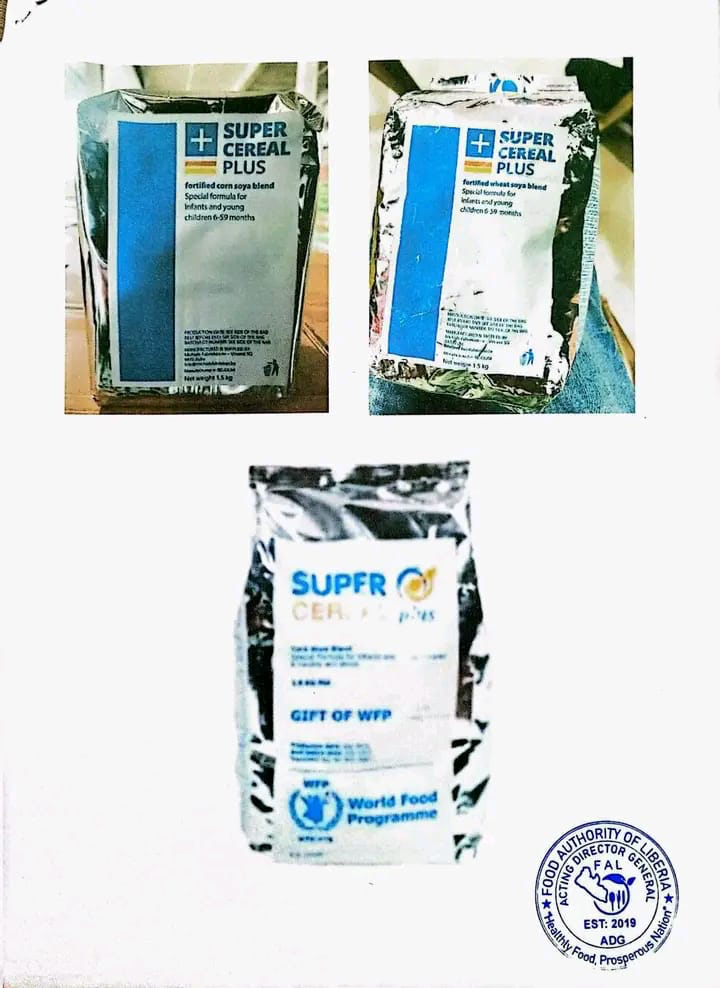
MONROVIA, Liberia — The Food Authority of Liberia (FAL) and the Ministry of Health have ordered the immediate withdrawal of suspected falsely labelled Super Cereal Plus products from the Liberian market, warning consumers against buying, selling or consuming products being marketed under the name of the World Food Programme (WFP).
The directive follows market inspections that uncovered Corn-Soya Blend Plus, commonly identified as CSB++, products carrying WFP’s name despite having no verified connection to the humanitarian agency, according to a joint public health alert issued on October 27.
The authorities said inspectors found that the products had been repackaged, while their batch numbers and expiry dates appeared to have been changed or re-stamped. The factories identified on the labels could not be traced, leaving regulators unable to confirm the products’ origin, age or safety.
FAL consequently ordered the products’ immediate removal from the market, citing the inability to verify their safety and authenticity.
The alert followed communication from WFP to the Ministry of Health on September 2, 2026. After receiving the communication, FAL inspectors purchased and examined samples from shops and markets where the products were being sold.
The authorities stressed that the products were not supplied by WFP and had no established link to the organization, although they carried its name.
The joint alert did not specify the total quantity of products discovered, the number of vendors involved or whether laboratory testing had confirmed contamination. It also did not identify the manufacturers or suppliers responsible for the products.
FAL and the Ministry of Health have urged the public not to purchase the affected products from shops, markets or individual vendors.
Consumers who have already bought the cereal have been instructed not to eat it or feed it to children. Instead, they should retain the packaging and hand it over to the nearest FAL office or inspector.
Anyone who becomes ill after consuming the product should seek medical attention immediately and inform the health worker about what was eaten, the authorities said.
The public has also been encouraged to report vendors who continue selling the products.
The alert further clarified that nutrition commodities supplied through WFP and its partners under approved health and nutrition programmes are distributed free of charge. Such products carry the label “Not for Sale or Exchange” and should not be sold commercially.
The warning is particularly important because the use of WFP’s name could lead consumers to believe that the products came through an established humanitarian food assistance programme.
However, the alert concerns the specific products identified during market inspections; it does not establish that genuine WFP-supplied nutrition commodities are unsafe.
Under the directive, sellers have been ordered to stop selling the products immediately, remove all remaining stock from their shelves and stores, and surrender the items to FAL.
Traders must also provide information about their suppliers, including available invoices and receipts relating to the products.
The authorities warned that selling falsely labelled, altered or misleading food products constitutes an offence under the Food Law of Liberia of 2017.
Anyone found importing, distributing or selling the affected products after the warning could face seizure of goods and further legal action.
The Food Law of Liberia of 2017 establishes a national framework for food safety and quality. Its scope covers food-related activities throughout production, processing and distribution, with the objective of protecting consumers from unsafe food and supporting the integrity of the food supply chain.
The current recall places emphasis on product traceability, accurate labelling and the ability of regulators to identify the origin of food commodities circulating in the country.
The alert comes as Liberia continues to face food insecurity and malnutrition, making the availability of safe and reliable food particularly important for vulnerable households.
According to the World Food Programme’s Liberia country information and its 2026–2030 country strategic plan, approximately 21 percent of Liberia’s population faces chronic food insecurity, while about 26 percent of children under five experience stunted growth. The WFP identifies high food prices, economic pressures, climate-related shocks and limited infrastructure among the factors affecting food security and nutrition.
These challenges reinforce the importance of ensuring that food products sold to consumers are properly labelled, traceable and safe for their intended use.
The suspected misrepresentation of a humanitarian organization’s name also raises consumer-protection concerns, as buyers may rely on the reputation of an established agency when deciding whether to purchase a food product.
The authorities have not yet provided details about the total volume of affected products recovered or the outcome of investigations into their supply chain.
FAL and the Ministry of Health are calling on consumers and traders to cooperate with the nationwide withdrawal order.
Consumers are encouraged to check product packaging carefully, avoid food items with suspicious or altered labels, and report concerns to the relevant authorities.
Traders have been warned against continuing sales while the products’ origins and safety remain unverified.
The immediate priority is to remove the identified products from circulation, prevent further consumption and establish accountability for the importation, distribution or sale of falsely labelled food.