


By Vaye Abel Lepolu
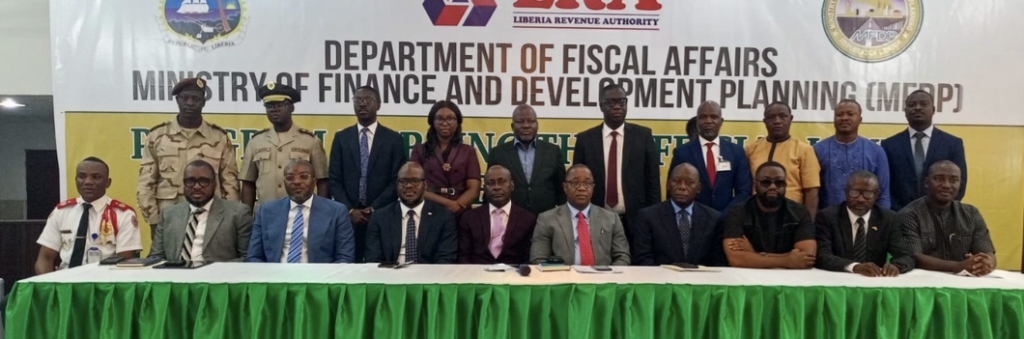
The Ministry of Finance and Development Planning (MFDP), in collaboration with the Liberia Revenue Authority (LRA), has officially launched the Tax Expenditure Management Act of 2025, describing the new legislation as a landmark reform aimed at improving transparency, accountability, and efficiency in the administration of tax incentives across Liberia.
Speaking at the launch, Deputy Minister for Fiscal Affairs Anthony G. Myers said the Act represents a major milestone in the government’s efforts to modernize Liberia’s tax system while ensuring that tax incentives contribute meaningfully to national development.
“Myers emphasized that the law provides a comprehensive legal framework for the approval, registration, monitoring, evaluation, and reporting of tax expenditures, ensuring that every tax incentive granted by government aligns with the country’s development priorities while protecting public resources.”
He noted that while tax incentives remain important for attracting investment, creating jobs, promoting industrialization, and stimulating economic growth, they also represent revenue forgone by the government. As such, he said these incentives must be managed with the same level of oversight and accountability as public spending.
A key feature of the new law is the establishment of Liberia’s first National Tax Expenditure Register, a centralized database that will record all tax incentives and exemptions granted under Liberian law. The register will identify beneficiaries, record the legal basis for each incentive, estimate revenue forgone, and monitor the performance and duration of approved tax expenditures.
The Act also requires the publication of an Annual Tax Expenditure Report, which will provide the Legislature, development partners, investors, researchers, and the public with detailed information on the fiscal cost and effectiveness of tax incentives.
In addition, the legislation introduces mandatory Fiscal Impact Assessments before any new tax incentive can be approved. Under the new framework, applicants must demonstrate the economic benefits of proposed incentives and justify how they will contribute to national development.
Director of the Indirect Taxation Unit at the MFDP, Mamadee A. Bility, explained that the Act applies to tax holidays, customs duty waivers, reduced tax rates, exemptions, concession agreements, executive orders, and other forms of preferential tax treatment.
Bility disclosed that beneficiaries will be required to register their incentives, maintain records for seven years, submit periodic reports, and comply with monitoring and audit requirements. Failure to meet these obligations could result in the suspension or revocation of incentive certificates, recovery of unpaid taxes, financial penalties, or prosecution in cases of abuse.
He further announced that all existing beneficiaries have until the end of December to register under the new system, with full implementation of the Act scheduled to begin on January 1.
Delivering remarks at the event, Auditor General P. Garswa Jackson Sr. welcomed the initiative, describing it as an important step toward strengthening public financial management.
He stressed that public awareness of the law is critical to ensuring compliance and promoting transparency, accountability, and good governance throughout government institutions.
Also addressing the gathering, Senator Nyan D. Twayen Jr. praised the passage of the legislation, noting that it would improve oversight of tax incentives and prevent companies from improperly benefiting from exemptions long after transitioning into commercial production.
The senator said the Legislature would continue exercising its oversight responsibility to ensure tax incentives are granted transparently and reviewed periodically in accordance with the law.
Representing the Office of the President, the President’s Economic Advisor Morley P. Kamara reaffirmed the Boakai administration’s commitment to responsible fiscal management, transparency, and accountability, emphasizing that tax incentives should serve as strategic investments that create jobs, stimulate economic growth, and deliver measurable benefits for the Liberian people.
He said the successful implementation of the Tax Expenditure Management Act of 2025 will enhance investor confidence, strengthen domestic revenue mobilization, improve fiscal transparency, and ensure that tax incentives support sustainable and inclusive economic development across Liberia.