By Jessica Cox
MONROVIA, Liberia — The Liberian government is pursuing initiatives to improve road infrastructure, attract investment into the fisheries sector, strengthen food safety and enhance consumer protection as part of broader efforts to improve public services and promote economic development.
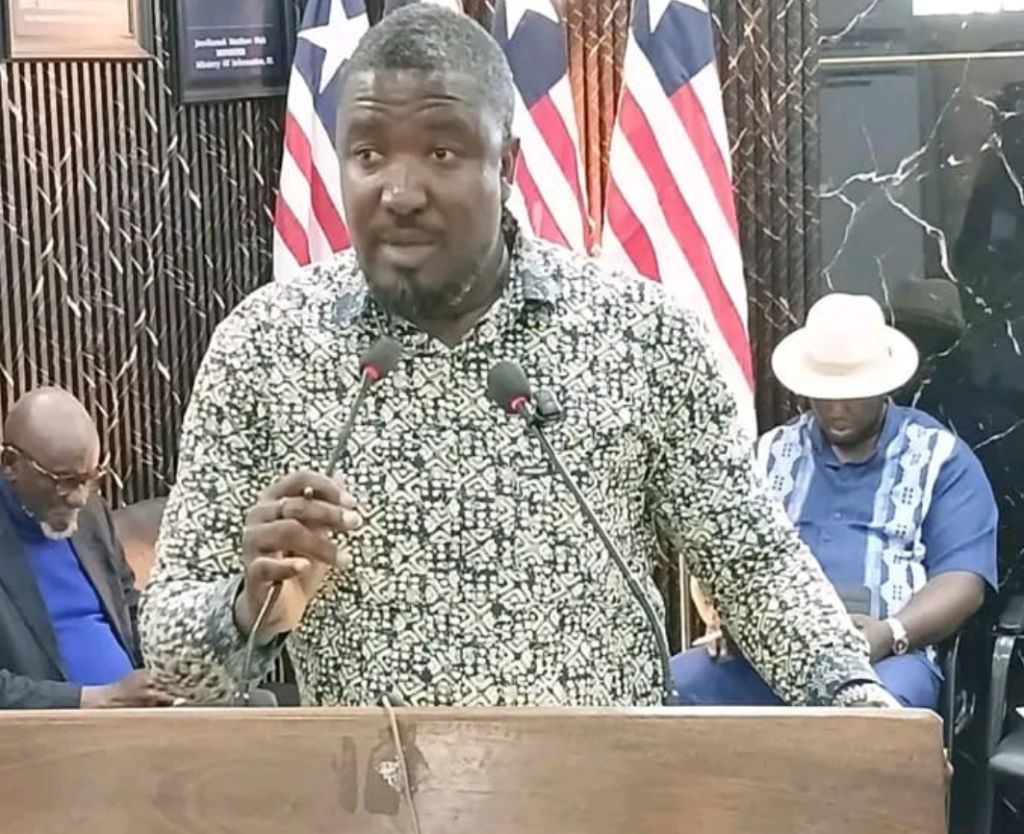
Deputy Minister for Press and Public Affairs at the Ministry of Information, Daniel O. Sando, outlined the developments during a press briefing at the Ministry’s Charles Gbenyon Hall in Monrovia.
He also provided updates on telecommunications regulation, environmental sanitation and Liberia’s engagement with regional judicial institutions.
The Ministry of Public Works, in collaboration with the African Development Bank (AfDB), has conducted monitoring activities along road corridors being developed under a regional road and transport facilitation programme.
According to Sando, the exercise involved inspecting construction sites, reviewing project progress and engaging local authorities and residents affected by the works.
The team also discussed implementation challenges, including compensation concerns involving people affected by the projects.
Sando said the monitoring exercise was intended to identify challenges requiring attention, strengthen accountability and ensure that project activities remain on course.
He emphasized that cooperation among government institutions, development partners, contractors, consultants and affected communities would be essential to achieving the intended results.
The programme forms part of broader efforts to improve transportation links, particularly in southeastern Liberia, where better roads are important for trade, mobility and access to essential services.
Liberia is exploring opportunities to attract more private-sector investment into its fisheries industry following discussions with the World Bank’s Director of Environment and Blue Economy.
Sando said the engagement took place on the sidelines of the 2026 annual meetings of the International Monetary Fund and the World Bank Group in Bangkok, Thailand.
The discussions reviewed progress under the World Bank-supported Liberia Sustainable Management of Fisheries Project and examined infrastructure gaps affecting the sector’s commercial potential.
Potential investment areas include fish processing facilities, cold storage and other infrastructure needed to improve the handling, preservation and marketing of fisheries products.
Sando explained that addressing these gaps could create opportunities for local businesses, generate employment and increase the value of fisheries products processed and marketed within Liberia.
The engagement reflects efforts to strengthen the fisheries value chain and expand the sector’s contribution to the national economy.
In a move aimed at strengthening consumer protection, 16 participants have completed training in food safety and Hazard Analysis and Critical Control Points (HACCP), a system used to identify and control potential hazards during food production and handling.
Sando said the United Nations Industrial Development Organization (UNIDO) is implementing the programme, with financial support from the European Union and collaboration with relevant Liberian authorities.
The trained participants are expected to support the Liberia Food Authority’s regulatory activities, including inspections and efforts to improve compliance with food safety standards.
He added that additional training was anticipated before December 2026 as authorities work to expand the number of personnel equipped to monitor food safety requirements.
The initiative is intended to strengthen regulatory capacity, improve food-handling practices and protect consumers from foodborne illnesses.
The Liberia Telecommunications Authority (LTA) has begun consultations with stakeholders on mobile data and short message service (SMS) pricing, including promotional packages offered by telecommunications operators.
According to Sando, the discussions cover pricing transparency, approval procedures for promotional offers and the disclosure of terms and conditions to subscribers.
The consultations seek to help consumers better understand the costs and conditions attached to telecommunications services while considering the commercial interests of service providers.
Feedback from stakeholders is expected to inform guidelines governing pricing disclosures and promotional arrangements within the telecommunications industry.
The process could improve communication between operators and subscribers and help consumers make more informed decisions about available mobile packages.
Sando also reported on discussions involving the Ministry of Health, the Monrovia Consolidated School System, the Environmental Protection Agency, food safety authorities and local government representatives concerning sanitation, hygiene and environmental cleanliness.
The engagement addressed waste management, food safety practices and public health risks associated with unsanitary surroundings. Participants emphasized the need for stronger coordination among institutions responsible for sanitation services, environmental protection and public health.
They also highlighted public awareness, routine monitoring and cooperation with local communities as important measures for addressing sanitation-related challenges.
Sando stressed that maintaining clean communities requires collective action, noting that government institutions, businesses, local authorities and residents all have roles to play.
The Ministry of Information briefing also conveyed the Liberian government’s congratulations to the newly appointed president of the ECOWAS Community Court of Justice.
The government highlighted the regional court’s role in promoting the rule of law, protecting human rights, strengthening judicial accountability and advancing cooperation among West African countries.
The court’s leadership responsibilities include judicial and administrative oversight, institutional coordination, case management and strategic planning.
Liberia’s message underscored the importance of regional judicial institutions in promoting justice and strengthening cooperation among ECOWAS member states.
The developments outlined during the briefing reflect ongoing efforts to address infrastructure challenges, expand economic opportunities, strengthen consumer protection and improve public health.