

The Liberia Diplomatic Club (LDC) has successfully concluded a two-day History and Leadership Summit aimed at inspiring emerging leaders, strengthening their understanding of Liberia’s history and encouraging responsible leadership for national development.
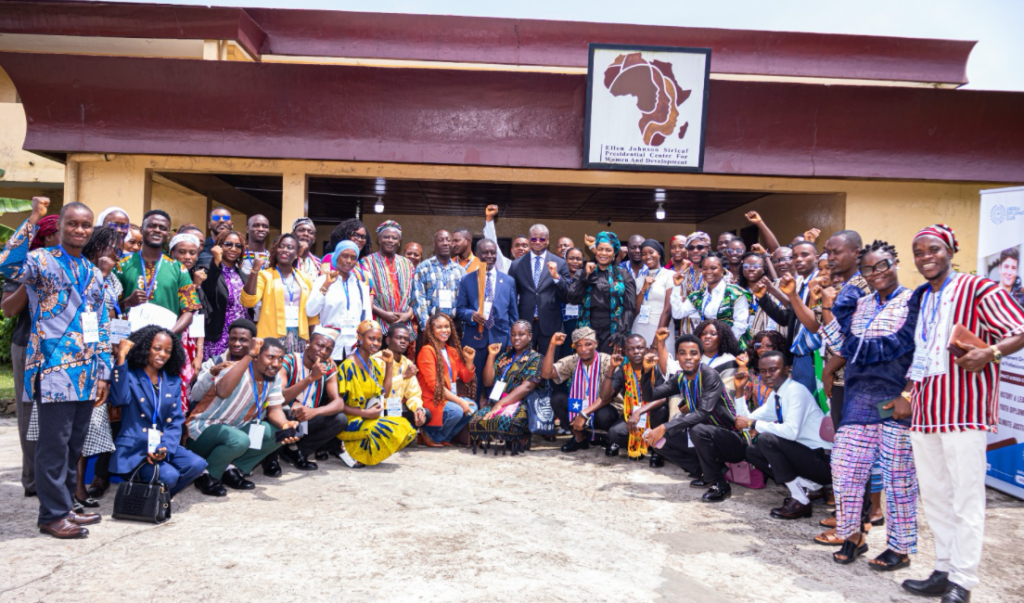
The summit was held over the weekend from October 9-10, 2026, under the theme: “Awakening Liberia’s Leadership Potential,” day one took place at the Ellen Johnson Sirleaf Presidential Center for Women and development in Monrovia, while day two was held at the old LAMCO sit-in Yekepa, Nimba County.
The event brought together more than 70 participants, including young leaders, students, diplomats, politicians, civic actors, and government officials, with 53 taking part in the Yekepa program, reflecting on Liberia’s history, industrial heritage, national identity, and leadership future, emphasizing integrity, accountability, patriotism, and responsible governance.
Giving an overview, the Liberia Diplomatic Club Executive Director of Nyema M. Merriam emphasized the importance of understanding Liberia’s history as a foundation for patriotism, national identity, and responsible leadership, reflecting on the country’s 14-year civil conflict, which claimed over 250,000 lives, he challenged young Liberians to learn from the past they have inherited and take responsibility for shaping the nation’s future.
According to him, the club works in youth diplomacy, leadership, civic engagement, and community service, guided by its motto, “Diplomacy Across Cultures,” urging young people to appreciate Liberia’s heritage while contributing to its continued progress, he also called for greater efforts to preserve Liberia’s indigenous languages, cultures, and traditions through museums, universities, and cultural institutions.
He further identified the Youth Monrovia Declaration as a key outcome of the summit, capturing young people’s reflections and commitments to history, identity, patriotism, leadership, and national development, “Fifty-one delegates signed the declaration, which will be submitted to the Governance Commission for onward engagement under its Civic Engagement, National Identity and Visioning Mandate,” he said, calling on young Liberians from all 15 counties to embrace their identity, serve their communities, and work collectively to awaken Liberia’s leadership potential
Delivering the keynote address, Cllr. Tiawan Saye Gongloe challenged young Liberians to embrace integrity, accountability, and service to humanity, he urged emerging leaders to learn from past mistakes and prioritize citizens’ welfare over personal interests, stressing that ethical leadership is essential to building a just and prosperous society.
Gongloe identified disregard for the rule of law, human rights violations, and inadequate political will to combat corruption as major obstacles to national progress, referring to the 1871 removal of President Edward James Roye, the 1980 military coup, and the civil war that began in 1989, he emphasized justice, reconciliation, and responsible governance as essential foundations for lasting peace.
He called for stronger anti-corruption measures, including transparent procurement, credible audits, asset declarations, investigations into unexplained wealth, and protection for whistleblowers, he also proposed quarterly lifestyle audits for government officials urging young people to reject bribery, fraudulent receipts, and other corrupt practices.
Criticizing public spending that favors official privileges over essential services, Gongloe described budgeting that sustains luxury while depriving citizens of basic necessities as “legalized theft.” He called for greater investment in education, healthcare, food security, infrastructure, electricity, and employment, while drawing valuable lessons from other African countries to strengthen economic development.
He also encouraged practical action through community projects, student mentorship, peaceful advocacy, and cooperation across political, ethnic, and religious divisions, stressing that government is a place to serve, not to steal, adding that governance is for the people, not the pockets.
Delivering remarks, Ambassador-at-Large Robert Yarsuo Lormia II highlighted the importance of diplomacy in protecting Liberia’s sovereignty and advancing international relations, he underscored the need for peaceful communication, negotiation, and dialogue, tracing the country’s diplomatic history from its founding to President Joseph Jenkins Roberts’ efforts to secure international recognition, beginning with Great Britain in 1848.
Lormia highlighted Liberia’s contributions to African liberation movements, including its support for Nelson Mandela and Namibia’s founding leader, Sam Nujoma, he also discussed Liberia’s role regional cooperation through the Organization of African Unity, now the African Union, the Mano River Union, and ECOWAS, alongside its contributions to international peacekeeping, and conflict mediation.
He noted that Liberia would assume the presidency of the United Nations Security Council in December, describing it as a significant moment for the country’s diplomacy, he also recalled Liberia’s chairmanship of the African Union Peace and Security Council in October 2019, emphasizing that foreign policy should support national priorities and the government’s ARREST Agenda for Inclusive Development.
For his part, UNDP Liberia Resident Representative Aliou Mamadou Dia cautioned young Liberians to promote the country’s achievements, share positive stories, and contribute to national development, speaking on the theme: “From Liberia’s History to Its Development Future: What Role for Young Liberians?” he urged young people to challenge misinformation, reject political violence, and promote peace and reconciliation.
Dia highlighted UNDP’s support for youth empowerment, including the National Cadet Program, which provided more than 1,000 college graduates with workplace training and mentorship in 2026, he encouraged young Liberians to help shape the nation’s future through the guiding principles: “Remember, Reconcile, Rebuild,” he stated.
Meanwhile, Ghana Ambassador to Liberia, H.E. Godwin Baletum Amonzem, highlighted the longstanding historical, cultural, and diplomatic ties between Ghana and Liberia, speaking on “Ghana-Liberia Relations: Our Shared History and What It Means for the Future of Both Countries,” he recalled Ghana’s support during Liberia’s civil wars, including the deployment of 11,429 soldiers to the ECOMOG peacekeeping mission and its provision of refuge for Liberians fleeing the civil war.
Amonzem called for stronger bilateral cooperation in trade, investment, education, youth empowerment, and regional security, he highlighted collaboration between the two countries’ central banks on cross-border payment systems and urged Ghana and Liberia to leverage the African Continental Free Trade Area (AFCFTA) to expand economic opportunities, support young entrepreneurs, and strengthen regional integration through ECOWAS.
The Liberia Diplomatic Club however expressed appreciation to UNDP Liberia for sponsoring the summit, which sought to connect Liberia’s history with its development future by encouraging young people to embrace their national identity and take responsibility for leadership.