


By Jessica Cox
The Government of Liberia’s Protect Our Resources Taskforce (PORT) has outlined a multi-agency enforcement strategy aimed at confronting illegal mining, protecting the country’s mineral resources and strengthening enforcement of Liberia’s mining and environmental laws.
The Taskforce, established by President Joseph Nyuma Boakai Sr. through Executive Order No. 167 issued on June 26, 2026, brings together security, mining, environmental, immigration and justice institutions as the government intensifies efforts to curb illicit mining across the country.
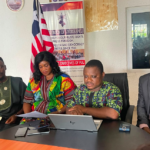
Speaking during an engagement on the implementation of the Taskforce’s mandate, PORT Chairman Abraham Kromah stressed that the initiative is designed to bring together specialized government institutions rather than leave enforcement of the country’s mining laws to a single agency.
Kromah said the composition of PORT reflects the government’s decision to combine technical expertise, law enforcement and prosecutorial capacity in confronting illegal mining operations.
The five presidentially appointed members of the Taskforce are Abraham Kromah, Ashford Peal, Prince Mulbah, Tarnue Kesselly and Charles Johnson. Representatives of the Ministry of Mines and Energy, Environmental Protection Agency (EPA), Armed Forces of Liberia (AFL), Liberia National Police (LNP), Liberia Immigration Service (LIS), Ministry of Justice and other relevant institutions also support the Taskforce.
According to the Ministry of Mines and Energy, PORT is intended to serve as a coordinated national enforcement mechanism responsible for intelligence gathering, inspections, compliance monitoring and enforcement across Liberia’s mining sector.
Kromah explained that the Ministry of Mines and Energy remains central to the operation because of its statutory responsibility for Liberia’s mineral sector.
The Ministry is responsible for functions including mineral licensing, registration, verification and administration of the country’s mining activities. PORT, he said, provides an additional enforcement layer where regulatory processes alone are insufficient to address persistent violations.
The arrangement is intended to allow mining authorities to identify and document violations while the Taskforce coordinates the broader security and legal response.
The Ministry of Mines and Energy has described illegal mining as more than a licensing violation, noting its potential implications for government revenue, environmental protection, lawful investment and national security.
The Armed Forces of Liberia and Liberia National Police are expected to play important roles in enforcement operations.
The Executive Mansion said the AFL and LNP would provide liaison and security support to the Taskforce, while other security institutions would assist in addressing violations identified during operations.
The LNP’s role is particularly important where operations require civilian law-enforcement intervention, while the AFL can provide additional tactical support when required.
The Liberia Immigration Service is also part of the wider enforcement arrangement, reflecting concerns about cross-border movements and unauthorized activities associated with some mining areas.
The Ministry of Justice is expected to provide the legal framework for cases arising from Taskforce operations, including the management of evidence and prosecution of alleged offenders.
Under Executive Order No. 167, PORT is empowered to investigate suspected illegal mining activities, confiscate equipment used in unlawful operations and facilitate the arrest and prosecution of violators in coordination with relevant security and justice institutions.
This gives the Taskforce a broader enforcement structure, linking field inspections and investigations to the formal justice system.
The Environmental Protection Agency has also been integrated into the Taskforce because of the serious environmental consequences associated with illegal mining.
The EPA has identified environmental compliance, inspection and monitoring, environmental permitting and enforcement procedures as critical areas of its contribution to PORT.
On August 7, 2026, the EPA conducted a capacity-building workshop for PORT members aimed at strengthening their understanding of environmental laws, mining regulations and enforcement procedures under Executive Order No. 167.
The government has linked illegal mining to river diversion, destruction of forests and wetlands, contamination of water bodies, degradation of farmland and the unlawful use of hazardous substances.
The latest development comes as PORT moves from its establishment and preparatory phase toward full-scale enforcement.
On September 2, 2026, Mines and Energy Minister R. Matenokay Tingban held a consultative technical meeting with the Taskforce to advance preparations for the implementation of its national enforcement mandate.
Tingban urged members to remain professional and measured in their engagements while ensuring that enforcement actions are firmly grounded in Liberia’s Minerals and Mining Law and related regulations.
The meeting followed PORT’s inaugural technical engagement on July 1, which marked the beginning of the Taskforce’s coordinated campaign against illicit mining.
The establishment of PORT comes amid longstanding concerns about the impact of illicit mining on Liberia’s economy and environment.
The Liberia Chamber of Mines has welcomed Executive Order No. 167, describing the government’s intervention as an important step toward protecting the country’s mineral wealth, improving compliance and creating a more transparent mining sector.
The Chamber has also warned that illicit mining can deprive the government of revenue, discourage legitimate investment and contribute to environmental degradation.
Under Executive Order No. 167, PORT is also expected to maintain a public record of enforcement actions, confiscated equipment and prosecutions, while submitting quarterly reports to the Office of the President on its activities, environmental remediation efforts and community engagement.
The order took immediate effect on June 26 and is scheduled to remain in force for one year, subject to renewal or amendment based on its effectiveness.
As PORT prepares for nationwide enforcement, the government says the broader objective is not only to shut down illegal mining operations but also to strengthen resource governance, protect communities and ensure that Liberia’s mineral wealth contributes more effectively to national development.