


By SHALLON S. GONLOR |
shallonsgonlor@gmail.com
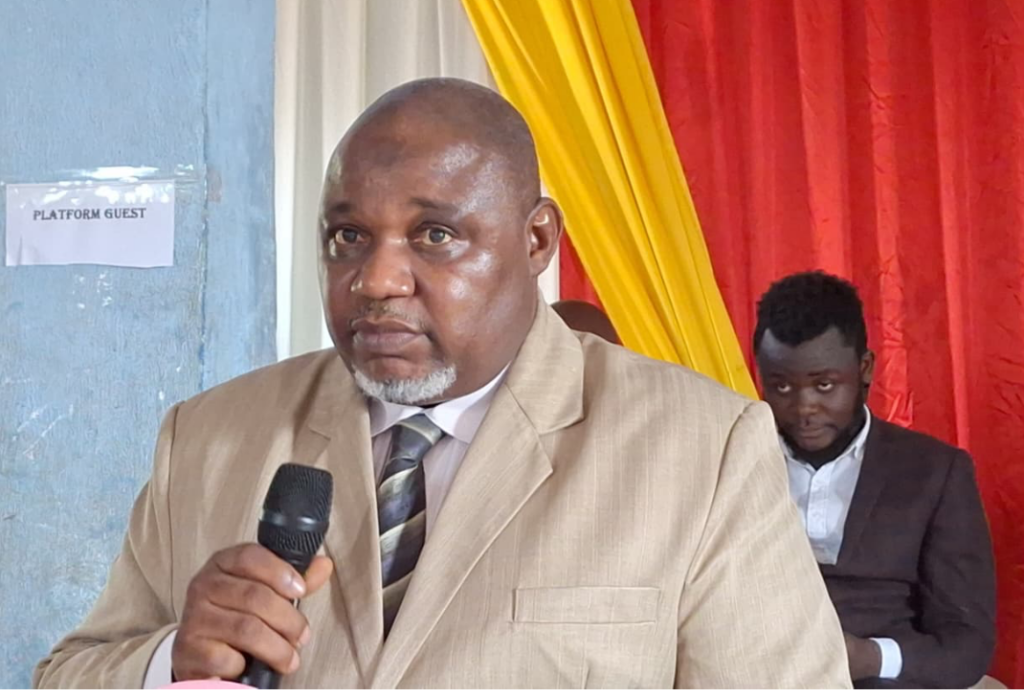
NIMBA COUNTY, Liberia — The 8th Judicial Circuit Court of Nimba County has officially opened its 2026 August Term of Court, with Resident Circuit Judge of the Sexual Offenses Division, His Honor Musa S. Sidibey, emphasizing the judiciary’s critical role in advancing national healing, reconciliation, and sustainable peace in Liberia.
Delivering the opening charge Monday at the 8th Judicial Circuit Court in Sanniquellie City, Judge Sidibey described the judiciary as both a pillar and guardian of justice within Liberia’s constitutional democracy.
He called on judges, lawyers, court officers, and citizens to uphold impartiality, accountability, and ethics as fundamental pillars of a credible justice system.
Judge Sidibey urged courts to remain neutral and impartial, arguing that fair and equal justice can heal social divisions, while corrupt or biased justice can deepen existing wounds.
“When the courts act impartially, they heal divisions; when the courts act corruptly, they deepen wounds. Thus, impartial justice is not only a legal necessity but also the path to national healing, reconciliation, and sustainable peace,” he declared.
He said the judiciary has a responsibility that extends beyond resolving individual disputes, noting that the integrity of the courts directly influences public confidence, national unity, and the rule of law.
Judge Sidibey described the judiciary as the “moral compass of the Republic,” entrusted not only with interpreting the law but also with defending truth, fairness, human dignity, and the constitutional rights of citizens.
According to him, the administration of justice is not a ceremonial responsibility but a solemn duty anchored in the conscience of the nation and mandated by the Constitution.
“This morning, as we reaffirm our collective commitment to the rule of law, it becomes necessary to revisit and renew the sacred principles that give the judiciary its legitimacy and moral strength. These principles are impartiality, accountability, and ethics,” Judge Sidibey declared.
Constitutional Mandate
Judge Sidibey cited Article 65 of the 1986 Constitution of Liberia, which provides for the vesting of judicial power in the Supreme Court and such subordinate courts as may be established by the Legislature.
He stressed that courts exist to administer justice without fear or favor, affection or ill will, describing this responsibility as a constitutional command binding upon judges, lawyers, and every servant of the court.
He also referenced Article 66, which vests the Supreme Court with final authority in constitutional matters and makes its decisions binding on all authorities and persons throughout Liberia.
The judge said this constitutional responsibility demands that those occupying the seat of justice remain beyond reproach, free from improper influence, and guided by law and conscience.
Judge Sidibey further invoked Article 5 of the Constitution, particularly its directive for positive steps to eliminate sectionalism, tribalism, discrimination, and corruption.
He argued that every branch of government and every public servant has a responsibility to promote national unity, equality, and justice.
“The judiciary, as the moral center of governance, must therefore lead by example, remaining unswayed by sectional, political, or ethnic pressures,” he emphasized.
Judiciary as a Covenant With Citizens
Judge Sidibey described the judiciary as more than a government institution, calling it a covenant between the state and its citizens.
He said the justice system exists to ensure that every person—regardless of wealth, social status, political influence, tribe, or background—stands equal before the law.
“The moment the scales of justice tilt toward bias or corruption, the covenant is broken, and faith in the Republic begins to erode,” he warned.
According to Judge Sidibey, the strength of a nation should not be measured solely by its military power or economic wealth, but also by the integrity of its courts.
“When judgments are rendered in truth, peace reigns; but when justice is sold or compromised, the soul of the nation weeps,” he stated.
Judge Challenges Lawyers to Uphold Ethics
Addressing members of the legal profession, Judge Sidibey reminded lawyers of their responsibility as officers of the court.
He said their primary obligation is to the cause of justice and not merely to the convenience of their clients or the influence of powerful individuals.
“A lawyer’s voice must be the voice of conscience, the defender of truth, and the shield of the defenseless,” he said.
Judge Sidibey cautioned lawyers against distorting the law, concealing evidence, or engaging in unethical conduct intended to mislead the court.
He urged members of the legal profession to reject corruption, resist manipulation, and protect the dignity of the profession.
“The oath you take binds you not only to your client but to the Republic, whose peace and stability depend upon your integrity,” he said.
Court Officers Also Responsible for Judicial Integrity
The judge extended his call for integrity to clerks, bailiffs, recorders, and other administrative personnel working within the judiciary.
He said impartiality must begin not only from the Bench but also from every desk operating under the authority and seal of the court.
According to Judge Sidibey, the proper filing of documents, timely preparation of records, and accurate transmission of judgments are not merely administrative duties but essential components of the justice system.
“Each task performed with diligence and honesty contributes to the credibility of the entire system,” he noted.
He warned that favoritism, undue delays, and secret compromises in court administration undermine public confidence and dishonor the Constitution.
Public Urged to Respect Judicial Independence
Judge Sidibey also called on members of the public to respect judicial independence and resist attempts to influence court proceedings through social, political, tribal, or personal connections.
He said while citizens have a constitutional right to seek redress through the courts, they also have a responsibility to respect the independence of the judiciary.
“The people’s confidence in the courts must be founded upon fairness, not familiarity; upon justice, not proximity to power,” he stressed.
According to him, impartiality is the soul of justice, warning that a judge who cannot rise above personal bias, political favor, or ethnic allegiance cannot administer justice fairly.
“The court must know no tribe, recognize no region, and favor no section. It must see only Liberian citizens and lawful residents, standing equal before the law,” Judge Sidibey declared.
Accountability and Judicial Integrity
The judge further described accountability as an essential component of judicial integrity, stressing that it should not be viewed as hostility toward the courts.
“Accountability is the mirror by which the judiciary examines itself. It is not a weapon of punishment but a tool of decontamination—a tool that cleans the system,” he said.
Judge Sidibey maintained that a judiciary that holds itself accountable strengthens public confidence, while one that shields misconduct weakens its own legitimacy.
He clarified that judicial immunity serves as a constitutional protection against external interference in the administration of justice but should not be interpreted as protection for misconduct or arbitrary conduct.
He called for transparency in judicial procedures, fairness in decisions, and discipline among all court actors.
“Every judgment rendered, every case decided, and every decision delayed must reflect a consciousness of duty to the Constitution and to the people,” he said.
Call for Renewed Commitment
As the 2026 August Term gets underway, Judge Sidibey called on all judicial actors to renew their commitment to the Constitution and the rule of law.
He urged judges, lawyers, and court personnel to reject every inducement capable of compromising fairness and to defend judicial independence and integrity.
“Where impartiality is lost, justice is betrayed. Where accountability is neglected, liberty is endangered. And where corruption thrives, the Constitution trembles,” Judge Sidibey warned.
He encouraged lawyers to remember that justice is not simply a craft of persuasion but an act of truth, while court officers should recognize that their records and official actions can significantly affect people’s lives.
“Let every citizen know that the integrity of the judiciary is the measure of national civilization,” he said.
Judge Sidibey concluded by calling on all who serve within Liberia’s judicial system to uphold their oaths faithfully and protect the rule of law as the foundation of national freedom.
“Let it be known that the Republic of Liberia will continue to stand strong only when her judiciary remains independent, incorruptible, impartial, and accountable to the people. May justice, guided by truth, forever uphold our nation,” Judge Sidibey concluded.