

-To Address Recurring Monrovia Flooding Crisis
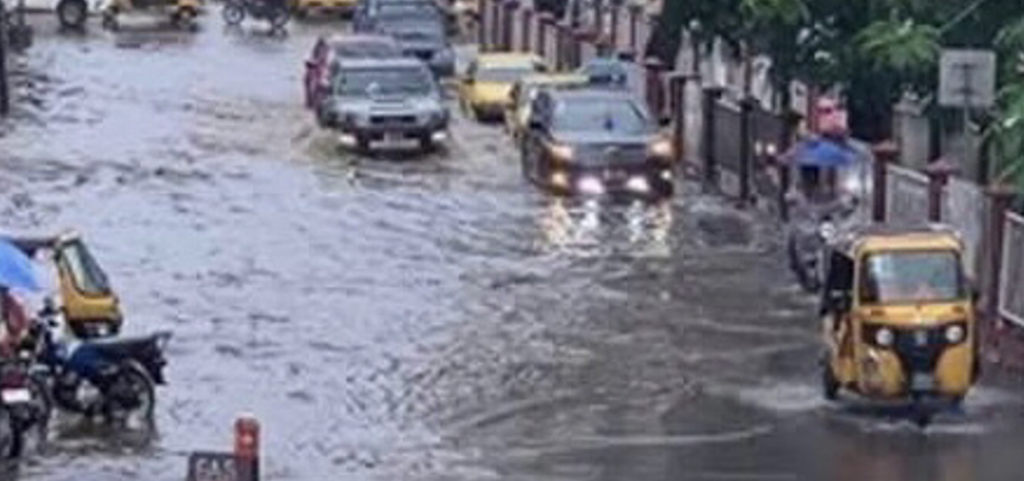
MONROVIA – The House of Representatives has formally requested that key government agencies appear before the Legislature to provide answers on the persistent water overflow along Main Street, Paynesville, and surrounding areas of Sinkor. The decision is in response to the perennial flooding plaguing the capital.
The request, submitted by Hon. Briggs Mensah and adopted by the full Plenary, cites the grave threat that recurring floods pose to human life, property, commercial activity, and public infrastructure. The invitation, scheduled for a leadership appearance on Monday, specifically targets the Public Works authorities, and the Environmental Protection Agency (EPA).
This legislative action comes as Liberia enters the peak of its rainy season, with forecasts predicting between 218.7 millimeters and 754.2 millimeters of rainfall across the country. The urgency is heightened by recent catastrophic flooding in neighboring Ghana’s capital, Accra, which claimed at least 13 lives and displaced thousands.
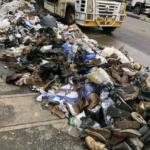
The House’s directive is designed to compel the relevant institutions to account for several critical issues. The agencies are expected to provide a full and candid explanation regarding the root causes of the recurrent flooding, which experts and residents attribute to a complex mix of clogged drainage systems, poor waste management, and unregulated construction in wetlands. EPA Executive Director Emmanuel Urey Yarkpawolo has previously warned that “wetlands serve as natural water retention systems, but when they are filled or built upon, the water has nowhere to go.”
Furthermore, the agencies must outline their immediate, medium, and long-term interventions. While the World Bank-funded Liberia Urban Resilience Project (LURP) has been undertaking drainage cleaning activities, a recent report noted that the positive outcomes of Phase I were “short-lived” due to the “reoccurrence of the pilling of silts and solid wastes” caused by poor sanitation practices.
The House’s request also demands clarity on inter-agency coordination and preparedness. A significant challenge has been the lack of a unified strategy, with residents and officials alike pointing to weak enforcement of land-use rules as a major driver of the crisis.
A joint investigation team was previously formed to tackle flooding in Monrovia and Paynesville, comprising the National Road Fund, Public Works, EPA, National Disaster Management Agency (NDMA), and other entities. However, the upcoming appearance will test whether this coordination has translated into effective action.
The memorandum explicitly warns against a “catastrophic flooding disaster” akin to the tragedy in Ghana, where President John Dramani Mahama described the 140mm of rain in one day as “the highest experienced in several years” and ordered the demolition of illegal structures blocking waterways.
As Monrovia continues to experience heavy rainfall, with early flooding already reported in parts of Montserrado County, the NDMA has activated its emergency response system. However, the agency has acknowledged operating with limited resources in the face of increasing risks.
“Flood prevention is not the responsibility of one institution alone,” Yarkpawolo recently stated, emphasizing the need for government-wide coordination. Monday’s appearance before the Plenary is expected to be a critical test of whether the agencies can present a unified plan to protect citizens and strengthen national resilience. The House has made clear that the agencies must appear before leadership on Monday to provide the necessary explanations and outline concrete measures being pursued.