By: Laymah Kollie
MONROVIA, Liberia – Liberia is hosting a five-day meeting of the Economic Community of West African States (ECOWAS) Directors General of National Statistical Offices, where leaders renewed calls for stronger regional cooperation and harmonized statistical systems as a foundation for the proposed ECOWAS single currency.
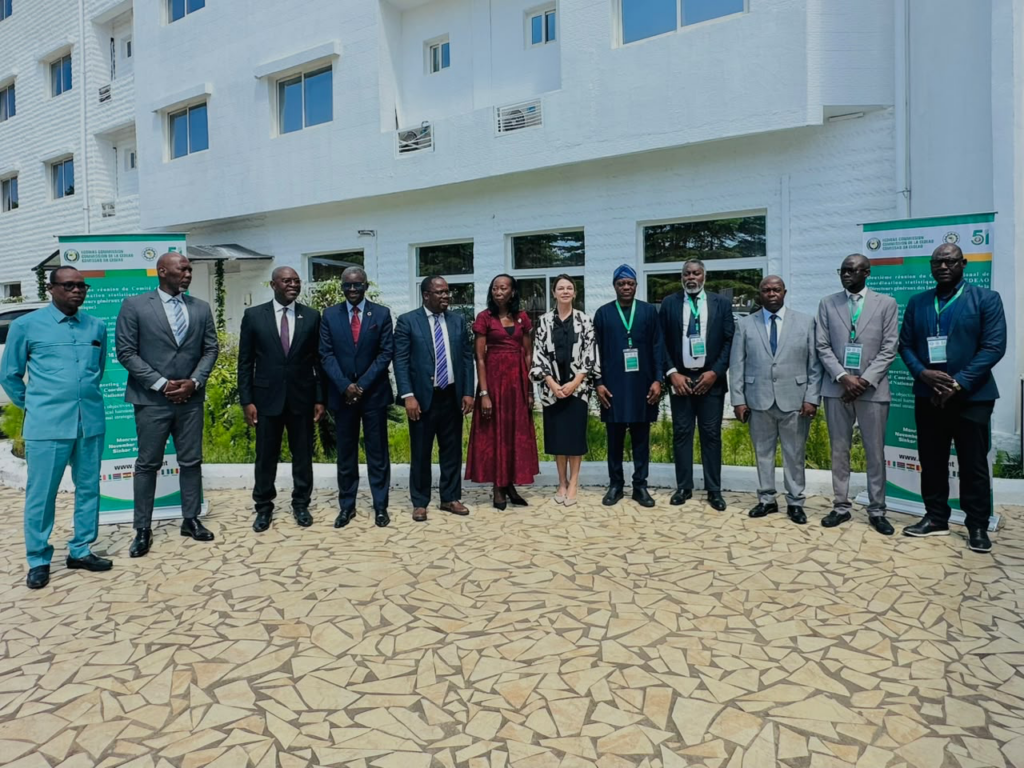
The Second Meeting of the ECOWAS Regional Statistical Coordination Committee (RSCC) opened Monday, November 16, 2026, in Monrovia, bringing together statistical chiefs from across the region to strengthen collaboration among national statistical institutions, improve the quality and comparability of official statistics, and support evidence-based policymaking.
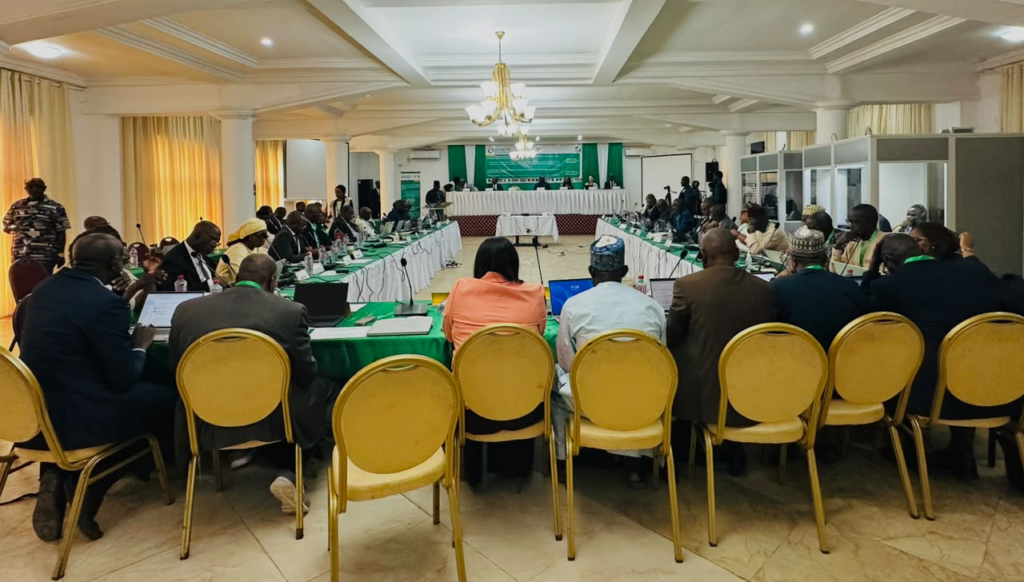
Also, the meeting runs through Friday, November 20, and it is particularly significant to ECOWAS’ regional integration agenda, as member states seek to establish common statistical standards capable of supporting trade, economic policy coordination, regional development and the eventual introduction of a single currency.
ECOWAS Representative calls for credible and comparable statistics:
Delivering a statement on behalf of the President of the ECOWAS Commission, the ECOWAS Resident Representative in Liberia, Ambassador Mohamed Kenewui Konneh, underscored the critical role of statistics in achieving the region’s integration objectives.
Ambassador Konneh said harmonized and comparable data were essential for ECOWAS to design, monitor and evaluate policies affecting citizens, including free movement, trade, food security, agricultural development and economic convergence.
He specifically linked the importance of reliable statistical information to the proposed ECOWAS single currency, noting that inflation figures and other economic convergence indicators must be credible if member states are to make informed monetary decisions.
“Without harmonized, comparable data, our community cannot design, monitor, or evaluate the policies that matter to our citizens,” Konneh stressed.
He also highlighted progress made in strengthening national statistical development strategies, improving civil registration and vital statistics, preparing for the 2030 round of population and housing censuses, and harmonizing consumer price indices, national accounts and external trade statistics.
However, he acknowledged persistent challenges, including inadequate financing, limited staffing capacity, delays in releasing statistical information and the need to protect the independence of national statistical institutions.
Konneh called on the Directors General to use the meeting to address these challenges through stronger methodological standards, improved data quality and deeper cooperation between national statistical offices and the ECOWAS Commission.
He reaffirmed the Commission’s commitment to supporting regional statistical integration through capacity-building, coordination and advocacy for increased resources for national statistical institutions.
Ngafuan calls for stronger regional statistical cooperation
In a special statement delivered on behalf of the Directors General of National Statistical Institutes across ECOWAS member states, Liberia’s Director General of the Liberia Institute of Statistics and Geo-Information Services (LISGIS), Richard Fatorma Ngafuan, emphasized the need for collective commitment to strengthening statistical systems and ensuring that regional decisions are guided by credible evidence.
Ngafuan stressed that statistical harmonization must go beyond agreements and technical documents to produce practical improvements in how data are collected, processed, validated, and published across member states.
He highlighted the importance of adopting common definitions, consistent classifications and reliable data sources to ensure that statistics produced by different countries are comparable while still reflecting their respective national realities.
He further emphasized that regional statistical cooperation should strengthen the measurement of population dynamics, economic activities, merchandise trade, informal cross-border trade, services and tourism.
Ngafuan also underscored the need to translate regional statistical guidelines into practical improvements in the work of national statistical institutions, including better questionnaires, stronger administrative records, improved validation procedures and more accessible statistical publications.
Liberia Minister of State and Presidential Affairs Samuel A. Stevquoah, launched the occasion while affirming the government’s commitment to the body.
The gathering is an opportunity for ECOWAS member states to strengthen their collective capacity to produce reliable statistics that would guide regional planning, policymaking and development.
With the region’s growing economic interdependence makes it necessary for countries to speak a common statistical language, particularly as goods, services, labour and ideas increasingly move across national borders.
According to Director Ngafuan, the meeting will highlight key areas for consideration, including civil registration and population census systems, statistics on the non-agricultural informal sector, supply and use tables, social accounting matrices, merchandise trade, informal cross-border trade, services and tourism.
He explained that these statistical areas are critical to understanding the region’s economic activities, population dynamics and development challenges.
Another key issue highlighted was the review of the 2027 Annual Work Programme, which he said should establish clear priorities, responsibilities, realistic resource requirements and effective follow-up mechanisms.
According to him, the success of regional cooperation would ultimately be measured by the capacity of national institutions to work together and produce evidence that governments and citizens can trust.
The five-day meeting is expected to provide an opportunity for Directors General and regional stakeholders to exchange experiences, examine existing statistical challenges and agree on practical measures to strengthen the ECOWAS statistical system.
As West African countries continue pursuing deeper economic integration, the call for a common statistical framework remains central to efforts toward a single currency, improved trade relations and coordinated development policies.
For Liberia, hosting the regional gathering also represents an opportunity to demonstrate its commitment to regional cooperation and the strengthening of national statistical institutions.