By Jessica Cox
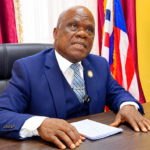
The Chief Executive Officer of the Liberia Maritime Authority (LiMA), Cllr. Neto Zarzar, has called for stronger international cooperation to address growing threats to global shipping, warning that no single country can independently guarantee maritime safety and security.
Zarzar said maritime security requires coordinated action among flag states, coastal states, port states, international organizations, regional institutions, and private shipping companies, particularly as geopolitical tensions, armed conflicts, piracy, cyberattacks, and transnational crimes continue to threaten international shipping.
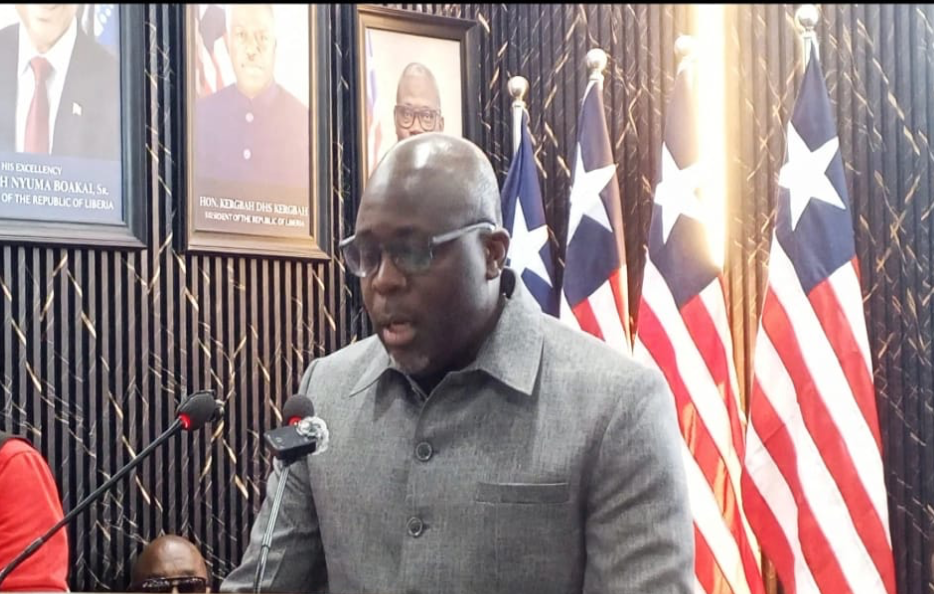
Speaking Tuesday at the Ministry of Information’s regular press briefing in Monrovia, the LiMA chief announced that Liberia will host a high-level dialogue on global maritime safety, security, and the welfare of seafarers on Thursday, November 19, 2026, at the Liberia Maritime Training Institute in Marshall, Margibi County.
The engagement, scheduled to begin at 10 a.m., will be held under the theme, “Enhancing Global Maritime Safety, Security, and the Welfare of Seafarers for International Peace and Shared Prosperity.”
The dialogue comes as Liberia prepares to assume the rotating presidency of the United Nations Security Council in December 2026, placing the engagement within an important period of the country’s international affairs.
The meeting is expected to bring together senior government officials, members of the diplomatic corps, United Nations representatives, maritime safety and security experts, shipping industry leaders, and other national and international stakeholders to examine emerging threats confronting commercial shipping and seafarers.
According to Zarzar, the global maritime environment is becoming increasingly complex, with threats ranging from geopolitical tensions and armed conflicts to piracy, cyberattacks linked to the growing digitalization of shipping, illegal, unreported and unregulated fishing, narcotics trafficking, and human trafficking.
He expressed concern over the risks facing commercial vessels and maritime infrastructure, particularly in strategically important shipping corridors and conflict-affected areas, including the Gulf of Guinea and the Gulf of Aden.
He noted that disruptions to major shipping routes can affect international trade, weaken supply chains, and increase economic pressures on countries and ordinary citizens who depend on the movement of essential goods.
The LiMA chief, however, stressed that the consequences of maritime insecurity extend beyond economic losses, emphasizing that the lives and welfare of seafarers must receive equal attention in international security discussions.
“Seafarers are human beings whose lives, safety, dignity, and welfare must be protected at all times,” Zarzar said.
He observed that seafarers work in increasingly dangerous environments, often separated from their families for extended periods, while ensuring that goods reach markets across the world.
Without their contribution, he said, commercial vessels would be unable to sustain the movement of goods that supports international trade and commerce.
Zarzar therefore maintained that efforts to protect commercial shipping must go hand in hand with measures to safeguard the men and women working aboard vessels.
He further highlighted Liberia’s position as the world’s largest flag state, saying the country’s influence in the international maritime industry comes with responsibilities that extend beyond maintaining a reputable and competitive ship registry.
According to him, Liberia must also support international efforts to strengthen maritime safety, promote freedom of navigation and communication, protect seafarers, combat maritime crimes, and advance cooperation among countries and maritime institutions.
He said the planned dialogue is intended to provide a platform for stakeholders to examine these challenges and strengthen collective responses to threats facing the global maritime domain.
The engagement is also expected to reinforce the importance of multilateral cooperation, improved information sharing, and the harmonization of international maritime standards.
For Liberia, the dialogue presents an opportunity to demonstrate its commitment to international maritime governance while preparing to take on a leadership role at the United Nations Security Council.
Zarzar said the growing threats to international shipping make cooperation among maritime stakeholders increasingly necessary, stressing that the responsibility for protecting the global maritime environment must be shared.