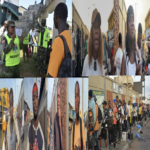



MONROVIA — There is no shame in trembling before a battlefield. But there is grave danger in trembling before a sentence. The ongoing Armed Forces of Liberia (AFL) 2026 recruitment drive—officially underway since April 27 at the Barclay Training Center (BTC)—has exposed a wound Liberia can no longer afford to bandage. Since last week, videos have circulated across social media showing young applicants struggling to read short written passages. Public ridicule followed. So did excuses.
Whether born of anxiety or absence of schooling, an inability to read under pressure is still an inability to read when it matters. And in a military, it always matters. Orders are not given through gestures on a live battlefield. Reports are not filed with courage alone. A soldier who cannot read a map, a patrol log, a ROE (rules of engagement) card, or a medical evacuation request is not merely disadvantaged—he or she is a liability.
The AFL must therefore make one thing immediate and non-negotiable in this recruitment cycle and all those to follow: reading proficiency must become a priority, not an afterthought. Let us be clear. Liberia’s adult literacy rate stands at roughly 48 percent—barely half the population. In rural areas, it drops to 34 percent. These are not statistics. They are the very pools from which the AFL draws its future rank and file. Ignoring this reality during recruitment does not show compassion. It shows strategic failure.
Exiled Liberian, Martin Kollie, rightly pointed to the deeper rot: “A few greedy politicians pocket almost everything every year.” He noted that US$559,180 was allocated for “Entertainment for Speaker Koon” while public high schools received scraps. He has since raised private funds for adult literacy programs, saying, “It’s our system that produced them as graduates. We can’t beat on them.”
We agree. But beating on them is not the answer. Neither is pretending phobia is the core problem.
The AFL must integrate a mandatory, low-stakes reading assessment early in the screening process—not to shame, but to identify. Candidates who struggle should not be automatically rejected. Instead, they should be flagged for remedial support before basic training even begins.
Applicants like Micarlos Peter, an electrician, and Jarret Harris, a contractor, have shown that passion for service runs deep. Inez Togbah traveled from Ganta City and spent four days in line because her business failed. Anthony Menyon cried when turned away over documents but swore he would return. These are not lazy people. They are products of a broken educational compact between the state and its children.
But the military cannot fix Liberia’s schools. What it can do is refuse to lower its own standards while simultaneously refusing to abandon those who fall short. That is the difference between an army and a militia. The AFL recruitment screening will continue through June 27, moving from BTC to Tubmanburg, Gbarnga, Zwedru, and Harper. More than a thousand applicants are competing for just six hundred slots.
That competition should be fierce—but fair. And fairness begins with honesty: fear is real, but literacy is survival. If the Armed Forces of Liberia wants to be a professional force worthy of the nation’s trust, it must stop treating reading as a clerical skill and start treating it as a combat essential. Because on any future mission, the most dangerous weapon is not the one you hold.