By Jessica Cox
MONROVIA, Liberia — Liberia is taking initial steps toward developing a national framework for autism and intellectual and developmental disabilities, with government officials and international partners calling for increased public education, improved support for affected individuals, and greater attention to caregivers.
Hon. Foday E. Karpeh, Chief of Staff in the Office of the First Lady, said the country currently lacks a structured national policy framework specifically addressing autism and intellectual and developmental disabilities, making awareness and stakeholder engagement important starting points toward developing a coordinated national response.
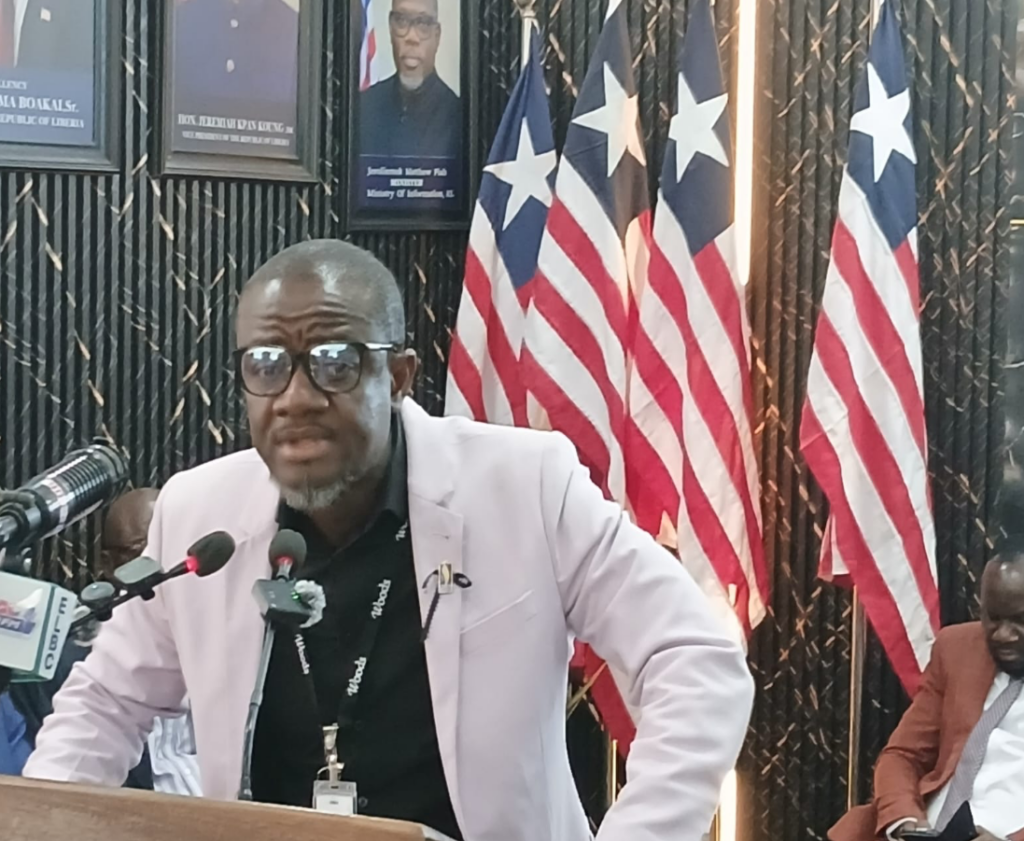
Speaking at the Ministry of Information’s Charles Gbenyon Hall in Monrovia, Karpeh disclosed that the planned initiative will bring together policymakers, caregivers, families, professionals, and international partners to discuss the challenges facing people living with these conditions and identify possible solutions.
He emphasized that the initiative is intended to extend beyond a single conference or political administration, describing it as a long-term national undertaking.
“This is not tied to a political tenure. It is basically a national initiative,” Karpeh said, stressing the need for sustained efforts to ensure that affected individuals receive appropriate care and support.
The awareness initiative is scheduled for November 9–11 at the Ministerial Complex in Congo Town. A media stakeholder engagement is expected on November 9, followed by the official launch on November 10 at 10 a.m.
Jomah B. Samuels, Ambassador of Woods System of Care’s International Workers Program, underscored the importance of strengthening public education and awareness of Autism Spectrum Disorder (ASD) and Intellectual and Developmental Disabilities (IDD).
Addressing journalists at the Ministry of Information, Samuels said the conference seeks to improve public understanding of autism and the difficulties experienced by individuals living with developmental disabilities.
He noted that people on the autism spectrum have different needs and require appropriate attention, understanding, and support from their families, caregivers, and society.
According to Samuels, the conference will provide an opportunity to promote education, encourage professional engagement, and strengthen the role of caregivers in supporting individuals with disabilities.
He stressed that increased awareness and inclusion are necessary to ensure that people with autism and other developmental conditions are not overlooked in society.
Samuels said the partnership with Woods System of Care, a Pennsylvania-based institution specializing in services for people with intellectual and developmental disabilities, is intended to bring international experience to Liberia’s efforts.
The institution, which has operated since 1913, provides services to individuals with autism, intellectual and developmental disabilities, brain injuries, and other conditions.
Samuels explained that the partnership followed a visit by Liberia’s First Lady to the institution in the United States, where she observed its work and expressed interest in bringing similar awareness and support initiatives to Liberia.
He said the conference would also address misconceptions surrounding autism and developmental disabilities, including beliefs that associate such conditions with witchcraft or supernatural explanations.
Samuels emphasized that individuals living with autism and other developmental disabilities possess talents and abilities that are often overlooked because of stigma and limited public understanding.
He called for greater public education and support for caregivers, noting that families need information and guidance to better understand and care for individuals with these conditions.
Karpeh said Liberia’s response must be developed within the country’s own social and cultural context rather than simply adopting approaches from other countries.
He said the government intends to engage affected individuals, families, caregivers, policymakers, and international partners in discussions aimed at identifying the country’s needs and developing a framework suitable for Liberia.
The consultations are expected to help establish a clearer understanding of the challenges faced by individuals with autism and developmental disabilities and inform future policy discussions.
Karpeh urged the media to participate in the awareness activities and help disseminate accurate information to communities across the country.
He acknowledged that the initiative represents only the beginning of a broader process, noting that sustained collaboration among government, families, professionals, and development partners will be necessary to establish a comprehensive national response.
The three-day conference is expected to bring together stakeholders to discuss public awareness, education, caregiver support, and the development of a more inclusive approach to autism and intellectual and developmental disabilities in Liberia.