


–Liberian women Importers Cry out as House Summons Commerce Ministry, Others
By Jerromie S. Walters
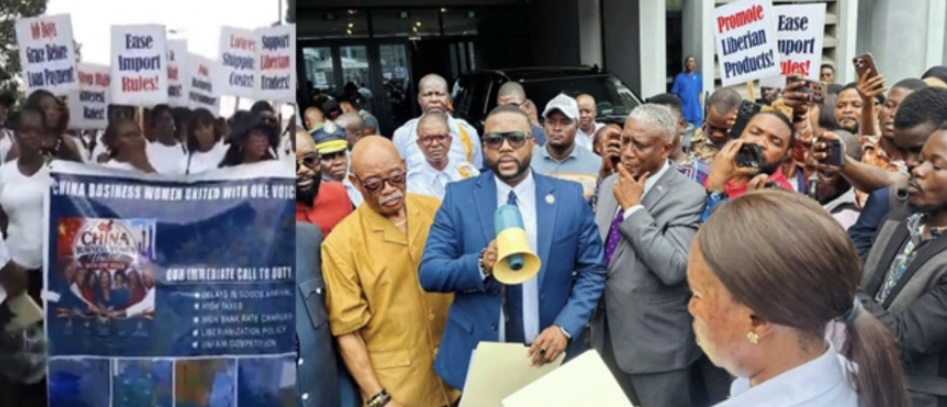
MONROVIA — A coalition of Liberian importers and businesswomen has warned that prolonged shipping delays and port bottlenecks are pushing local enterprises toward collapse, declaring in an urgent petition to the Legislature and the National Port Authority that “our businesses are collapsing, our investments are trapped, and our families are suffering.”
The China Business Women United with One Voice/Consortium of Liberia Importers, joined by other commercial stakeholders, submitted the petition Tuesday, November 3, 2026, demanding immediate government intervention to address what they describe as catastrophic disruptions in the import supply chain, particularly for cargo originating from Asia and China.
The coalition’s appeal has prompted swift legislative action. The House of Representatives has cited several government institutions, port operators, shipping agencies, and business associations to appear before the Legislature on Friday, November 6, 2026, to address the concerns.
Those cited include the Ministry of Commerce, the Liberia Chamber of Commerce, the Association of Shipping Agencies, the National Port Authority, APM Terminals, the National Brokers Association, the Liberia Maritime Authority, the leadership of the China Business Association, GTMS, and the Liberia Business Association.
Six to Seven Months at Sea
In their petition, the business stakeholders paint a grim picture of an import system they say has become structurally hostile to Liberian entrepreneurs. Shipments from China and Asia now take six to seven months to arrive in Monrovia, according to the coalition. The group argues this timeline prevents Liberian entrepreneurs from turning over their capital even twice a year.
“Silence is no longer an option,” the petition states. “Our businesses are collapsing, our investments are trapped, and our families are suffering.” The coalition says its members secure high-interest bank loans using their personal homes and properties as collateral to sustain their operations, only to watch their capital remain trapped at sea or stuck at the port for months on end.
Delivery Orders Expire Before Cargo Arrives
A central grievance in the petition concerns the arbitrary expiration of Delivery Orders. According to the coalition, systemic bottlenecks at port clearance and delays caused by major shipping lines—most notably Maersk Line—cause required Delivery Orders to expire before cargo can be retrieved.
Business owners are then forced to pay costly renewal fees, administrative surcharges, and what the group describes as penalizing demurrage and detention fees for delays completely beyond their control.
The coalition is demanding that shipping lines and port authorities waive re-issuance fees and demurrage charges on expired Delivery Orders whenever delays are caused by shipping schedules or port congestion.
Double Taxation and Mounting Debt
While their capital remains trapped at sea or stuck at the port, importers say loan interest continues to accumulate. They also remain obligated to meet quarterly tax obligations to the Liberia Revenue Authority, pay office rents, and settle employee salaries.
The coalition describes this as a form of double taxation, arguing that they are penalized both by the delays and by the financial obligations that continue regardless of whether their goods reach the market.
“We are not enemies of the state—we are the backbone of Liberia’s economy,” the petition reads. “We want to work, pay our taxes, and employ our people, but we cannot survive a broken shipping and port system.”
The coalition is calling for an immediate legislative inquiry into shipping lines—specifically naming Maersk Line—regarding excessive transit times, arbitrary handling fees, and cargo delays. They also want the government to mandate clear, predictable, and accountable arrival and cargo handover timelines for shipping operators.
Additionally, the group is urging the National Port Authority and terminal operators to streamline container clearance and eliminate what they describe as unnecessary bureaucracy at the Freeport of Monrovia.
The petition also raises concerns about the non-enforcement of Liberia’s Liberalization Policy. According to the coalition, foreign traders bypass fair market practices by importing directly from Chinese factories and selling retail in Liberia at undercut prices.
This practice, they argue, is driving local entrepreneurs out of business and undermining the government’s own liberalization framework. The coalition is demanding strict enforcement of the policy to protect Liberian-owned small and medium enterprises from unfair foreign competition in the retail and wholesale sectors.
Long-Term Reform Demands
Beyond immediate relief, the business stakeholders are calling for the establishment of long-term maritime and supply chain reforms. They want sustainable logistics policies that prevent recurring port backlogs, protect local importers, and stimulate national economic growth.
The coalition has requested an immediate audience with the National Legislature and the Management of the National Port Authority to present their grievances and work toward solutions. “Our properties, our children’s futures, our employees’ jobs, and the stability of the Liberian economy are on the line,” the petition states.
Legislative Response
The House of Representatives has responded to the coalition’s appeal by summoning a broad cross-section of stakeholders to appear before the Legislature on Friday, November 6, 2026. The scope of those cited suggests lawmakers are casting a wide net in their investigation, bringing together government regulators, port operators, shipping agencies, and business associations to address the mounting crisis.
The Liberia Maritime Authority and the Ministry of Commerce are expected to address the regulatory dimensions of the crisis, while the National Port Authority and APM Terminals will likely face questions about port operations and terminal efficiency. The Association of Shipping Agencies may be asked to respond to allegations of excessive transit times and arbitrary fees, while the Liberia Chamber of Commerce, the China Business Association, and the Liberia Business Association are expected to provide perspective on the broader economic impact.
The coalition’s petition outlines six specific demands: an immediate legislative inquiry into shipping lines, particularly Maersk Line; waiver of unfair fees for expired Delivery Orders; mandated delivery schedules for shipping operators; expedited port clearance at the Freeport of Monrovia; strict enforcement of the Liberalization Policy; and long-term maritime and supply chain reforms.
The women’s concern comes as the World Bank outlines four major priorities for Liberia’s economic transformation, warning that the country’s 5.1 percent growth in 2025 has failed to translate into meaningful improvements in the lives of ordinary citizens. The recommended priorities include: maintaining macroeconomic stability, removing barriers to private investment and economic diversification, strengthening governance of State-Owned Enterprises and expanding productive opportunities, and improving livelihoods.
The priorities—contained in the World Bank Group’s seventh Liberia Economic Update, titled “Beyond Growth: Addressing Structural Constraints to Job-Rich Growth in Liberia”—were unveiled Monday in Monrovia at the report’s launch. “Liberia’s recent economic gains are encouraging. The key challenge now is translating growth into opportunities and improvements in people’s lives,” said Georgia Wallen, World Bank Group Country Manager for Liberia.