-For 2029
By Jerromie S. Walters
Women candidates won races across the US and broke barriers in several states as Democrats captured control of both the House and Senate, capitalizing on President Donald Trump’s unpopularity to secure power to check his final two years in office. Pundits say the results offer a marker of hope for Liberian women politicians as Liberia prepares for its 2029 elections.
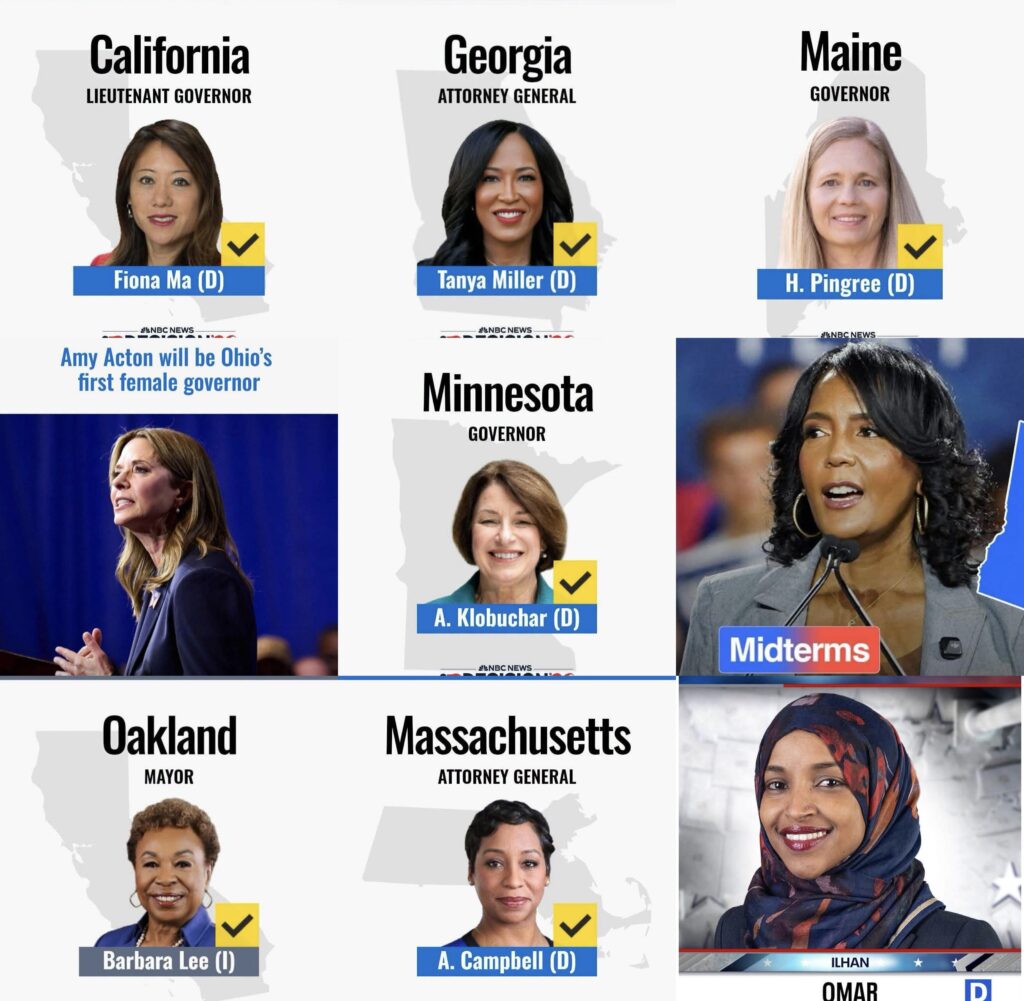
Keisha Lance Bottoms became the first Black woman elected governor of any U.S. state after winning in Georgia. Amy Acton won Ohio’s governor race and became the state’s first female governor. Marsha Blackburn won Tennessee’s governor race and became the state’s first female governor. Kelly Ayotte won a second term as New Hampshire’s governor.
Voters also elected women to other statewide offices. A. Campbell won Massachusetts’ attorney general race, Tanya Miller won Georgia’s attorney general race, A. Klobuchar won Minnesota’s governor race, H. Pingree won Maine’s governor race, and Fiona Ma won California’s lieutenant governor race. Barbara Lee won Oakland’s mayor race.
Democrats also won key races and ballot measures. James Talarico is expected to win a Texas Senate seat that Democrats had not held for 38 years. Adam Hamilton won a Senate seat in Kansas, and Annie Andrews won a Senate seat in South Carolina. Katy Padilla Stout won Texas’ 23rd Congressional District.
Virginia voters approved a constitutional amendment protecting same-sex marriage. Maryland voters approved a Democratic-backed amendment that clears the way for the General Assembly to redraw the state’s congressional map.
Republicans won several races. Tommy Tuberville won Alabama’s governor race, and Kelly Ayotte won reelection as New Hampshire’s governor. Trump told The New York Times he will accept the results. He told Fox News he did not see the GOP losses “as a hit on me.”
As some consider the US women’s wins a hope for Liberian women, they remain significantly underrepresented in the national legislature, holding roughly 11 percent of seats despite making up nearly half the population and a large share of registered voters. The current legislature, elected in 2023, includes eight women in the 73-member House of Representatives and three in the 30-seat Senate.
Women’s legislative representation in Liberia has fluctuated without sustained progress. The 2005 post-civil war elections marked a high point: Ellen Johnson Sirleaf became Africa’s first elected female head of state, and 14 women entered the 52nd Legislature. However, the numbers declined in subsequent cycles—nine women won seats in 2011, and the figure remained low through the 2017 and 2023 elections.
Political parties have largely failed to implement the voluntary 30 percent gender quota proposed in 2005, and a more recent legislative effort to mandate a quota faced resistance over enforcement concerns . Women aspirants also face limited access to campaign financing, weaker political networks, and risks of violence during elections. Ahead of the 2029 general elections, the Women’s Legislative Caucus has publicly committed to supporting women candidates.