

-Over “Barking Dog” Comment
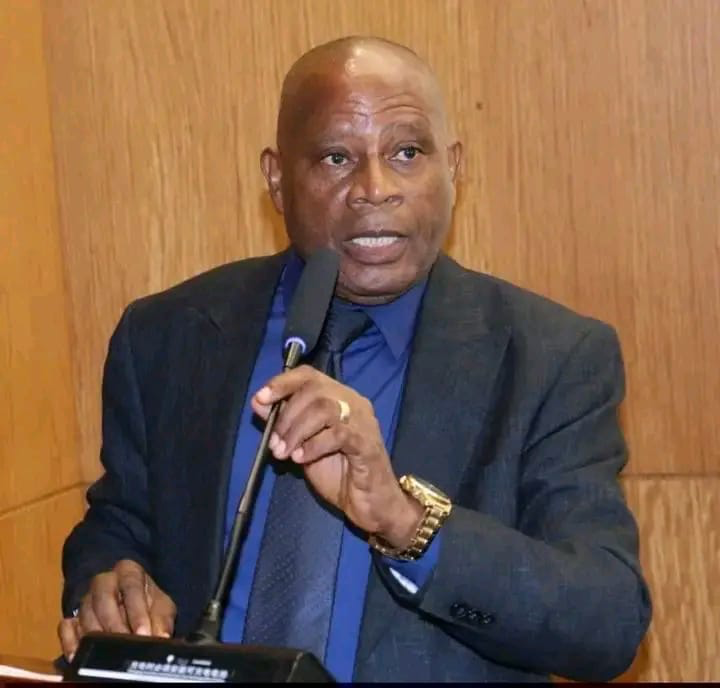
MONROVIA – Liberian Senator Augustine Chea has sharply condemned President Joseph Boakai’s recent “barking dog” analogy, calling it a failure of leadership and demanding an immediate apology to the Liberian people. In a statement posted to his official Facebook page, Senator Chea responded to growing public backlash over the President’s remarks, in which Boakai urged cabinet members not to be distracted by critics—comparing such distractions to a pedestrian being barked at by a dog.
“The President should have chosen inclusive, non-demeaning imagery and avoided comparisons that reduce critics to animals (dogs). That is insensitive and dehumanizing,” Chea wrote. “President Boakai must apologize.” President Boakai made the comments during a recent engagement with his cabinet, advising them to remain focused on governance despite opposition voices.
Supporters of the President have defended the statement as purely metaphorical, arguing that Boakai was simply warning against distraction, not insulting Liberians. However, Senator Chea noted that the broader public reaction has been “predominantly critical,” with many interpreting the analogy as dismissive and disrespectful—particularly coming from the nation’s highest office.
“For critics, the comparison of dissenting voices to ‘barking dogs’ was seen as dismissive and disrespectful, and inappropriate for presidential communication, where respect for opposing views is expected,” Chea stated. The Senator emphasized that presidential communication is held to a uniquely high ethical standard, requiring language that is “respectful, measured, and unifying.”
“Respectful speech does not mean avoiding disagreement,” Chea wrote, “but rather expressing it in a way that preserves the dignity of the Office and of all participants in public discourse.” He argued that even if the President intended to refer only to uninformed or external critics, the metaphor still encourages “a general attitude of disregard rather than thoughtful critique.”
The most troubling aspect of the episode, according to Senator Chea, is the absence of any apology from President Boakai or his office. “The lack of acknowledgment suggests a failure to recognize the impact of the words used,” Chea said. “In leadership, failure to address public concern can be seen as reinforcing the original message rather than softening it.”
He added: “Whatever the President might personally believe, the fact that people felt genuinely offended by the statement created a responsibility to respond with leadership. The responsible course of action would have been to offer an apology.”bInstead, Chea noted, the President’s office and supporters defended the statement as “mere metaphor” and dismissed criticism—a posture the Senator described as reflecting “broader political insensitivity and hypocrisy.”
Senator Chea concluded his statement with a direct demand: “President Boakai must apologize.”
The controversy continues to stir debate across Liberian political and civic circles, with some defending the President’s right to metaphorical speech and others agreeing with Senator Chea that the nation’s leader should model greater respect for all citizens—including those who dissent.