

-Ex-pres. Sirleaf Urges Pres. Boakai to Act on War Crimes and Anti-Corruption Courts
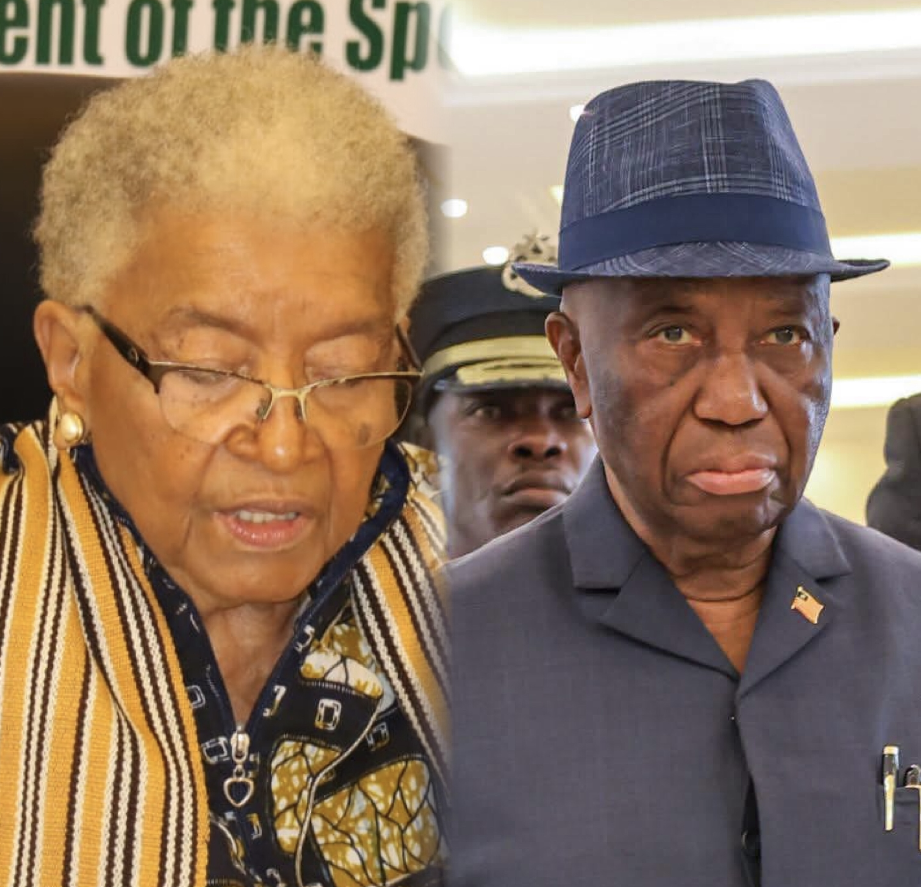
Monrovia – Former Liberian President Ellen Johnson Sirleaf has thrown her weight behind the proposed establishment of both the War and Economic Crimes Court and a specialized National Anti-Corruption Court, urging President Joseph Nyuma Boakai to demonstrate decisive leadership by taking prompt executive action.
Speaking at a policy dialogue organized by the Center for Transparency and Accountability in Liberia (CENTAL), Sirleaf reflected on the deep-seated corruption she inherited upon taking office in 2006.
“When I took the Presidential Oath of Office in January 2006, Liberia was a nation where corruption was largely the operating system,” she stated. “Public office had become, for too many, a license for personal extraction rather than an obligation to serve.”
The former President acknowledged the anti-graft reforms introduced during her tenure, including the strengthening of institutions such as the General Auditing Commission, the Governance Commission, the Internal Audit Agency, the Public Procurement and Concessions Commission, the Financial Intelligence Agency, and the Liberia Anti-Corruption Commission. However, she conceded that without a specialized judicial framework, the majority of corruption cases never culminated in successful prosecutions.
Sirleaf made a compelling case for the creation of a dedicated National Anti-Corruption Court, arguing that it would ensure corruption cases are adjudicated swiftly, professionally, and without political interference. She warned that prolonged delays within the mainstream judiciary continue to erode public trust and impede the fight against graft.
On transitional justice, Sirleaf reaffirmed her support for the War and Economic Crimes Court, describing it as indispensable for addressing the atrocities committed during Liberia’s civil wars and prosecuting economic crimes linked to that dark chapter. She insisted that the court must be independent, well-resourced, and insulated from political manipulation.
In a direct appeal to President Boakai, she declared: “We call on the President to treat the request for the Specialized Court with the seriousness it deserves and to take the necessary corrective executive actions on that and the several scandals that plague our society.”
She emphasized that a credible accountability framework is fundamental to reinforcing the rule of law, advancing good governance, and ensuring the sustainability of Liberia’s development gains.
Also addressing the gathering, Cllr. Dr. Jallah A. Barbu, Executive Director of the Office for the Establishment of the War and Economic Crimes Court for Liberia (OWECC-L), reaffirmed his office’s unwavering dedication to advancing justice.
“OWECC-L remains committed to working openly, transparently, and inclusively with government institutions, civil society organizations, development partners, the media, victims’ groups, and the Liberian public to ensure the successful establishment of the court,” Dr. Barbu said.
He underscored that accountability is non-negotiable for strengthening the rule of law, ending the culture of impunity, and fostering lasting peace and reconciliation. He pledged that OWECC-L would continue executing its mandate with professionalism, integrity, and independence.
The CENTAL dialogue convened senior government officials, members of the judiciary, civil society organizations, development partners, anti-corruption advocates, and representatives of key accountability institutions to deliberate on practical strategies for combating corruption through judicial reform.