

-After Five Years of Advancing SRHR Advocacy
By Jerromie S. Walters
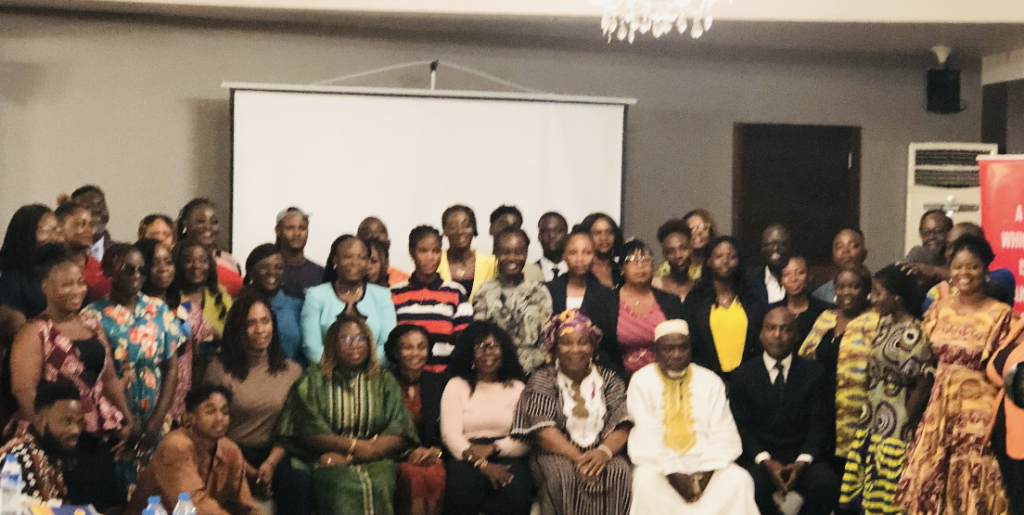
Monrovia, Liberia – The Amplifying Voices Project, a five-year initiative implemented by the Amplifying Rights Network (ARN) and dedicated to amplifying marginalized voices and strengthening sexual and reproductive health and rights (SRHR) advocacy in Liberia, officially concluded on June 29 with a close-out ceremony at the Mamba Point Hotel in Monrovia.
The event marked the culmination of a journey that began in 2021, transforming what was once a fragmented advocacy landscape into a coordinated, locally led movement capable of convening partners, mobilizing communities, and speaking with a credible national voice on SRHR issues.
The close-out ceremony featured a documentary screening tracing the project’s journey, followed by a panel discussion on sustaining community voices. The session, moderated by Lovetee David, included panelists Ida Nowaal Kaiser, Alonzo D. Dixon, Bendu Kamara, and Martin Mugerwa.
For Ida Nowaal Kaiser, ARN Chair and Head of the Rural Women and Rights Foundation, the project was transformative for her organization’s operations. She recounted how the initiative boosted their work through conflict resolution training, SRHR education including access to family planning, and enabling her organization to provide effective 24-hour services to communities in need.
Kaiser also stressed the importance of inclusivity in program design, urging international and national NGOs to ensure the involvement of everyone or leaving no one behind when designing their programs. She described this as the intersectionality approach—a perspective she considers essential for meaningful and sustainable development.
Bendu Kamara highlighted a particularly striking example of the project’s impact on access to justice. She shared the story of one of their staff members who was forcefully initiated into the local Sande society, where female genital mutilation is practiced. Although the staff member was mutilated, Kamara said they received support through the project to ensure the victim obtained justice. As a result, the traditional women responsible faced the law for their actions.
According to Kamara, this case led to a fundamental change in their operational approach. The incident occurred in the same environment where they operate, prompting their organization to adopt more vigilant and proactive strategies in protecting their staff and community members from harmful traditional practices while continuing their advocacy work.
Rightsholders also shared success stories and testimonials. Goodwill messages were delivered by
Dwede Tarpeh of the Swedish Embassy and Leonard Kamugisha of the United Nations Population Fund (UNFPA) admitted to the visible impact of the project and assured that their doors remain open for more support.
Also at the event, Dr. Wahdemi Gray-Harmon spoke on legacy and sustainability which she said ARN partners are eager to sustain the momentum by deepening county-level ownership, strengthening evidence and documentation, expanding inclusive SRHR messaging, and maintaining support for coordinated advocacy on comprehensive sexuality education, contraceptive access, Female Genital Mutilation abandonment, and Sexual Gender-Based Violence elimination.
From her end, Hawa C. Wilson led the recognition and appreciation ceremony, as the Swedish Embassy and the United Nations Population Fund (UNFPA) were presented with awards of appreciation. When the project launched, Liberia faced a dire SRHR context characterized by a maternal mortality rate of 628 deaths per 100,000 live births, a contraceptive prevalence rate of approximately 30 percent, and an adolescent fertility rate of 125 births per 1,000 girls aged 15 to 19.
The need for coordinated advocacy on safe abortion, contraceptive access, youth-friendly services, and comprehensive sexuality education was urgent.
The project, coordinated by the Swedish Association for Sexuality Education (RFSU) and implemented by the Amplifying Rights Network (ARN) with financial support from the Swedish International Development Cooperation Agency (Sida), answered that call. With a total budget of SEK 22,797,000, the initiative supported the creation of ARN as a coordinated national SRHR platform.
The selection process itself demonstrated the demand for coordination: 48 organizations expressed interest, 29 were shortlisted, and 10 partner civil society organizations were ultimately selected to form the network. In 2023, ARN convened the first-ever national SRHR conference, drawing 700 participants. The momentum continued to grow, and in 2025, the second national conference brought together over 1,000 stakeholders from all 15 counties, utilizing six satellite hubs and providing braille and sign language interpretation to support participation by persons with disabilities.
The project’s reach extended far beyond conference halls. In 2024 alone, ARN mobilized more than 3,700 people nationwide across all 15 counties for Public Health Bill awareness and Call to Action socialization. The network also engaged 103 religious and traditional leaders in 2023 and 2024, and progressively observed eight international advocacy days during the 2024-2025 period.
Also, twenty ARN partner staff received QuickBooks certification as part of efforts to strengthen local partner systems in finance, governance, and conflict management. Budget execution progressed from 79 percent in 2022 to 90 percent in 2023, demonstrating strong delivery and local systems.
The project’s impact brief emphasizes that the Amplifying Voices Project “did not only fund activities, it created a locally led SRHR movement with stronger partner systems, broader county reach, inclusive convening power, and a multistakeholder foundation for sustained SRHR advocacy”.
Amid the achievements, challenges loom. Sweden’s decision to close its Monrovia embassy by August 2026 has raised concerns about the future of SRHR advocacy in Liberia. The Swedish government, which has been the sole backer of the Amplifying Rights Network, cited reduced funding in its overall development cooperation budget as the reason for the withdrawal. However, an embassy official at the event said although the embassy is shutting down, there is still room for funding.
Civil society advocates warn that the exit could disproportionately affect rural communities, where mentorship and sexuality education programs may shrink sharply. The Swedish Association for Sexuality Education estimates that 80 percent of young people under 20 lack access to sex education and contraception.