


By Laymah Kollie
GRAND CAPE MOUNT COUNTY, Liberia — United Nations Population Fund (UNFPA) Country Representative Dr. Mady Biaye has expressed concern over a sharp increase in pregnancies among girls under 15 in Grand Cape Mount County. He called for stronger community engagement, improved access to family planning services, and collective action to protect adolescent girls.
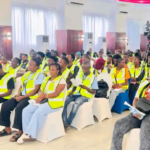
Dr. Biaye raised the concern during a health tour by UNFPA and the Senate Committee on Health across Grand Cape Mount, Bomi, and Gbarpolu counties. Health officials presented data highlighting challenges confronting maternal and adolescent health services.
Figures presented by UNFPA Data Specialist Chea S. Wesseh showed that pregnancies among girls below age 15 in Grand Cape Mount County increased from 94 in 2024 to 151 in 2025. The figures represent an increase of approximately 61 percent in one year, raising concerns about the health, education, and protection of young girls in the county.
Wesseh’s presentation further indicated that 2,218 adolescents were among the 7,900 pregnant women recorded in the county in 2024. Adolescent pregnancies accounted for nearly 28 percent of pregnant women during the period under review.
The presentation also highlighted limited access to family planning services among adolescents. Less than 30 percent of adolescents accessed family planning services in 2025, compared with approximately 33 percent in 2024.
Dr. Biaye said the figures underscore the need for urgent interventions to prevent early pregnancy and ensure that adolescents receive appropriate reproductive health information and services.
“It’s not their fault,” he stressed, arguing that teenage pregnancy should not be treated simply as an individual failure but as a challenge requiring collective responsibility from families, communities, health workers, and government institutions.
The UNFPA representative urged health professionals to communicate with adolescents in supportive and nonjudgmental ways. He cautioned against approaches that stigmatize young girls instead of helping them understand the risks associated with early pregnancy.
He said society must confront harmful practices while promoting positive cultural values, adding that community and religious leaders should be actively involved in efforts to protect girls. According to Dr. Biaye, adolescent girls between the ages of 12 and 15 are not physically or socially prepared for the responsibilities and risks associated with pregnancy and childbirth.
He emphasized that prevention requires more than medical interventions, calling for stronger community-level education and better access to family planning information and services.
The concerns raised during the tour reflect Liberia’s broader adolescent reproductive health challenges. The World Health Organization’s African Region adolescent-health scorecard reports that Liberia recorded an adolescent birth rate of six births per 1,000 girls aged 10–14 in 2021, while the rate among girls aged 15–19 stood at 131 births per 1,000 girls.
These figures measure births rather than all pregnancies and predate the 2024 and 2025 county data presented by UNFPA.
WHO’s April 2024 fact sheet on adolescent pregnancy also warns that adolescent mothers face higher risks of eclampsia, serious infections, and other pregnancy-related complications than women aged 20–24. Babies born to adolescent mothers also face increased risks of premature birth, low birth weight, and severe neonatal conditions.
Against this background, Dr. Biaye said Liberia must intensify efforts to reduce early pregnancy and improve maternal health outcomes. He expressed concern that Liberia continues to experience a high maternal mortality burden despite the efforts of health workers and the progress reported by county health teams.
WHO’s Liberia country profile identifies the country’s maternal mortality ratio at 742 deaths per 100,000 live births, based on the 2019–2020 Demographic and Health Survey figures cited in its reporting.
Dr. Biaye called for improved documentation of maternal deaths at county level, requesting clear statistics for 2024, 2025, and 2026 to establish progress and identify persistent gaps. He said reliable data would help the government and development partners determine whether interventions were reducing maternal deaths and where additional resources were required.
Dr. Biaye also expressed frustration over delays in finalizing Liberia’s national roadmap for reducing maternal mortality. He said the document remained pending at the Ministry of Health despite efforts to advance it.
He explained that completing the roadmap was important not only for coordinating national maternal health interventions but also for unlocking potential funding opportunities at the regional level. The UNFPA representative called for the roadmap to be finalized and launched, saying maternal health challenges required stronger political commitment and coordinated action.
He emphasized that the Ministries of Health, Education, and Youth must work together to address adolescent pregnancy, keep girls in school, and provide support for those who have dropped out. According to him, improving adolescent health requires a broader approach that connects healthcare with education, social protection, and economic empowerment.
Dr. Biaye disclosed that Bomi County was being considered as one of two potential pilot locations for an initiative aimed at improving adolescent girls’ health, education, and empowerment. The proposed programme would seek to keep girls in school while creating opportunities for those who have dropped out to participate in income-generating activities.
One proposed component involves establishing workshops where out-of-school girls could manufacture reusable sanitary pads, helping address the cost of menstrual hygiene products and supporting girls’ continued participation in education.
Dr. Biaye said successful interventions could later be replicated in other parts of Liberia, depending on the results of the pilot projects. He added that community leaders and religious authorities would be important partners in communicating reproductive health messages in ways that reflect local realities and cultural contexts.
The UNFPA representative also explained that family planning should be presented as a means of helping families make informed decisions about the number of children they want and their ability to provide healthcare, food, education, and other essential needs.
Meanwhile, Senate Committee on Health Chairperson Senator Dabah Varpilah provided an overview of the tour. She explained that the delegation visited counties to assess health service delivery, engage county health teams, and identify challenges affecting healthcare facilities.
Varpilah said the exercise was intended to give lawmakers a clearer understanding of conditions on the ground, including the availability of health workers, infrastructure, financing, and essential services. She explained that the committee also wanted to examine whether government budget allocations were reaching health facilities as expected and identify administrative or financial obstacles requiring legislative intervention.
The delegation, which included members of the Senate and House of Representatives, engaged county health officials and visited health facilities to observe services and assess ongoing initiatives. Varpilah said the findings would help lawmakers strengthen their advocacy and engage relevant government institutions on challenges identified during the visits.
As the tour concluded across Grand Cape Mount, Bomi, and Gbarpolu counties, Dr. Biaye urged health workers, policymakers, community leaders, and development partners to work together to improve maternal and adolescent health outcomes.
He said adolescent girls must be protected from harmful practices and given the opportunity to remain in school, access appropriate health services, and prepare for adulthood. The UNFPA representative maintained that improving maternal health and preventing early pregnancy are essential to Liberia’s long-term development.
He called on county health authorities to provide accurate and timely data that would help measure progress, strengthen accountability, and guide future interventions. For Dr. Biaye, the increase in pregnancies among girls under 15 in Grand Cape Mount County is a warning that requires urgent attention—not blame directed at the girls, but a coordinated response from the society and institutions responsible for protecting them.