


-Nimely Slams NPL Conference
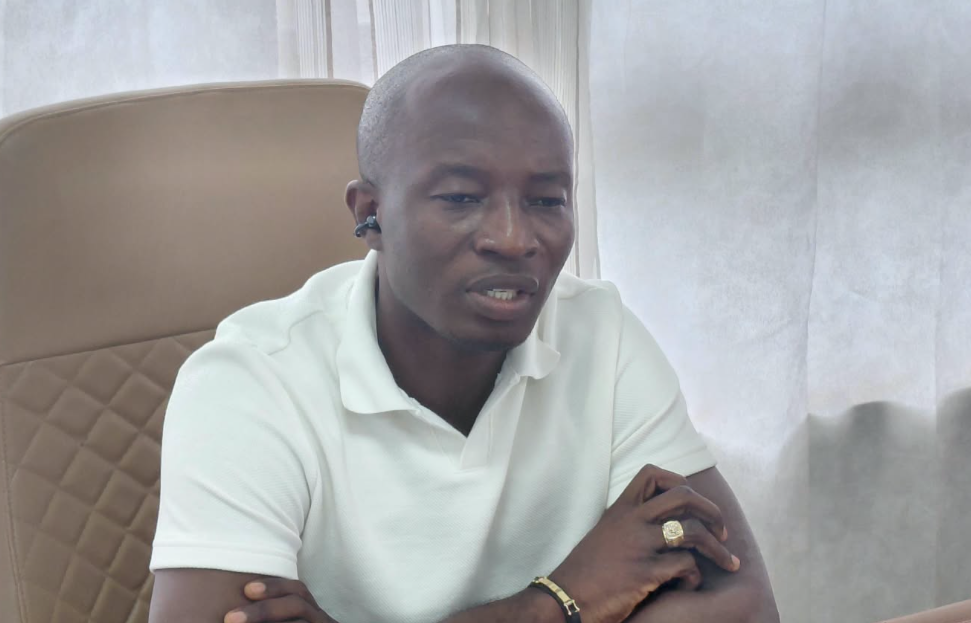
The president of the Trade Union Congress of Liberia (TUCL), Dominic Nimely, has sharply criticized the Central Bank of Liberia’s (CBL) National Non-Performing Loans Resolution Conference, recently held at the Ellen Johnson Sirleaf Ministerial Complex in Cong Town.
Nimely, who is also a member of the Liberia Business Association (LIBA) and Liberia Chambers of Commerce (LCC), also accused the government of repeatedly excluding Liberian businesses from major economic decisions that directly affect their survival.
Nimely said that while the CBL’s initiative to address non-performing loans (NPLs) is necessary, the government and banking sector cannot expect meaningful results when the very private-sector actors affected by the policy are left out of the conversation.
He lambasted, “We are tired of being left outside. We are tired of being abandoned. “It is a good thing for the government to come up with such an idea to go after loans, but we should have been part of the discussion from the onset.”
The CBL recently convened stakeholders under the theme, “Resolving Non-Performing Loans to Unlock Access to Finance for Private Sector Growth and Job Creation,” but Nimely argued that Liberian businesses should have been involved from the beginning in designing the framework.
According to him, the exclusion of the private sector risks undermining the very objective of the conference, referencing a foreign participant at the conference who, he said, questioned why Liberia’s private sector had not been adequately involved in discussions surrounding the NPL.
Nimely also challenged what he described as a double standard in the treatment of Liberian and foreign-owned businesses, particularly when it comes to bank borrowing, loan recovery, access to credit and public scrutiny.
He claimed that Liberian businesses are frequently publicly identified as examples of loan defaulters, while larger debts involving some foreign-owned businesses receive less public attention.
“Liberian businesses, we are always being used as case studies,” Nimely argued, insisting that the government must examine why businesses fail to repay loans instead of simply shutting down enterprises or auctioning their properties.
Nimely further took aim at Liberia’s lending environment, describing prevailing interest rates as a major obstacle to private-sector growth, and decried, “You are not lending to us; you are killing us.”
He complained that Liberian businesses face interest rates that can reach extremely high levels, arguing that such costs make it difficult for entrepreneurs to survive, invest and repay their loans.
Comparing Liberia with other countries in the region, Nimely said businesses elsewhere benefit from significantly lower lending rates and longer repayment periods, and declared, “You are not lending money to us, you are killing us.”
The Trade Union Congress president at the same time called on the CBL and commercial banks to reconsider lending conditions if they genuinely want to stimulate private-sector growth and employment.
He also criticized the judiciary’s approach to loan disputes, saying courts often focus on closing businesses and auctioning collateral without sufficiently examining the circumstances that led to loan defaults.
Nimely then called for banks, borrowers, government agencies, the judiciary and private-sector representatives to sit together and address the problem as a “two-way street”, and said, “Government policies affecting businesses should not be developed behind closed doors and presented to entrepreneurs as finished decisions.”
He argued that private-sector stakeholders should be consulted months before new regulations, taxes, customs measures or financial frameworks are introduced or maintained. “We have to sit around the table. We have to disagree and agree before you come up with a framework to launch.”
Despite his criticism, Nimely acknowledged some steps taken by the Boakai administration, describing it as the first government in decades, in his view, to formally recognize the private sector in the national budget and provide support for private-sector representation abroad.
He urged the administration to build on those initiatives rather than allowing Liberian businesses to remain marginalized, and added, “The little businessman is the backbone of every economy. So, the government and CBL must recognize that resolving NPLs requires more than recovering money from distressed borrowers.
-30-