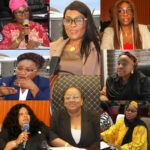
THE 2029 ELECTIONS are fast approaching. If Liberia’s female lawmakers hope to secure re-election and enable voters to have confidence in other women who are interested in contesting, the current lawmakers must deliver measurable, visible results. The alternative is stark: the already dismal number of women in the Legislature could shrink further.
THE LATEST LEGISLATIVE Constituency Monitoring Report from Naymote Partners for Democratic Development paints a sobering picture of female representation in Liberia’s 55th Legislature. With only 11 women occupying 103 seats—a mere 10.7%—female lawmakers constitute a small and vulnerable minority. Within the House of Representatives, women account for just nine percent of members.
THESE NUMBERS ARE not merely statistics; they represent a crisis of representation that demands urgent attention. And while systemic barriers certainly contribute to this imbalance, the performance of sitting female lawmakers will play a decisive role in shaping electoral outcomes in 2029.
Naymote’s 2026 monitoring report, which tracked 72 Representatives across five accountability indicators over a 12-week period, reveals a troubling divide among the eight female lawmakers monitored. Two—Hon. Rugie Yatu Barry (Montserrado District 1) and Hon. Prescilla A. Cooper (Montserrado District 5)—achieved perfect scores, demonstrating that women can and do excel when they commit to full accountability.
Yet others fell significantly short. One lawmaker, Hon. Bintu Massalay (Grand Cape Mount District 1), recorded no monitored activity whatsoever—no functional office, no constituency visits, no town halls, no media engagement, and no legislative reports. Several others demonstrated strong community presence but failed to provide formal legislative documentation, undermining their effectiveness as representatives.
This disparity matters. In a political environment where women already face heightened scrutiny and entrenched bias, every female lawmaker carries the weight of collective expectations. Excellence from some cannot compensate for absence from others.
The connection between performance and electoral prospects is undeniable. Voters reward visible, responsive leadership. When female lawmakers maintain functional district offices, conduct regular constituency visits, hold town hall meetings, engage with media, and submit formal legislative reports, they build the credibility necessary for re-election and create a template for other women to follow.
Conversely, when female lawmakers are invisible—absent from their districts, inaccessible to constituents, and silent on legislative matters—they reinforce harmful stereotypes that women are less capable of effective governance. This not only jeopardizes their own political futures but dampens the aspirations of potential female candidates.
The 2029 elections will serve as a referendum on whether women deserve expanded representation. Female lawmakers must ensure that the answer is a resounding yes.
We call upon the women of the 55th Legislature to embrace their roles as both representatives and trailblazers. Specifically:
MAINTAIN FUNCTIONAL DISTRICT offices. Constituents must have physical spaces where they can access their representatives, seek assistance, and hold them accountable.
CONDUCT REGULAR CONSTITUENCY visits and town halls. Physical presence demonstrates commitment and builds trust. But these engagements must be substantive, not merely ceremonial.
ENGAGE WITH MEDIA and radio. Public communication is essential for transparency and for reaching constituents who cannot attend in-person events.
SUBMIT FORMAL LEGISLATIVE reports. Documentation provides evidence of work accomplished and creates a record that constituents and monitors can evaluate. Half of all lawmakers failed this basic test—women cannot afford to be among them.
BRIDGE THE GAP between visibility and accountability. As Naymote notes, “Greater visibility alone does not demonstrate responsiveness or results.” Women must pair their community engagement with institutional rigor.
LIBERIA CANNOT AFFORD to lose the women currently serving in the Legislature. Each female lawmaker who fails to perform undermines the case for gender parity and reduces the likelihood that voters will support female candidates in 2029.
BUT THE CONVERSE is also true. Each woman who excels—who maintains an office, visits her constituents, holds town halls, engages the media, and submits reports—strengthens the argument for greater female representation and paves the way for more women to enter politics.
THE WOMEN OF the 55th Legislature have an opportunity to prove that they are not merely symbolic representatives but effective, accountable leaders. Their performance over the next three years will determine not only their own political futures but the future of women’s representation in Liberia.